

20 Fresh Short Shag Hairstyles for Women for a New Season Look

Maybe you’re tired of a bob that falls flat by noon. Maybe you want to go shorter but don’t want a pixie that needs styling every morning. Short shag hairstyles for women handle both. Choppy, staggered layers build movement into the cut, so your hair looks styled even on days you barely touch it.
The catch is that the right shag depends on your texture, density, and routine. A cut that looks effortless on thick waves can look stringy on fine, straight hair. Below, Hairstyle Inspirations breaks down 20 short shags in order from shortest to longest, from cropped pixie shags to neck-grazing cuts. Each one includes its length range, trim schedule, styling time, and the hair type it suits best, so you can choose before you book.
Quick Overview: Short Shags at a Glance
- Best for fine hair: a soft shag with fewer, longer layers and a weighted perimeter, or a bixie shag with wispy bangs. Both add volume without thinning out the ends.
- Best for thick hair: an undercut pixie shag or a polished shag with internal layers. Both remove bulk so the cut doesn’t puff into a triangle.
- Best for curls and coils: a curly shag bob or a tapered coily shag. Both should be cut dry, curl by curl, so the shape matches how your hair actually sits.
- Lowest maintenance: the chin-length shag with curtain bangs and the neck-grazing shag. They need trims every 6–10 weeks and can air-dry in most textures.
- Trim frequency: every 4–6 weeks for pixie-length shags, 6–8 weeks for chin-length cuts, and 8–12 weeks for neck-grazing and curly shags.
- Color touch-up: every 4–6 weeks for copper or red shags, every 3–4 months for lived-in brunette or blended highlights. Natural, uncolored shags need none.
What Is a Short Shag Haircut?
A short shag is a heavily layered haircut, usually 1 to 9 inches long, cut with shorter layers at the crown and thinned, choppy ends so the hair looks tousled instead of blunt. Most versions include bangs or face-framing pieces. Lengths range from pixie-short to just above the shoulders.
A layered bob keeps most of its weight at the perimeter. A shag moves that weight up toward the crown and breaks up the ends, so the volume sits on top and the edges look airy and piecey. Stylists build that texture with point cutting, slide cutting, or a razor. On curly and coily hair, they often cut dry so each curl’s spring is visible as they work.
A shag also differs from a wolf cut. A wolf cut is more disconnected, with a dramatic jump between the short crown and the longer, mullet-like back. A shag blends its layers, so it reads softer and grows out more gracefully.
20 Short Shag Hairstyles for Women
1. Textured Pixie Shag

This is the shortest shag on the list. The nape and sides are cropped close, 2 to 3 inches are left on top, and the ends are point-cut so they separate into piecey spikes instead of lying flat. Most of the height sits at the crown, which draws attention to the cheekbones and eyes.
Straight or slightly wavy hair with medium-to-thick density gives the crispest piecey effect. Fine hair can wear it too, but ask for less thinning on top so the scalp doesn’t show through. To style, work a pea-size amount of matte paste through dry hair with your fingertips and pinch the ends upward.
Best for: straight to slightly wavy hair, medium to thick density
- Length: 1–3 inches
- Maintenance: Medium
- Styling time: 5 min
- Trim every: 4–6 weeks
- Color touch-up: Not needed unless colored
2. Undercut Pixie Shag
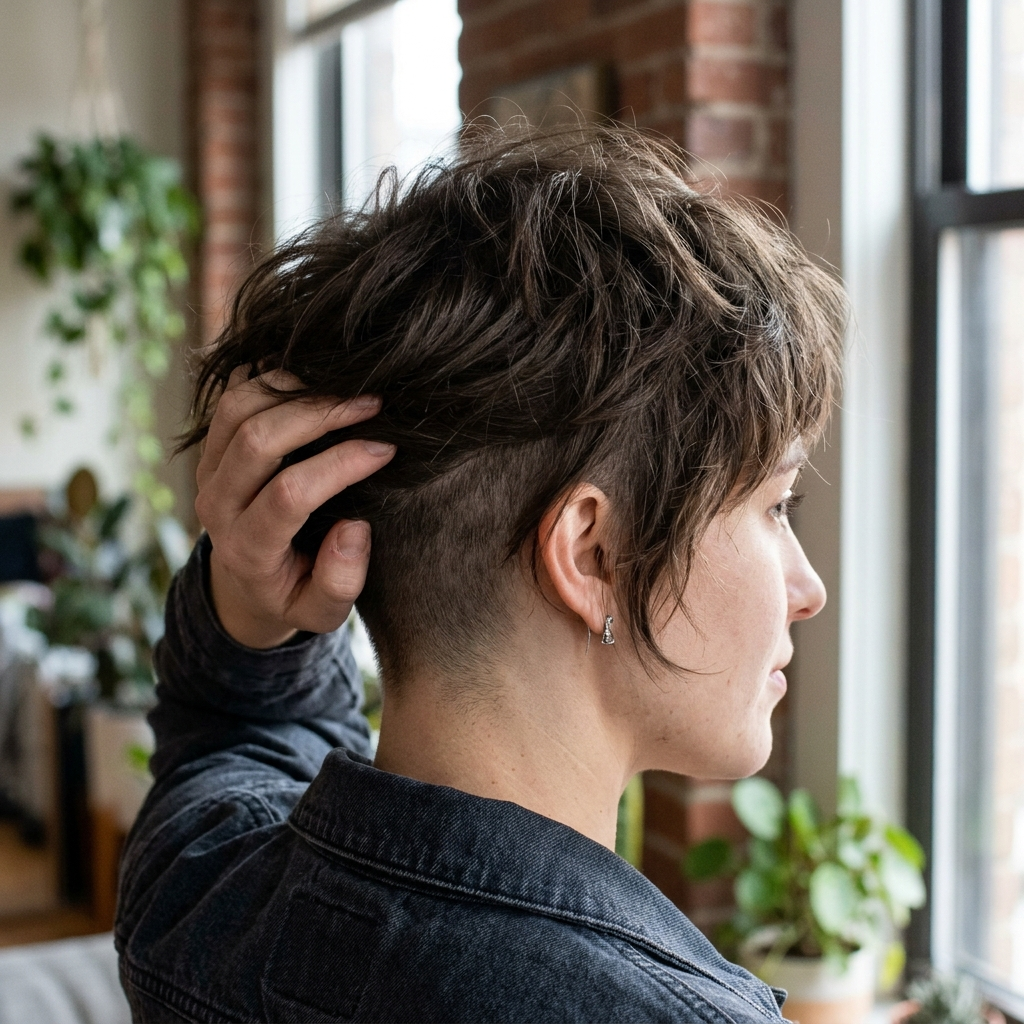
The section underneath, at the nape and sometimes above one ear, is clipped short, usually with a #2 or #3 guard. That clipped section stays hidden under a layered, choppy top. Removing that hidden bulk lets very thick or coarse hair lie closer to the head instead of puffing out at the sides.
When the hair is down, it looks like a regular pixie shag. Tuck it behind your ear or lift it into a mini top knot and the buzzed section shows. Expect a fuzzy phase when growing out the undercut. Plan for about three months before the clipped area blends with the layers above it.
Best for: very thick, coarse, or dense hair of any straight-to-wavy texture
- Length: 0.25 inch underneath, 2–4 inches on top
- Maintenance: High
- Styling time: 5 min
- Trim every: 3–5 weeks
- Color touch-up: Not needed unless colored
3. Curly Pixie Shag

Type 3 curls get room to spring here: 3 to 4 inches on top, tapered sides, and layers cut dry so each ringlet lands where it naturally falls. Curls look much shorter dry than wet. A stylist who cuts wet, without accounting for shrinkage, can take off far more than you planned.
The result is a rounded, airy crown of defined curls that frames the face without bulk around the ears. Looser 3A curls look tousled. Tighter 3C curls create a denser, sculpted halo. To style, rake curl cream through soaking-wet hair, scrunch in a light gel, and diffuse on low heat or air-dry.
Best for: Type 3A–3C curly hair, medium to thick density
- Length: 2–4 inches (stretched)
- Maintenance: Medium
- Styling time: 15 min
- Trim every: 6–8 weeks
- Color touch-up: Not needed unless colored
4. Tapered Coily Shag
This cut gives Type 4 hair a shag silhouette: the nape and sides are tapered close, and the crown is left fuller and rounded with layered length. Stylists often shape it on picked-out or stretched hair with shears. That way the outline stays even, whether you wear a wash-and-go, a twist-out, or a fluffed afro.
The tapered sides keep the cut neat as it grows. The volume on top shows off coil pattern and density. Moisture is the priority. Layer a water-based leave-in, a cream, and a sealing oil, then define with gel or finger coils. Expect a longer first-day routine, with quick 5-minute refreshes after that.
Best for: Type 4A–4C coily hair, medium to high density
- Length: 0.5 inch at nape, 2–5 inches on top
- Maintenance: Medium
- Styling time: 20–30 min (wash day), 5 min refresh
- Trim every: 6–8 weeks
- Color touch-up: Not needed unless colored
5. Bixie Shag with Wispy Bangs

The bixie sits halfway between a bob and a pixie. It skims the tops of the ears, layers up through the crown, and finishes with a sheer, wispy fringe. The extra length over a pixie gives fine hair more to work with. Short crown layers create lift, and the soft fringe disguises a high forehead or a thin hairline.
The bixie is also one of the smoothest ways to grow out a pixie, since it simply needs shaping rather than a full restart. Blow-dry the crown with a round brush, lifting at the roots, then finish with a dry texture spray to separate the fringe.
Best for: fine to medium straight or wavy hair, especially growing-out pixies
- Length: 3–5 inches
- Maintenance: Medium
- Styling time: 10 min
- Trim every: 5–7 weeks
- Color touch-up: Not needed unless colored
6. Mixie Shag
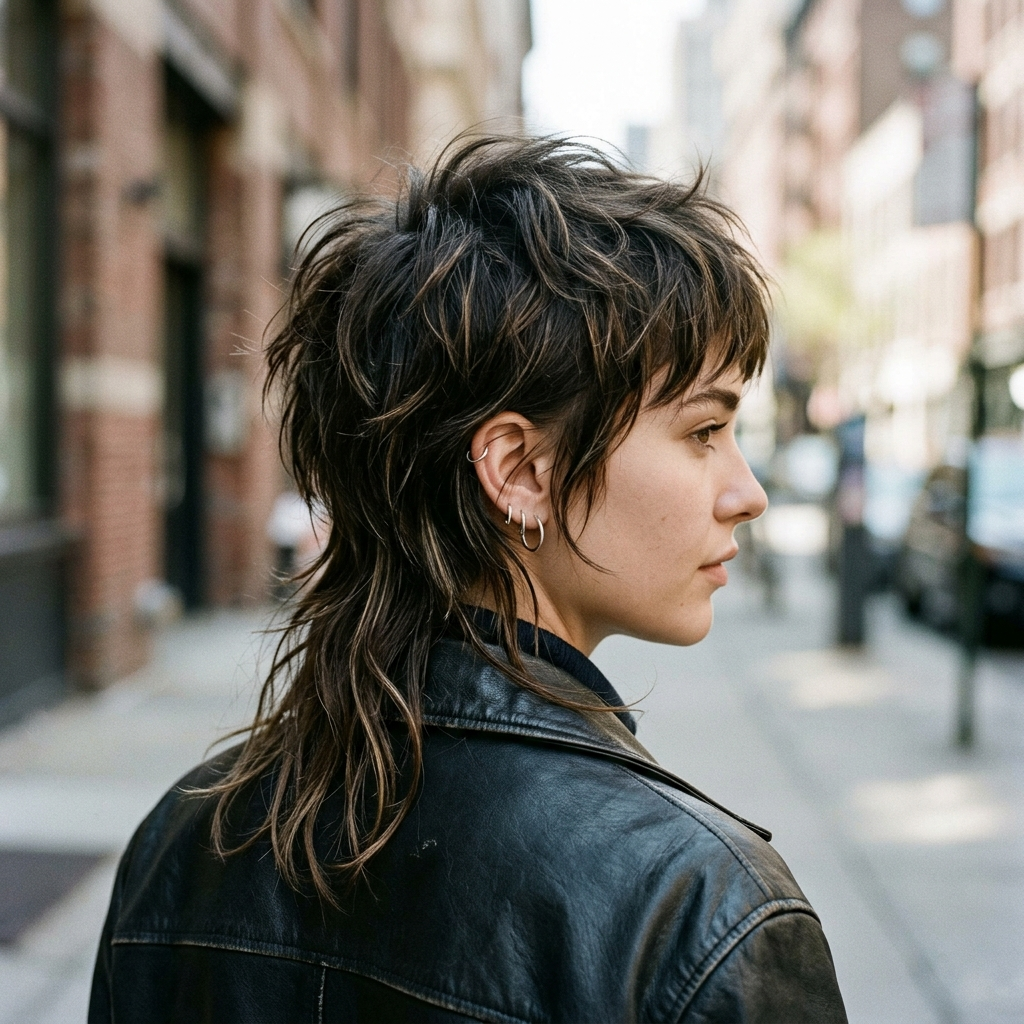
The mixie combines a pixie and a mullet. The top and sides are kept short and choppy, while tendrils 4 to 6 inches long trail down the back of the neck. It’s the edgiest cut in the short range, and the shape reads clearly in photos from the side and back.
Straight and wavy hair show the length contrast best. On curly hair, the nape tendrils coil up and soften the effect. Because the back is longer, it grows out more slowly than a standard pixie, though the top still needs regular shaping. Twist the nape pieces with a little cream and leave the crown messy.
Best for: straight to wavy hair, medium density, anyone wanting a bold shape
- Length: 2–3 inches on top, 4–6 inches at nape
- Maintenance: Medium
- Styling time: 10 min
- Trim every: 5–6 weeks
- Color touch-up: Not needed unless colored
7. Silver Cropped Shag

Gray and silver hair often turns coarser and wirier with age, and short layers put that texture to work instead of fighting it. This crop keeps 3 to 5 inches through the top, with feathered pieces along the hairline and the nape. That gives silver strands movement without frizz at the ends.
On fully gray hair, a toning gloss or purple shampoo once a week counters yellowing. If you’re transitioning from dye, a stylist can blend the line of demarcation with fine silver or ash highlights. A lightweight smoothing cream and a quick blow-dry with a paddle brush finish it.
Best for: natural gray, silver, or white hair; coarse or wiry texture
- Length: 3–5 inches
- Maintenance: Low
- Styling time: 10 min
- Trim every: 6–8 weeks
- Color touch-up: 6–8 weeks for toning gloss; not needed for untreated gray
8. Short Wolf Cut

A short wolf cut takes the shag’s choppy crown and adds more disconnection: heavy layers on top, curtain or choppy bangs, and a back that drops noticeably longer than the sides. The short version lands around the jaw in front and the nape in back, so it reads edgy without the full mullet drama.
Thick, wavy hair gives the most defined result, because the layers stack into visible tiers. Fine hair can look sparse at the back once that much weight is removed. Scrunch in sea salt spray, rough-dry upside down, and twist a few top pieces with your fingers.
Best for: thick wavy hair, Type 2B–2C waves
- Length: 3–4 inches on top, 6–8 inches at back
- Maintenance: Medium
- Styling time: 10 min
- Trim every: 6–8 weeks
- Color touch-up: Not needed unless colored
9. Chin-Length Shag with Curtain Bangs

This is the most versatile cut in the guide. The layers stop at the chin, and the curtain bangs part in the center and sweep out toward the cheekbones. The bangs frame the eyes and blend into the side layers, so there’s no harsh line as they grow.
It works on straight, wavy, and loosely curly hair, and on most densities. Ask for fewer layers if your hair is fine. Blow-dry the bangs with a small round brush, rolling each side away from the face, and let the rest air-dry. It’s the safest choice if this is your first shag.
Best for: straight, wavy, or loosely curly hair; fine to thick density
- Length: 5–7 inches
- Maintenance: Low
- Styling time: 10 min
- Trim every: 6–8 weeks
- Color touch-up: Not needed unless colored
10. Feathered Razor Shag

This is the 1970s shag, cut with a razor instead of shears. The razor tapers each layer into a fine, feathered tip that flicks away from the face. The movement looks soft and windswept rather than choppy, and the perimeter barely shows.
Straight or slightly wavy hair with medium density holds the feathering best. Razor cutting isn’t a good choice for very curly or frizz-prone hair, because the angled cut can rough up the cuticle and fray the ends. Blow-dry with a medium round brush, rolling each section back and away from your face, then mist with flexible hairspray.
Best for: straight to slightly wavy hair, medium density, smooth cuticle
- Length: 5–7 inches
- Maintenance: Medium
- Styling time: 15 min
- Trim every: 6–8 weeks
- Color touch-up: Not needed unless colored
11. Soft Shag for Fine Hair

Fine hair needs a different approach. This version keeps a weighted perimeter at the jaw, places shorter layers only at the crown, and skips heavy thinning shears. The ends stay full, so the cut looks thicker, while the crown layers create lift where fine hair usually falls flat.
The result is a gentle, rounded shape with movement rather than a choppy, separated texture. Apply volumizing mousse to damp roots, blow-dry with your head tilted forward, and finish with dry texture spray at the crown only. Heavy oils or creams will weigh it down.
Best for: fine, thin, or straight hair with low density
- Length: 5–7 inches
- Maintenance: Low
- Styling time: 10 min
- Trim every: 6–8 weeks
- Color touch-up: Not needed unless colored
12. Wavy French Shag with Bottleneck Bangs

The French shag sits just below the jaw. It’s undone and slightly undercut at the nape, and it has bottleneck bangs that are narrow at the center and widen as they reach the cheekbones, like the neck of a bottle. The cut is designed to air-dry and look unbrushed.
Type 2 waves are its natural partner, because the layers let each wave form its own S-shape. Straight hair can wear it with a texturizing spray, though it’ll look sleeker. Apply wave cream to damp hair, scrunch, and leave it alone. Diffuse on low if you’re short on time.
Best for: Type 2A–2C wavy hair, medium density
- Length: 5–8 inches
- Maintenance: Low
- Styling time: 5–10 min
- Trim every: 8 weeks
- Color touch-up: Not needed unless colored
13. Curly Shag Bob

Curly hair cut to one length often forms a triangle: flat on top, wide at the bottom. This shag bob avoids that with rounded layers cut dry, curl by curl, so the volume sits evenly from crown to jaw. The finished shape is a soft oval of defined curls.
It suits Type 3A–3C curls in most densities. Thicker curls get more internal layering to reduce weight at the sides. Rake a curl cream and gel through soaking-wet hair, scrunch, then diffuse on low until about 80 percent dry. Avoid brushing once it’s dry, which turns curls into frizz.
Best for: Type 3A–3C curly hair, medium to thick density
- Length: 5–8 inches (stretched)
- Maintenance: Medium
- Styling time: 20 min
- Trim every: 10–12 weeks
- Color touch-up: Not needed unless colored
14. Copper Shag with Face-Framing Money Pieces

Rich copper all over, with two brighter strawberry-copper money pieces at the front, highlights the shag’s face-framing layers. The cut itself is a chin-to-jaw shag with curtain bangs. The color puts the focus on the front of the shape.
Copper tends to flatter warm and neutral undertones, though a cooler, rosier copper can work on cool undertones. Red pigment fades faster than most shades, so plan on a gloss every 4 to 6 weeks, plus a color-depositing conditioner between appointments. Use cool water and a sulfate-free, color-safe shampoo to slow fading.
Best for: color-treated hair; light brown to dark blonde base; warm or neutral undertones
- Length: 5–7 inches
- Maintenance: High
- Styling time: 10 min
- Trim every: 6–8 weeks
- Color touch-up: 4–6 weeks
15. Asymmetrical Shag

One side falls 1 to 2 inches longer than the other, and a deep side part sweeps the longer side across the cheek. The layers still stagger the way a shag’s should, but the uneven perimeter gives the cut a deliberate, editorial edge.
The longer side can soften a strong or square jawline. Straight, thick hair makes the asymmetry most visible. Wavy hair blurs the line into something subtler. Blow-dry smooth with a paddle brush, then flat-iron only the longer side if you want a sharper contrast.
Best for: straight to slightly wavy hair, medium to thick density
- Length: 4–6 inches on one side, 6–8 inches on the other
- Maintenance: Medium
- Styling time: 15 min
- Trim every: 6–8 weeks
- Color touch-up: Not needed unless colored
16. Polished Shag for Thick, Straight Hair

This shag keeps its layers but smooths them into a glossy, polished finish. Internal (hidden) layers remove weight from the inside, so thick, straight hair moves and swings without the outer surface looking choppy. The ends are beveled slightly under, which gives a smooth, rounded shape.
It suits women who like the shag’s structure but prefer a refined look over a messy one. Thick hair benefits most, because thinning the interior prevents a heavy, helmet-like shape. Apply a heat protectant, blow-dry with a paddle brush, then pass a flat iron quickly over each layer and finish with a drop of shine serum.
Best for: thick, straight hair with high density
- Length: 5–8 inches
- Maintenance: Medium
- Styling time: 20 min
- Trim every: 6–8 weeks
- Color touch-up: Not needed unless colored
17. Shag with Long Side-Swept Fringe

Instead of curtain bangs, a single long fringe of 6 to 8 inches sweeps across the forehead and blends into the side layers. It covers a high forehead and softens strong brows, and it’s easy to pin back on days you want your face clear.
Strong cowlicks at the front hairline can make this fringe split or flip up. A stylist can usually work with the cowlick’s direction, so mention it at your consultation. Blow-dry the fringe across the forehead in the direction you want it to fall, using a flat brush. A small round brush gives it more curve.
Best for: straight to wavy hair, medium density, high foreheads
- Length: 5–8 inches
- Maintenance: Low
- Styling time: 10 min
- Trim every: 6–8 weeks (fringe every 3–4 weeks)
- Color touch-up: Not needed unless colored
18. Bouncy ’90s Blowout Shag

This version is built for blowouts. Layers at the cheekbones and chin are rolled into a full, bouncy finish with lift at the roots and flicked ends. It has more volume than most shags and looks best freshly styled.
Straight and wavy hair of medium-to-thick density holds a blowout longest. Fine hair will need more product to keep its bounce past lunch. Apply volumizing mousse to damp roots, rough-dry to 80 percent, then section and dry each layer over a large round brush. Use velcro rollers on the crown while you finish your makeup.
Best for: straight to wavy hair, medium to thick density, regular heat stylers
- Length: 6–8 inches
- Maintenance: High
- Styling time: 25–30 min
- Trim every: 6–8 weeks
- Color touch-up: Not needed unless colored
19. Lived-In Brunette Shag with Caramel Ribbons

An espresso base with hand-painted caramel ribbon highlights shows off the cut’s layers. Every flipped end and choppy layer catches a lighter tone, which makes the texture visible even on dark hair, where layers can otherwise disappear.
A root smudge (a soft blend from the natural root into the lighter pieces) means regrowth looks intentional for months. Caramel tones can turn brassy on dark bases. A blue or purple toning shampoo every week or two, plus a gloss at about the 8-week mark, keeps the ribbons golden rather than orange. Air-dry with a light texture cream.
Best for: dark brown to black hair; any texture from straight to curly
- Length: 6–8 inches
- Maintenance: Low
- Styling time: 10 min
- Trim every: 8 weeks
- Color touch-up: 3–4 months
20. Neck-Grazing Shag

The longest cut here falls to the nape and the top of the shoulders, leaving enough length for a low ponytail or half-up clip. It still has the shag’s lifted crown, face-framing layers, and choppy ends, so it looks distinctly shaggy rather than like a long bob.
It’s the easiest jump for anyone coming from long hair, and the lowest-commitment way to test a shag. Thick and wavy hair gives it the most shape. Fine hair can wear it with lighter layering. Air-dry with a curl or wave cream, or rough-dry and wrap a few face-framing pieces around a 1.25-inch curling iron.
Best for: wavy, straight, or loosely curly hair; medium to thick density; transitioning from long hair
- Length: 7–9 inches
- Maintenance: Low
- Styling time: 10 min
- Trim every: 8–10 weeks
- Color touch-up: Not needed unless colored
How Do I Choose the Right Short Shag?
Choose a short shag by matching three things: your natural texture, how much time you’ll spend styling, and how often you can book trims. Texture decides how the layers behave. Styling time decides whether a blowout cut is realistic. Trim budget decides whether a pixie-length shag or a longer cut makes sense.
Work through these in order:
- Start with texture, not a photo. Pick inspiration from someone whose hair matches your curl pattern and density. A shag on Type 2C waves won’t look the same on fine, straight hair.
- Be honest about mornings. If you won’t use heat, choose cuts with a 5–10 minute styling time, such as the French shag, the chin-length shag, or the neck-grazing shag. Skip the ’90s blowout shag.
- Factor in trim costs. Pixie-length shags lose their shape in 4–6 weeks, which can mean 9 to 12 salon visits a year. Neck-grazing and curly shags stretch to 8–12 weeks.
- Consider face shape as a guide, not a rule. Crown height can lengthen a round face. Curtain bangs and side-swept fringe soften angular jaws and high foreheads.
- Match color to undertone. For colored versions, coppers and caramels tend to suit warm and neutral undertones, while ash, silver, and cool brunettes tend to suit cool undertones.
- Check your hairline. Strong cowlicks at the front can fight blunt or side-swept bangs. Curtain bangs usually adapt more easily.
Which Short Shag Works Best for Fine, Thick, Wavy, Curly, or Coily Hair?
The best short shag depends on how your hair holds layers. Fine hair needs fewer layers and a full perimeter. Thick hair needs internal weight removed. Wavy hair needs layers that let each wave form. Curly and coily hair need a dry cut that accounts for shrinkage.
Fine Hair
Fine strands have less volume per strand, so aggressive layering and thinning shears can leave the ends see-through. The soft shag for fine hair and the bixie shag concentrate shorter layers at the crown for lift while keeping weight at the edges. Lightweight mousse and dry texture spray work better than creams and oils.
Thick Hair
Thick hair can expand into a wide, triangular shape when it’s layered only on the surface. Internal layering, slide cutting, or an undercut removes bulk from inside the cut so it lies closer to the head. The polished shag, the undercut pixie shag, and the short wolf cut all rely on this.
Wavy Hair
Type 2 waves suit shags especially well, because the layers release weight and let waves form on their own instead of being pulled straight by length. The French shag, the short wolf cut, and the neck-grazing shag air-dry into defined texture with just a wave cream or sea salt spray.
Curly Hair
Curls shrink as they dry, and that shrinkage varies from one section to the next, so a wet cut can come out uneven or far shorter than intended. A dry, curl-by-curl cut lets the stylist see where each curl sits. The curly pixie shag and the curly shag bob both use rounded layers to prevent the triangle shape.
Coily Hair
Type 4 hair holds shape and volume, so the shag’s outline comes from tapering and sculpting rather than choppy ends. The tapered coily shag keeps the sides neat and lets the crown show its coil pattern. Moisture-focused styling (leave-in, cream, then a sealing oil) keeps the layers defined.
How Do I Style and Care for a Short Shag at Home?
Caring for a short shag comes down to building texture rather than smoothing it out. Use lightweight texturizing products, protect your hair from heat, and stretch time between washes so natural oils help the layers separate. Most shags look better on day two than on wash day.
- Wash 2–3 times a week, not daily. Day-old hair holds texture better. Use a sulfate-free, color-safe shampoo if your shag is colored.
- Condition mid-lengths to ends only. Conditioner at the roots flattens the crown, which is where a shag’s volume lives.
- Apply one texture product while damp. Use mousse for fine hair, sea salt spray or wave cream for waves, curl cream and gel for curls, and a leave-in plus cream for coils.
- Protect before heat. Apply heat protectant before any blow-dryer, flat iron, or curling iron, especially on razor-cut or highlighted ends.
- Dry for your texture. Rough-dry straight hair, diffuse curls on low heat, and air-dry waves. Save the round brush for bangs and the crown.
- Finish with a dry product. A dry texture spray or a pea-size bit of matte paste separates layers. Twist a few pieces between your fingers.
- Refresh instead of rewashing. Mist with water or a refresh spray, scrunch, and touch up bangs with a quick blast of heat.
- Sleep on silk or satin. A silk pillowcase or satin bonnet reduces friction frizz on layered ends, especially for curly and coily shags.
How Do I Grow Out a Short Shag?
To grow out a short shag, keep booking trims, but ask your stylist to clean up only the perimeter and leave the top layers alone. Over several months the shorter crown layers catch up to the longer ends, and the cut turns into a layered bob, then a lob, without a shapeless in-between phase.
- Trim every 8–10 weeks. Skipping trims entirely lets the back grow into a mullet shape faster than the front catches up.
- Keep the nape tidy. The nape grows longest first. Shaping it keeps the outline neat while the crown lengthens.
- Let bangs become face-framing layers. Curtain bangs blend into cheekbone-length pieces in about 2 to 3 months.
- Rely on accessories during awkward weeks. Claw clips, slim headbands, and low twists hide uneven layers during the transition.
- Adjust color with the cut. If your shag is colored, a root smudge or gloss makes fading and regrowth look intentional while the length catches up.
Frequently Asked Questions About Short Shag Hairstyles
Is a short shag good for fine hair?
Yes, if it’s cut with fewer, longer layers and a weighted perimeter. Heavy thinning or razor-cut ends can make fine hair look sparse. Ask for shorter layers only at the crown, where they add lift, and keep the ends full.
How often should you trim a short shag?
Most short shags need a trim every 6 to 8 weeks. Pixie-length shags lose their shape faster and need cleanup every 4 to 6 weeks, while neck-grazing and curly shags can usually go 8 to 12 weeks.
Is a shag haircut high maintenance?
Most shags are low to medium maintenance because the texture is built into the cut. Air-dried styles like the French shag or chin-length shag take 5 to 10 minutes. Blowout shags and pixie-length versions take more time and more frequent trims.
What is the difference between a shag and a wolf cut?
A shag blends its layers smoothly from crown to ends, while a wolf cut has more dramatic, disconnected layers and a noticeably longer back, similar to a mullet. A wolf cut reads edgier; a shag looks softer and grows out more evenly.
Can you get a short shag with curly hair?
Yes. Curly hair often suits a shag because layering removes the bottom-heavy weight that creates a triangle shape. Look for a stylist who cuts curls dry, curl by curl, so the shape accounts for shrinkage.
Do you need bangs with a shag haircut?
No, bangs are optional. Curtain bangs and wispy fringe are classic shag pairings, but you can ask for face-framing layers starting at the cheekbones instead, which give a similar softness without daily bang styling.
What face shape suits a short shag?
Short shags can be adapted to most face shapes. Crown height can lengthen a round face, curtain bangs can soften a square or angular jaw, and a side-swept fringe can balance a long face or high forehead.
Can women over 50 wear a short shag?
Yes. Layers add volume to hair that thins with age, and they give movement to coarser gray or silver strands. The silver cropped shag, soft shag, and chin-length shag with curtain bangs are especially easy to style and maintain.
Find Your Short Shag
If you want minimal styling, start with the chin-length shag with curtain bangs or the wavy French shag. Both air-dry in about 10 minutes. If your hair is fine, book the soft shag or the bixie. Thick hair will move best in a polished shag or an undercut pixie shag. For curls and coils, look to the curly shag bob or the tapered coily shag, cut dry. Coming from long hair? The neck-grazing shag lets you test the look without losing everything.
Save your favorites from this Hairstyle Inspirations guide to your Pinterest boards to bring to your next appointment. Then browse our related guides to bangs, layered bobs, and curly cuts.


