
Auburn Hair and Blue Eyes: 20 Gorgeous Color Ideas

You already know auburn and blue eyes look good together. The real question is which auburn: a soft copper gloss that fades gracefully, a deep mahogany that reads polished at the office, or a bright strawberry shade that turns heads at brunch. Pick the wrong depth or undertone and blue eyes can look washed out instead of electric.
This guide breaks down 20 auburn hair and blue eyes color ideas, from barely-there red tints to full ginger transformations, with honest notes on maintenance, fading, and which hair types carry each shade best. At Hairstyle Inspirations, we organized the list from softest to boldest so you can find your comfort zone fast, then compare everything in one table before you book.
Quick Overview: Auburn Hair for Blue Eyes
- Best for fine hair: Strawberry auburn and soft copper ribbons add the illusion of density without heavy, flat all-over color.
- Best for thick hair: Mahogany and deep auburn balayage show dimension well because dense hair holds multiple tones without looking muddy.
- Lowest maintenance: A root-smudged auburn balayage needs a color refresh only every 4–5 months; the grow-out blends naturally.
- Best for curls and coils: Copper and cinnamon tones applied with a pintura (hand-painted) technique highlight curl definition with less lightener exposure.
- Trim frequency: Most auburn styles need a trim every 8–12 weeks to keep faded, dry ends from dulling the color.
- Color touch-up timing: Red pigment fades faster than most shades, so plan a gloss or toner every 4–8 weeks and a full color service every 6–10 weeks for all-over auburn.
- Best contrast with blue eyes: Copper and orange-leaning auburns sit opposite blue on the color wheel, which makes eye color look brighter.
What Is Auburn Hair, and Why Does It Flatter Blue Eyes?
Auburn is a reddish-brown hair color that sits between light brown and true red, usually around level 4 to level 7 on the colorist’s 1–10 scale. It flatters blue eyes because its warm red-orange base is the complementary color to blue, so the contrast makes blue irises look clearer and more saturated.
Auburn is a family, not a single shade. Cooler versions lean burgundy or mahogany, with violet-red undertones. Warmer versions lean copper, cinnamon, or ginger, with orange-gold undertones. Lighter versions drift toward strawberry blonde, while deeper ones approach chestnut brown with a red glint in sunlight.
The technique matters as much as the shade. All-over (single-process) auburn gives the richest, most uniform red but shows regrowth quickly. Hand-painted balayage and babylights place auburn in pieces, so roots blend and the color fades in a softer way. A demi-permanent gloss can tint natural brown hair auburn with almost no commitment, though it washes out in 4–6 weeks.
Match the auburn to your skin, not just your eyes:
| Skin undertone | Auburn family that usually works | Why |
|---|---|---|
| Cool (pink, rosy, veins look blue) | Mahogany, burgundy auburn, cool deep auburn | Violet-red tones harmonize with pink undertones instead of clashing |
| Warm (golden, peachy, veins look green) | Copper, cinnamon, ginger, golden auburn | Orange-gold tones echo warmth in the skin |
| Neutral (a mix of both) | Classic auburn, strawberry auburn, auburn balayage | Balanced red-brown sits comfortably on most mixed undertones |
| Very fair with freckles | Strawberry auburn, soft copper | Lighter, softer red avoids overwhelming pale skin |
20 Auburn Hair and Blue Eyes Color Ideas (Softest to Boldest)
The list starts with low-commitment tints and ends with full copper transformations. Lengths are measured from the scalp at the crown.
1. Sheer Auburn Gloss on a Brunette Lob

A demi-permanent auburn gloss over natural medium brown hair gives a red glint that only fully shows in sunlight. Indoors it reads as rich brown; outside, the warmth wakes up blue eyes without anyone guessing you colored your hair. Because a gloss deposits color without lifting, the cuticle stays smooth and straight hair gets a noticeable shine boost.
Fine hair benefits most, since there is no lightener to weaken strands. Expect it to fade back toward brown over 4–6 weeks, which makes it a smart test run before committing to permanent red. Style the lob with a flat iron bend or a round brush blowout to catch the light.
Best for: natural brown, straight to slightly wavy, fine to medium density
- Length: 10–14 inches
- Maintenance: Low
- Styling time: 10 min
- Trim every: 8–10 weeks
- Color touch up: 4–6 weeks (gloss)
2. Auburn Babylights on Light Brown Hair
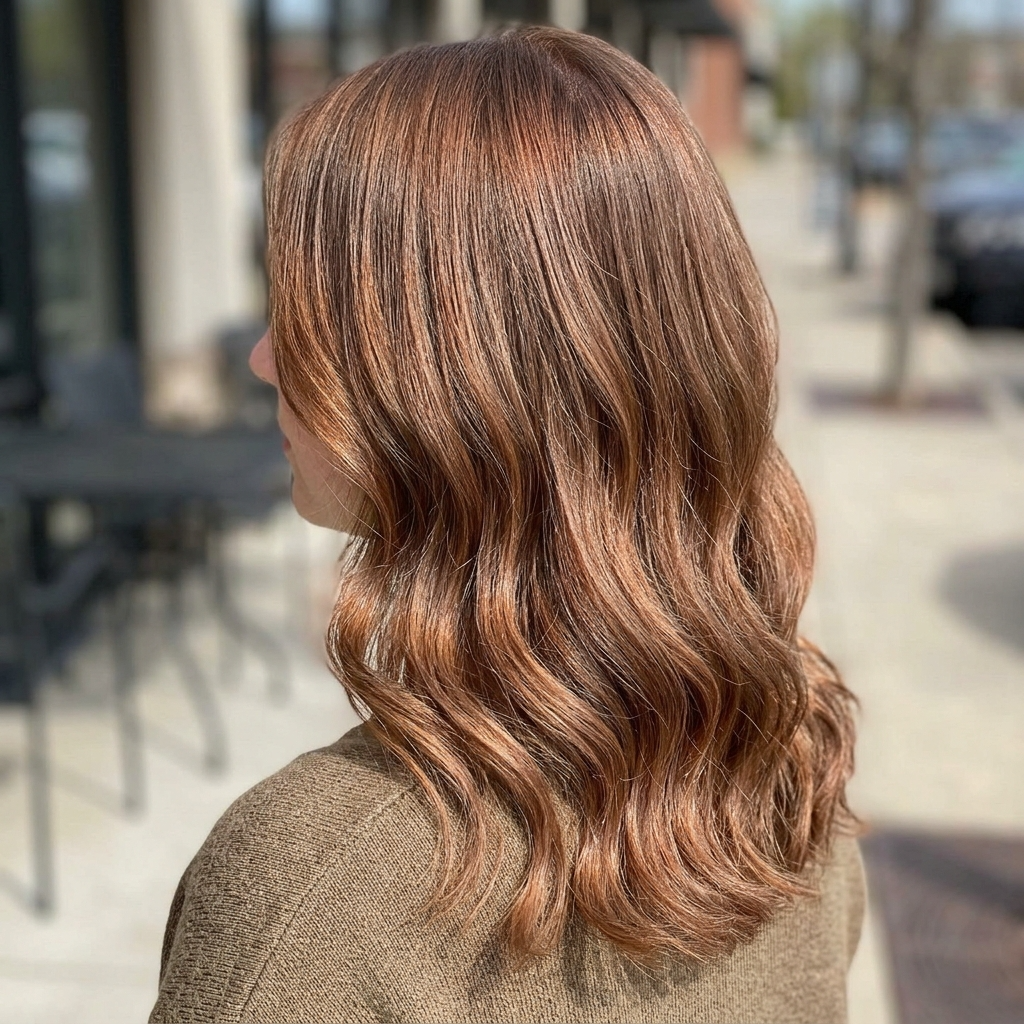
Babylights are micro-fine highlights woven close to the root, and in auburn they create a diffused, strawberry cinnamon shimmer rather than visible stripes. On light brown base color, the effect looks like hair that turns redder every summer.
Fine, straight hair is the best canvas because tiny sections add movement without exposing thin patches. Since the pieces are so small, regrowth looks soft for months. The tradeoff is appointment length: placing hundreds of fine foils often takes 2–3 hours. A loose wave from a 1.25-inch curling iron shows off the dimension.
Best for: light brown, straight or loose waves, fine density
- Length: 12–20 inches
- Maintenance: Low
- Styling time: 15 min
- Trim every: 10–12 weeks
- Color touch-up: 3–4 months
3. Root-Smudged Auburn Balayage
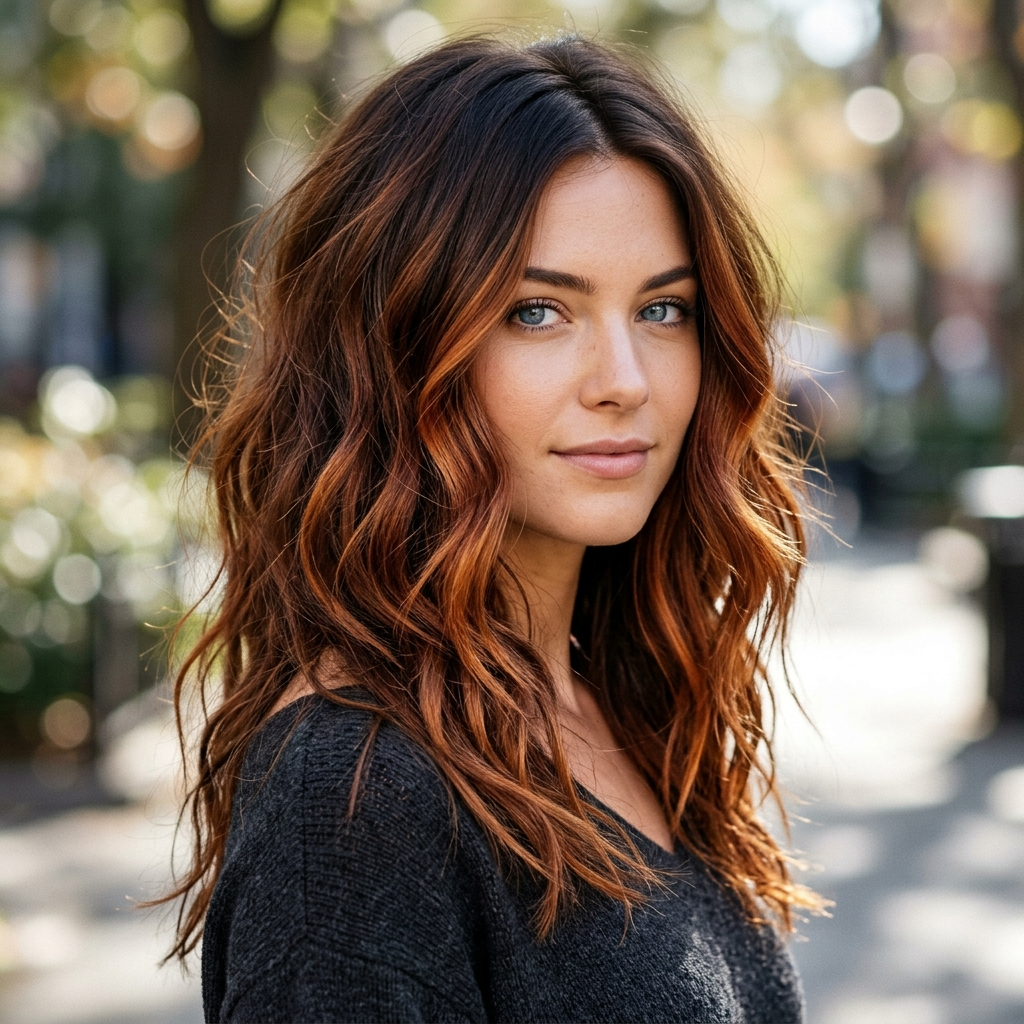
A root smudge blends a shade close to your natural color at the scalp into hand-painted auburn through the mid-lengths and ends. The soft gradient means there is no harsh line when roots grow, which is why this is the lowest-maintenance auburn on the list.
Thick, wavy hair shows the painted sections beautifully, since density keeps the color from looking sparse. On blue eyes, the brighter auburn sitting around the jaw and collarbone adds warmth right where it frames the face. Use a texture spray and loose, flat-iron waves to keep it lived-in.
Best for: dark blonde to medium brown, wavy, medium to thick density
- Length: 14–24 inches
- Maintenance: Low
- Styling time: 15 min
- Trim every: 10–12 weeks
- Color touch-up: 4–5 months (gloss every 6–8 weeks)
4. Chestnut to Auburn Color Melt
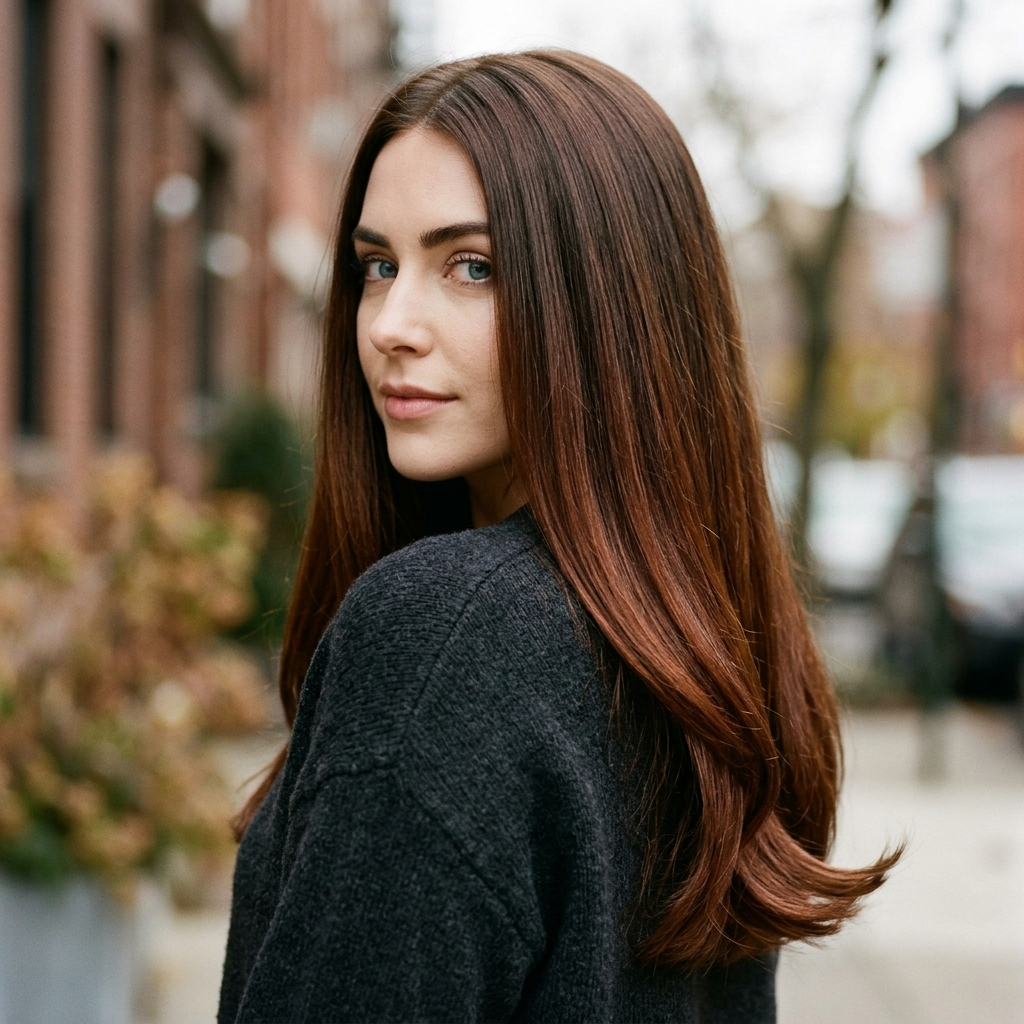
This color melt moves from chestnut brown at the root to a deeper, glossier auburn at the ends with no visible sections at all. Where balayage looks sun-kissed, a melt looks seamless and polished, almost like expensive silk.
Thick, straight hair carries it best: the smooth surface reflects the shift in tone, and density hides any slight unevenness. Darker brunettes with blue eyes get a striking contrast without going fully red. A sleek blowout or a single loose bend at the ends keeps the gradient visible.
Best for: medium to dark brown, straight, thick density
- Length: 16–26 inches
- Maintenance: Medium
- Styling time: 20 min
- Trim every: 8–10 weeks
- Color touch-up: 10–12 weeks
5. Strawberry Auburn Chin-Length Bob

Strawberry auburn is the lightest member of the auburn family, mixing copper-red with golden blonde. Cut into a blunt, chin-length bob, it reads fresh and slightly playful. A blunt perimeter makes fine hair look thicker at the ends, and the light shade softens the face for very fair skin and freckles.
Blue eyes look especially clear against the peachy warmth. Because this shade usually requires lifting brown hair, a bond-building treatment during lightening is worth requesting. A quick blowout with a paddle brush and a smoothing cream finishes it in minutes.
Best for: natural blonde or light brown, straight, fine density
- Length: 8–10 inches
- Maintenance: Medium
- Styling time: 10 min
- Trim every: 6–8 weeks
- Color touch-up: 6–8 weeks
6. Cinnamon Auburn on Type 3 Curls
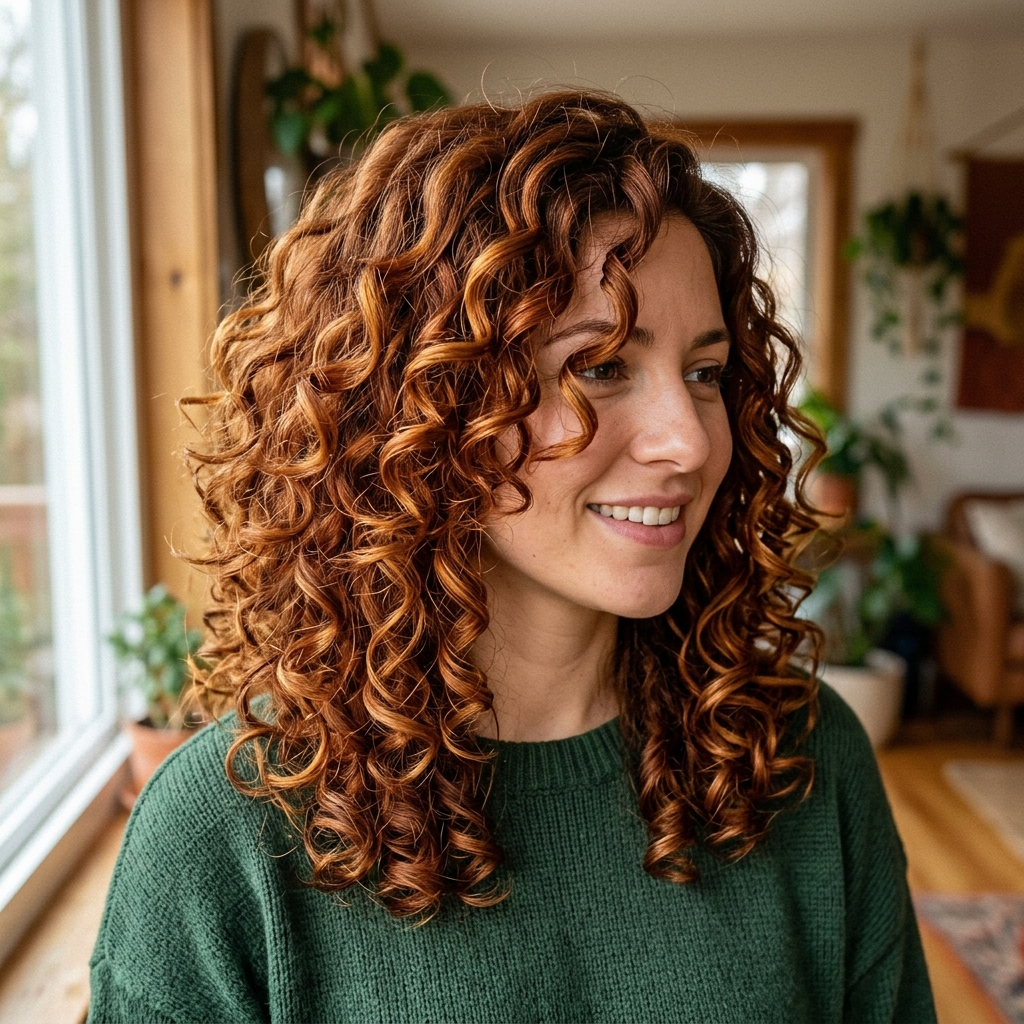
Cinnamon auburn is a warm, spiced red-brown with gold undertones, and on Type 3 curls it turns every coil into its own highlight. Hand-painting (pintura) the color onto individual curls places brightness exactly where curls naturally spring, so definition looks sharper.
The method also limits how much hair is lightened, which matters because curly hair is prone to dryness. Shoulder-length layers help prevent a triangle shape. Define with a leave-in conditioner and curl cream applied to soaking-wet hair, then diffuse on low.
Best for: light to medium brown, curly (Type 3A–3C), medium to thick density
- Length: 10–16 inches (stretched)
- Maintenance: Medium
- Styling time: 25 min
- Trim every: 10–12 weeks
- Color touch-up: 3–4 months
7. Golden Auburn Shag

A golden auburn shag pairs a honeyed red-brown with choppy, piece-y layers that make wavy hair look intentionally undone. The layers expose more surface area, so the golden tones catch light from every angle. Medium density is the sweet spot: very fine hair can look thin with this many layers, while very thick hair may need extra thinning.
Warm and neutral skin tones glow with this shade, and blue eyes stand out against the gold reflect. Scrunch in sea salt spray and air-dry, or diffuse for more lift at the crown.
Best for: light brown to dark blonde, wavy, medium density
- Length: 10–15 inches
- Maintenance: Medium
- Styling time: 10 min
- Trim every: 6–8 weeks
- Color touch-up: 8–10 weeks
8. Auburn Face Framing Money Piece

Two bright auburn panels around the hairline, often called a money piece, put color right next to your eyes while the rest of your hair stays natural. It is the quickest route to brighter-looking blue eyes with the least color commitment.
Works on almost any length and texture, though on curly hair the panels should be painted onto defined curls rather than foiled flat. Regrowth shows sooner at the front, so plan small root touch-ups. Tuck one side behind the ear to show it off.
Best for: any base color, straight to curly, any density
- Length: 10–22 inches
- Maintenance: Medium
- Styling time: 10 min
- Trim every: 8–10 weeks
- Color touch-up: 6–8 weeks (front only)
9. Auburn Curtain Bangs With Butterfly Layers

This look combines a classic medium auburn with curtain bangs that part at the center and sweep toward the cheekbones, plus short, feathery butterfly layers around the face. The bangs act as a frame that draws attention straight to the eyes. Wavy, medium to thick hair holds the bounce of butterfly layers best.
Curtain bangs need a 30-second round-brush blowout each morning, and they grow out gracefully into face-framing layers if you change your mind. A volumizing mousse at the roots keeps the shape full.
Best for: light to medium brown, straight to wavy, medium to thick density
- Length: 14–22 inches (bangs 4–6 inches)
- Maintenance: Medium
- Styling time: 20 min
- Trim every: 6–8 weeks (bangs every 3–4 weeks)
- Color touch-up: 8–10 weeks
10. Classic All Over Auburn With Long Layers
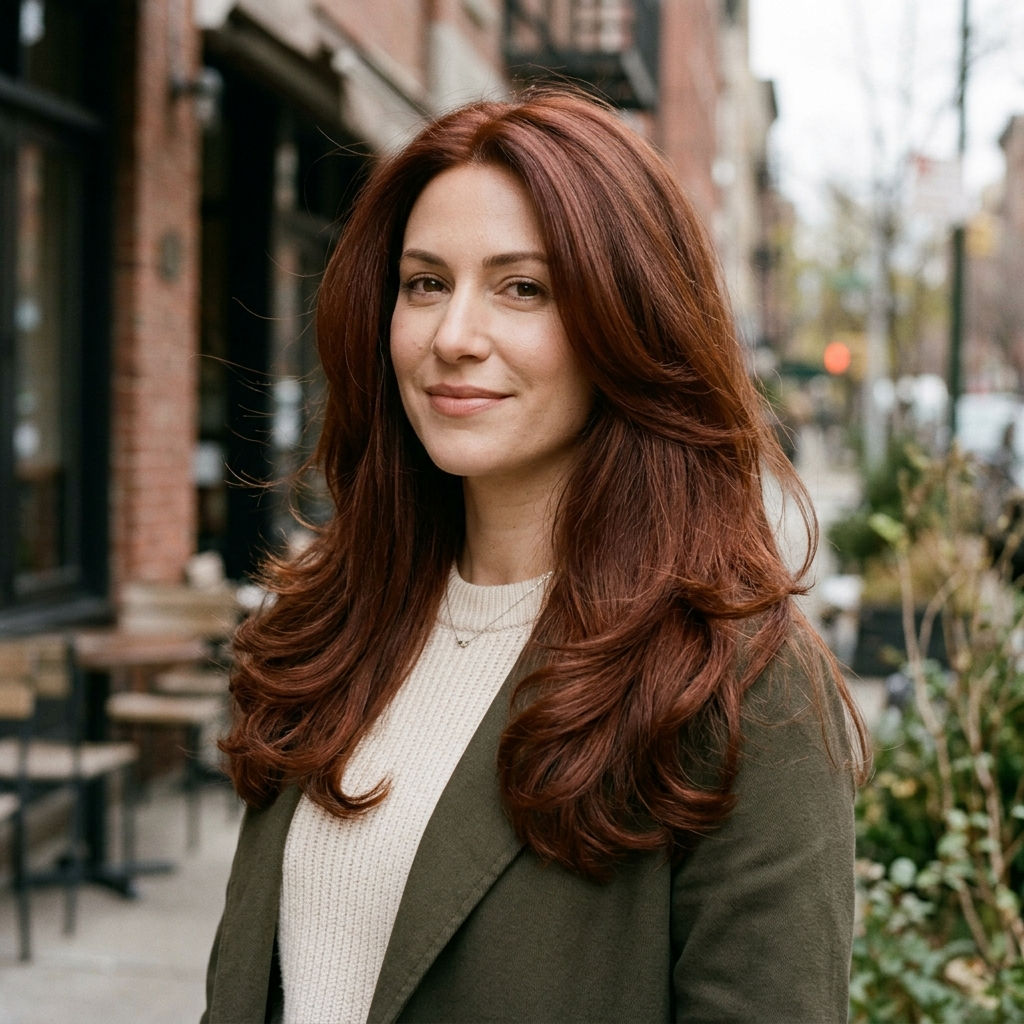
Single-process auburn applied from root to ends is the most recognizable version of this color: rich, uniform, and unmistakably red-brown. Long layers keep the solid color from looking heavy and add swing at the bottom. Straight to wavy hair with medium density shows the evenness of the tone best.
The catch is regrowth: natural roots become visible in 5–6 weeks on brown hair, sooner on gray. Neutral-undertoned skin looks especially good with this balanced shade. A big round-brush blowout gives the glossy, classic finish.
Best for: light to medium brown, straight to wavy, medium density
- Length: 14–24 inches
- Maintenance: High
- Styling time: 20 min
- Trim every: 8–10 weeks
- Color touch-up: 5–7 weeks (roots)
11. Mahogany Auburn Pixie

Mahogany auburn blends deep red-brown with a subtle violet undertone, and on a textured pixie it looks sharp and sophisticated. Short hair means every inch is relatively fresh, so the color stays vibrant longer between cuts.
The cool leaning red flatters pink or rosy skin, and with nothing hanging around the face, blue eyes become the focal point. Fine hair gains texture from short, point-cut layers; thick hair needs regular debulking. Work a pea-size amount of matte paste through dry hair with your fingertips.
Best for: medium to dark brown, straight to slightly wavy, fine to thick density
- Length: 2–4 inches
- Maintenance: High
- Styling time: 5 min
- Trim every: 4–6 weeks
- Color touch-up: 5–6 weeks
12. Deep Auburn Coils With Copper Tips
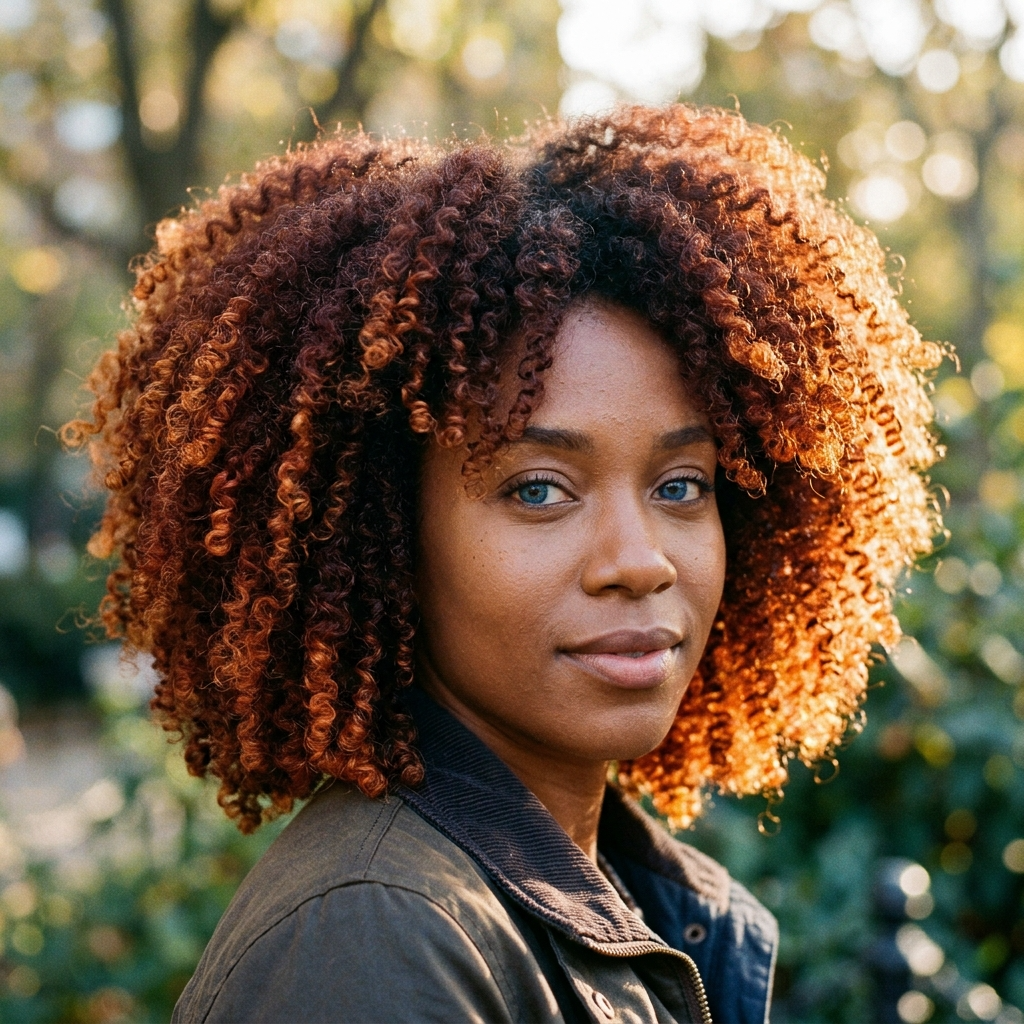
Deep auburn on Type 4 coils, finished with brighter copper concentrated on the ends, creates a glowing halo effect without lightening the entire head. Keeping the strongest lift away from the root protects the most fragile, newest growth.
Coily hair loses moisture faster than straight hair, so any lightening should include a bond builder and a deep conditioning plan. On blue eyes, which are less common with this texture, the warm copper creates especially striking contrast. Twist-outs and wash and gos both show the gradient well.
Best for: dark brown to black, coily (Type 4A–4C), medium to thick density
- Length: 6–12 inches (stretched)
- Maintenance: Medium
- Styling time: 30 min
- Trim every: 12–16 weeks
- Color touch-up: 4–5 months
13. Burgundy Auburn Bombshell Blowout
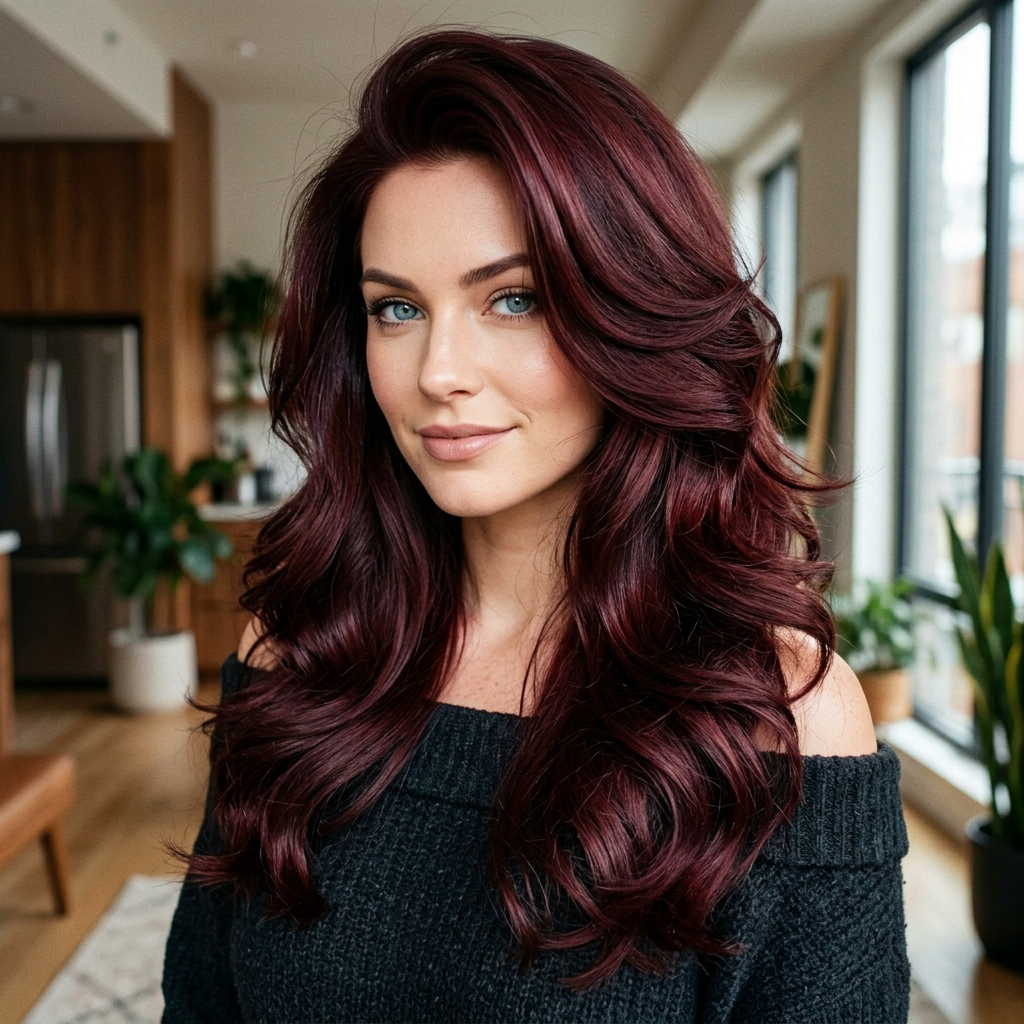
Burgundy auburn pushes the red toward wine, giving a cool, jewel-toned finish that looks luxurious paired with a voluminous blowout. Cool undertones in the shade harmonize with fair-rosy and olive skin alike, and the depth makes light blue eyes look icy.
Thick, long hair supports the big, bouncy barrel curls this style is known for. Burgundy tones fade toward brown red, so a burgundy color depositing conditioner once a week keeps it saturated. Use velcro rollers or a large round brush and a heat protectant for the volume.
Best for: medium to dark brown, straight to wavy, thick density
- Length: 16–26 inches
- Maintenance: High
- Styling time: 35 min
- Trim every: 8–10 weeks
- Color touch-up: 5–6 weeks
14. Copper Ribbon Highlights on Auburn
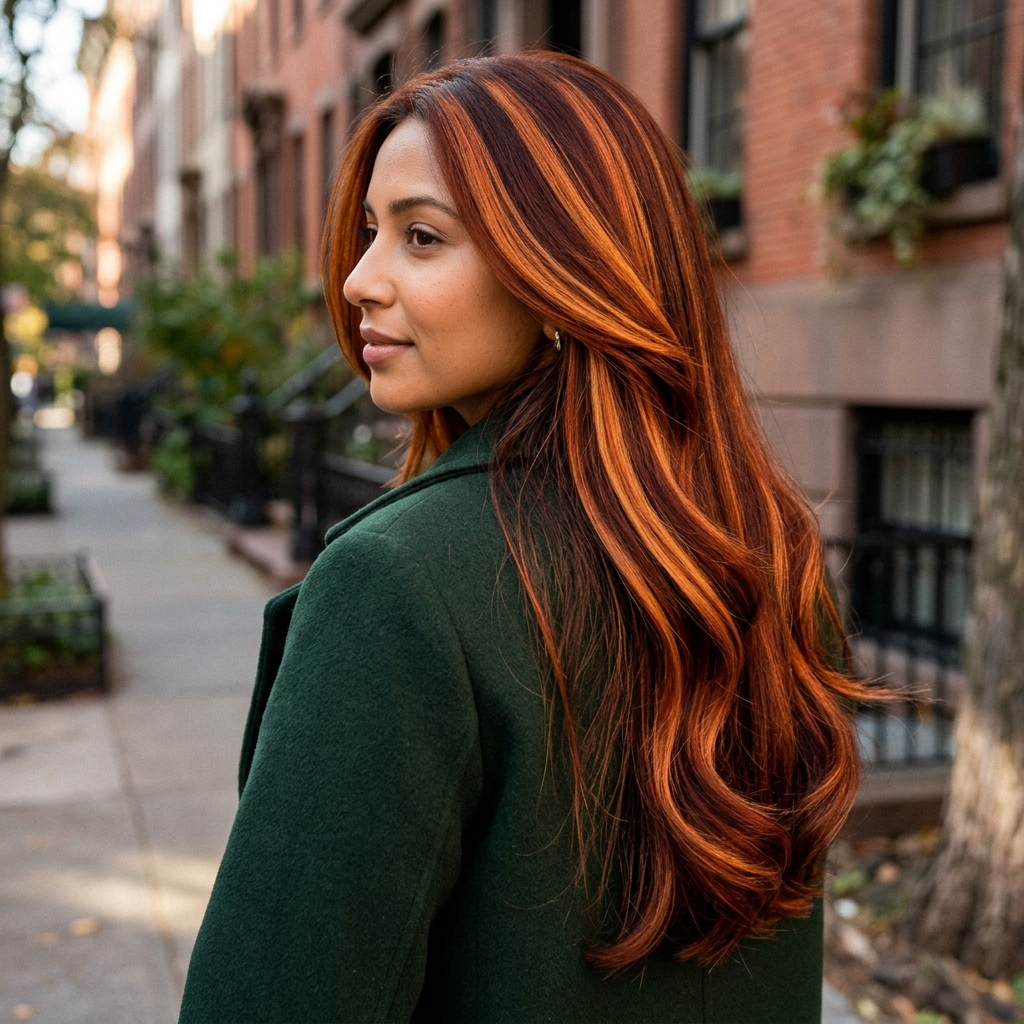
Ribbon highlights are wider, more visible bands of color than babylights, and in bright copper over an auburn base they create bold, flowing stripes of warmth. The look leans retro in a modern way and photographs with strong dimension. Long, straight, thick hair is ideal, because ribbons need smooth length to show their shape.
Warm and neutral skin tones carry the copper best. Because the contrast is higher, regrowth and fading are more noticeable than with balayage. A smooth blowout with a slight bend at the ends lets each ribbon read clearly.
Best for: light to medium brown, straight, medium to thick density
- Length: 16–24 inches
- Maintenance: Medium
- Styling time: 20 min
- Trim every: 8–10 weeks
- Color touch-up: 10–12 weeks
15. Auburn to Strawberry Ombré
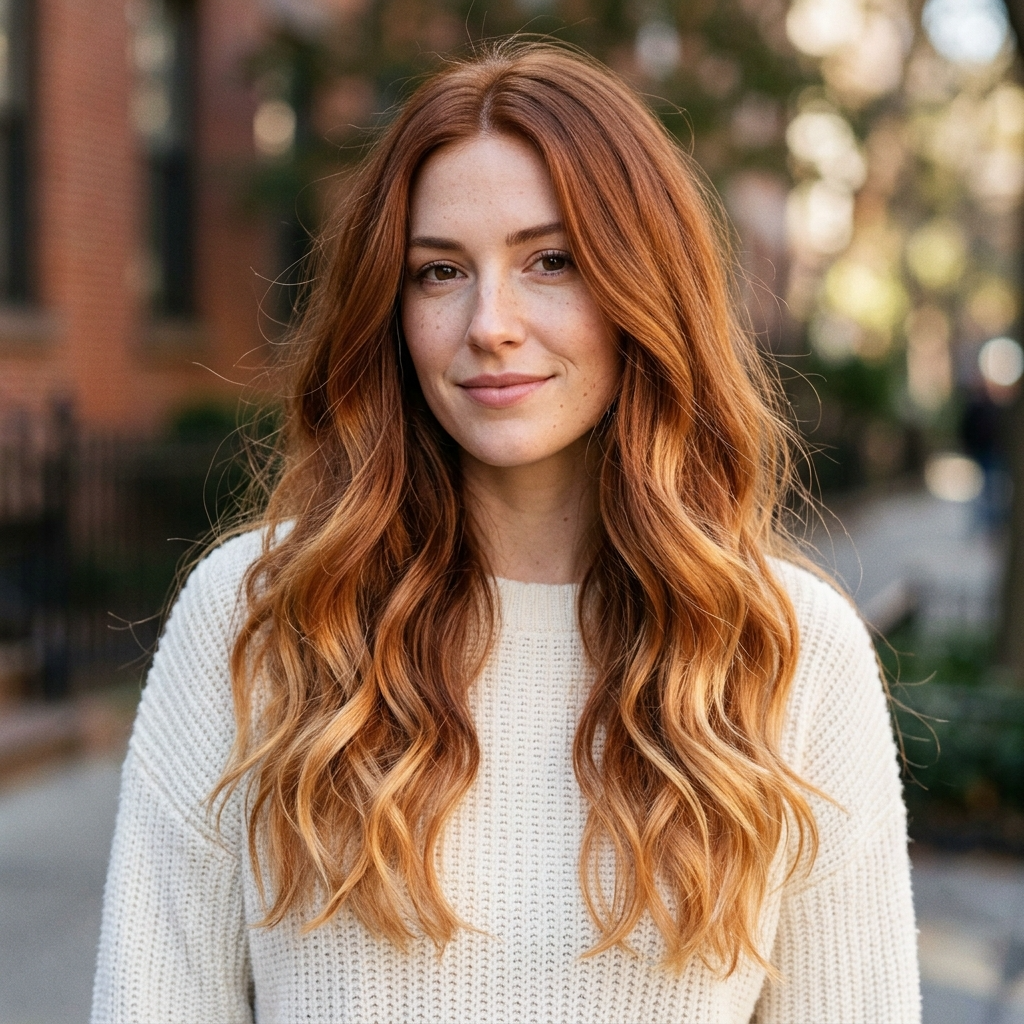
This ombré starts with medium auburn at the root and fades to strawberry blonde at the ends, so the hair literally gets lighter and warmer as it falls. The bright ends sit near the chest and collarbone, adding light to the lower face. Long, wavy hair shows the transition best, and the darker root means grow-out is forgiving.
The lightened ends need extra care: a weekly bond-repair mask and regular trims keep them from turning dry or brassy. Big, loose waves from a 1.5-inch iron display the full gradient.
Best for: light to medium brown, wavy, medium to thick density
- Length: 18–28 inches
- Maintenance: Medium
- Styling time: 20 min
- Trim every: 8 weeks
- Color touch-up: 3–4 months (gloss every 6–8 weeks)
16. Red Velvet Auburn With Mahogany Lowlights
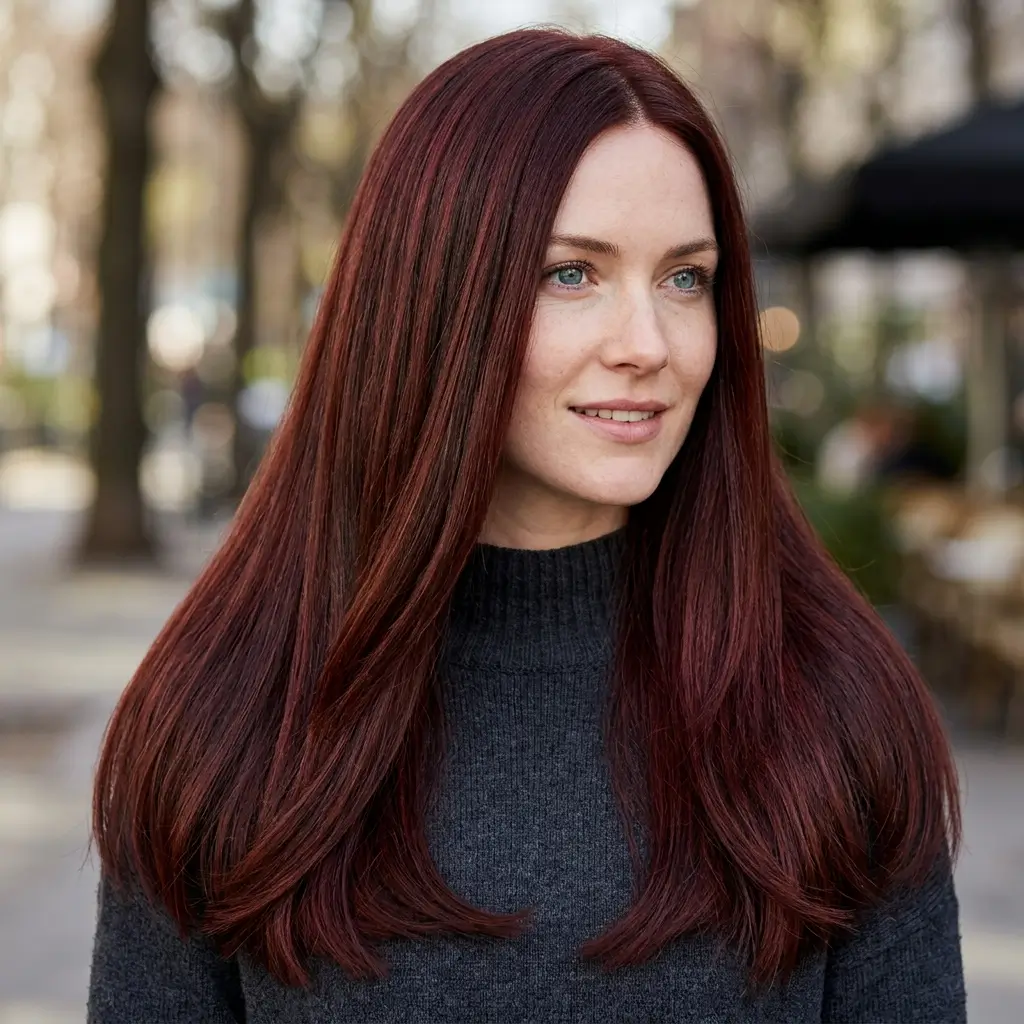
Red velvet auburn is a saturated, almost crimson-brown, and woven mahogany lowlights add depth so the color looks multidimensional instead of flat. The darker pieces also help disguise fading, since lowlights hold their tone longer than bright red.
Thick, long hair has enough volume to show both shades without muddying. On fair skin with blue eyes, this deep red creates dramatic, high contrast color. Cool water rinses and a color depositing gloss keep the red from turning orange. Style with a sleek straight finish to maximize shine.
Best for: medium to dark brown, straight, thick density
- Length: 16–26 inches
- Maintenance: High
- Styling time: 20 min
- Trim every: 8–10 weeks
- Color touch-up: 6–8 weeks
17. Copper Auburn Wolf Cut

The wolf cut blends a shag with a mullet, with heavy crown layers and wispy, longer lengths at the back. In copper auburn, the choppy texture creates flickers of orange-red that look high-energy and fashion-forward.
Wavy hair with medium density works best; very fine hair can look sparse with this much layering. The copper reads boldest on warm undertoned skin and makes blue eyes look vivid. Rough dry with a texturizing spray, then twist a few sections with a flat iron.
Best for: light brown to dark blonde, wavy, medium density
- Length: 8–16 inches
- Maintenance: Medium
- Styling time: 15 min
- Trim every: 6–8 weeks
- Color touch-up: 6–8 weeks
18. Hidden Copper Underlayer (Peekaboo)
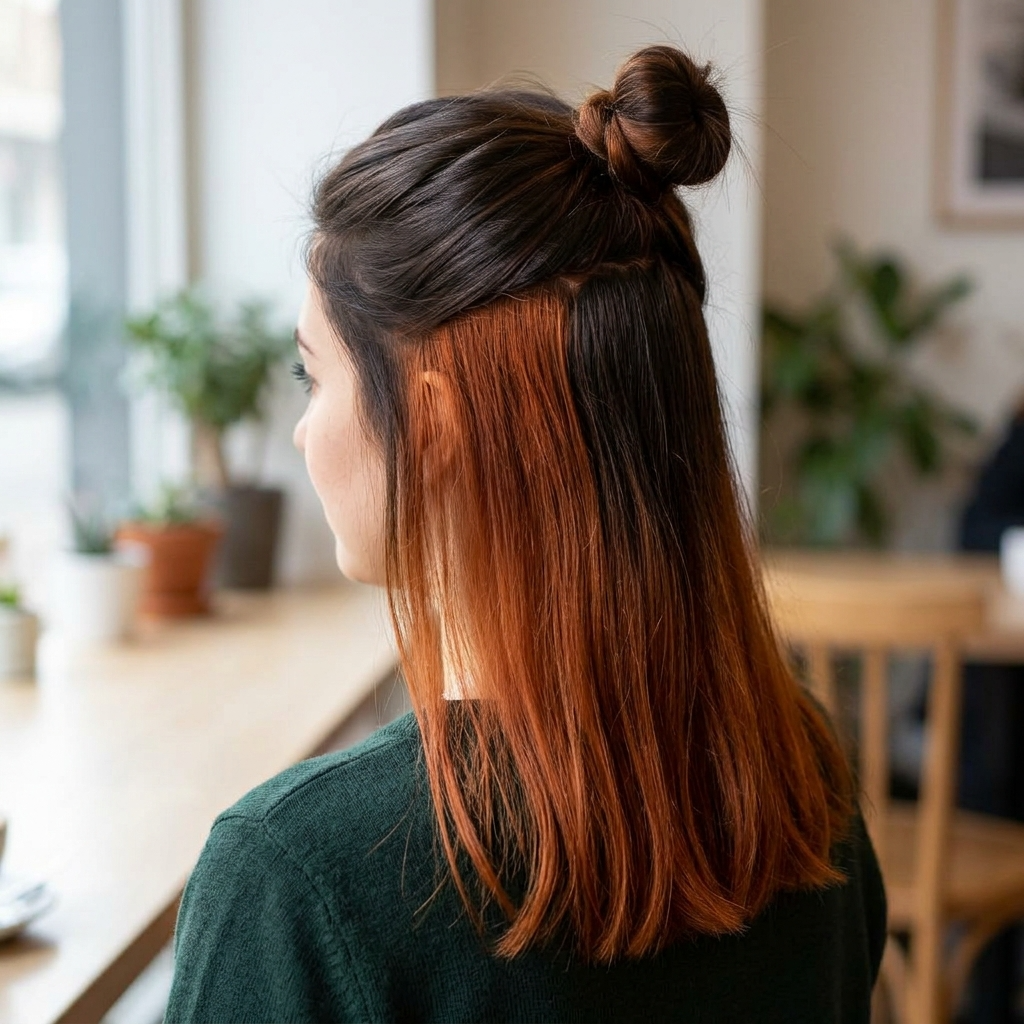
A peekaboo places vivid copper auburn only on the underneath section of hair, so it appears when you move, tie your hair up, or tuck it behind your ears. The top layer stays natural, which keeps the look office friendly. Straight, medium density hair shows the hidden layer most cleanly.
Because the color sits underneath, it is shielded from the sun and fades more slowly than surface color. A half up topknot or high ponytail reveals the copper and puts warmth right at eye level.
Best for: medium to dark brown, straight, medium density
- Length: 12–22 inches
- Maintenance: Low
- Styling time: 10 min
- Trim every: 8–10 weeks
- Color touch-up: 3–4 months
19. Bright Copper Auburn Curly Bob
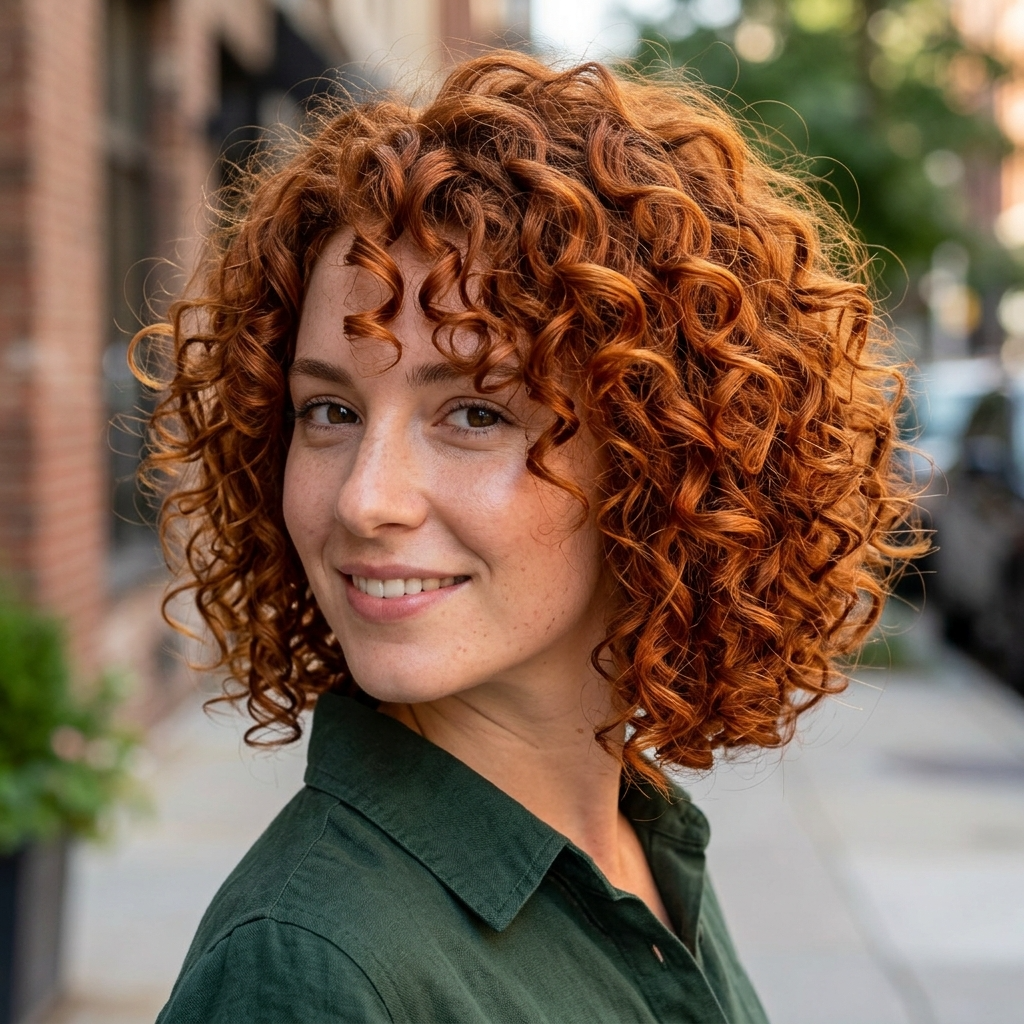
A chin-to-jaw curly bob in bright copper auburn concentrates volume and color around the face. The shorter length keeps curls light enough to spring up rather than stretch out, and the bright shade makes each ringlet distinct.
Type 3 curls with medium density are ideal, and a curl specific cut (dry or curl by curl) prevents an uneven shape. Bright copper fades in 4–6 weeks without care, so sulfate-free shampoo and cool rinses matter. Rake curl gel through wet hair, diffuse, then scrunch out the cast.
Best for: light brown to dark blonde, curly (Type 3A–3C), medium density
- Length: 6–10 inches (stretched)
- Maintenance: High
- Styling time: 25 min
- Trim every: 8–10 weeks
- Color touch-up: 6–8 weeks
20. Full Ginger Copper Auburn
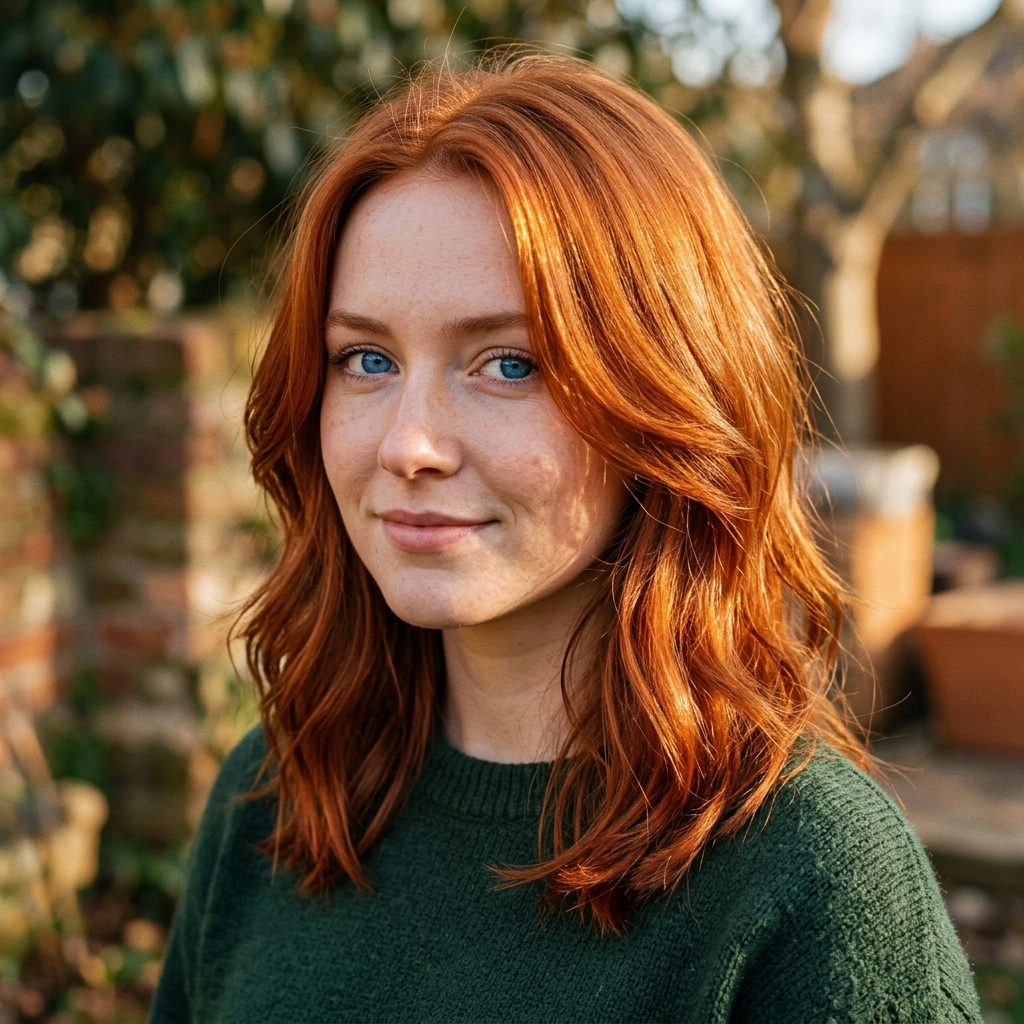
The boldest option is an all-over ginger copper: a vivid orange-red that sits at the brightest end of the auburn spectrum. Since orange is the direct complement of blue, this shade creates the most dramatic eye color contrast on the list. Fair to light skin with warm or neutral undertones carries it most naturally.
Brown hair usually needs lifting first, and maintaining the vibrancy means color-depositing products and glosses on a schedule. Medium-length, softly layered hair in any texture shows it off; finish with a shine serum.
Best for: natural blonde to light brown, straight to curly, fine to medium density
- Length: 12–20 inches
- Maintenance: High
- Styling time: 15 min
- Trim every: 8 weeks
- Color touch-up: 4–6 weeks
Which Auburn Works Best for Fine, Thick, Wavy, Curly, or Coily Hair?
Fine hair looks fullest with lighter, dimensional auburn; thick hair can carry deep, saturated shades; and curly or coily hair does best with hand painted color that limits lightener. Results differ because density, porosity, and curl pattern change how hair absorbs color and reflects light.
- Fine hair: Strands have fewer cuticle layers, so color processes faster and fades sooner. Dimensional shades like babylights or strawberry auburn create the illusion of volume, while very dark all-over red can make the scalp more visible.
- Thick hair: Dense hair can absorb color unevenly and takes longer to process, but it shows multitonal techniques (melts, lowlights, ribbons) clearly without looking sparse.
- Wavy hair: Waves create natural highs and lows, which is why balayage and shags look especially dimensional; the bends hide soft regrowth lines.
- Curly hair (Type 3): Curls are often more porous and dry, so red can grab quickly and fade fast. Pintura placement on individual curls adds brightness where curls spring and reduces overall damage.
- Coily hair (Type 4): Coils are the most fragile when lightened. Keeping lift on mid-lengths and ends, using bond builders, and choosing deeper auburns that need less lift protects curl pattern and strength.
How Do I Care for Auburn Hair at Home?
Keeping auburn bright comes down to four things: fewer washes, cooler water, UV and heat protection, and regular color deposits between salon visits.
- Wait 48–72 hours before the first wash after coloring, so the cuticle has time to close around the new pigment.
- Switch to a sulfate-free, color-safe shampoo and wash 2–3 times a week at most, using dry shampoo between washes.
- Rinse with cool or lukewarm water. Hot water swells the cuticle and lets red molecules escape faster.
- Use a color-depositing conditioner or mask in copper, red, or burgundy once a week to replace pigment lost in the shower.
- Apply a heat protectant every time you blow-dry, curl, or straighten; high heat can shift red toward orange and dull shine.
- Protect from sun and chlorine. Wear a hat or UV-protective hair spray outdoors, and wet hair with clean water before swimming.
- Book a gloss or toner every 6–8 weeks to restore saturation and shine without a full color service.
How Do I Grow Out or Transition Away From Auburn?
The easiest way to grow out auburn is to soften the contrast gradually: add a root smudge, introduce lowlights close to your natural shade, and let glosses get progressively less red over 2–3 appointments.
Auburn fades in a predictable way, moving from rich red toward copper and then a warm, brassy brown. Rather than fighting that fade, use it. Ask for a demi-permanent gloss closer to your natural color, so each visit nudges the overall tone back toward your base. Brown lowlights through the lengths help visible regrowth look like intentional dimension.
Regular trims every 8–10 weeks remove the most faded, porous ends, which are usually the brassiest. If you want to go lighter rather than back to brown, know that red pigment is the hardest to lift; plan on several gentle lightening sessions instead of one aggressive appointment.
Frequently Asked Questions About Auburn Hair and Blue Eyes
Does auburn hair make blue eyes stand out?
Yes, auburn usually makes blue eyes look brighter because its red-orange base is the complementary color to blue. Copper and ginger auburns create the strongest contrast, while deeper mahogany shades make pale blue eyes look icier.
What shade of auburn is best for a blue eyed girl with fair skin?
Strawberry auburn and soft copper are usually the most flattering choices for fair skin and blue eyes. Lighter reds keep the overall look soft, while very dark or saturated reds can overpower pale skin and emphasize redness or under-eye shadows.
Is auburn hair high maintenance?
Auburn can be moderate to high maintenance because red pigment fades faster than most hair colors. Low-commitment versions like root-smudged balayage need a full service only every 4–5 months, but nearly all auburn benefits from a gloss every 6–8 weeks.
Can brunettes go auburn without bleach?
Yes, many brunettes can go auburn without bleach if the target shade is within one or two levels of their natural color. A demi-permanent gloss or permanent color can add red tones to medium brown hair, while lighter copper or strawberry shades on dark hair usually require lightener.
How long does auburn hair color last?
Permanent auburn color typically looks vibrant for 4–6 weeks before noticeable fading, while a demi-permanent gloss lasts about 4–6 weeks total. Washing less often, using cool water, and applying color-depositing conditioner can extend the vibrancy.
What is the difference between auburn and copper hair?
Auburn is a reddish-brown, while copper is a brighter orange-red with little brown. Copper sits at the warm, vivid end of the auburn family, so all copper reads as auburn-adjacent, but classic auburn is deeper and more muted.
Does auburn hair work with cool skin tones?
Auburn works with cool skin tones when the shade leans toward mahogany, burgundy, or cool deep auburn. These violet-red versions harmonize with pink undertones, whereas orange-leaning copper can make cool skin look ruddy.
Why does my auburn hair turn brassy or orange?
Auburn turns brassy when the red pigment fades and exposes the warm orange undertones underneath. Heat styling, hot water, sun exposure, and sulfate shampoos speed this up; a red or copper gloss restores the intended tone.
Your Auburn Shortcut
For auburn hair and blue eyes, the easiest entry into red is a sheer auburn gloss or root-smudged balayage. If you want the strongest blue-eye contrast, go copper or full ginger. Cool, rosy skin should look at mahogany and burgundy, and curls or coils will thank you for hand-painted placement. Whatever you choose, budget for glosses, since red rewards upkeep.
Save your favorite looks to a Pinterest board to bring to your next appointment, and explore more color guides from Hairstyle Inspirations as you plan your next shade.