
20 Chin Length Haircuts for Women Over 50 That Look Fresh and Youthful

Your hair has changed, and the cut you’ve worn for ten years may not suit it anymore. After 50, many women find their strands getting finer, drier, or wirier as gray grows in. Longer lengths can also start to pull the face downward. Chin length haircuts for women over 50 fix several of these problems at once. The line sits at the jaw and draws the eye up toward the cheekbones. It also makes thinning ends look denser and healthier, and it cuts morning styling time in half.
At Hairstyle Inspirations, we’ve put together 20 chin-length cuts for 2026. They cover straight, wavy, curly, and coily textures, plus fine and thick hair. Each one comes with realistic notes on upkeep, so you can choose with confidence instead of guessing in the salon chair.
Quick Overview: Choosing a Chin Length Cut After 50
- Best for fine or thinning hair: A blunt or stacked bob. One solid perimeter makes the ends look thicker than layers do.
- Best for thick, heavy hair: A layered bob with internal debulking, or a hidden nape undercut. Both remove weight without making the cut look choppy.
- Lowest maintenance: The feathered shag bob and the tousled wavy bob. They grow out softly and forgive a missed trim.
- Best for curls and coils: A rounded curly bob for Type 3 curls, or a tapered coily bob for Type 4 hair. Cut both dry or stretched to account for shrinkage.
- Trim frequency: Every 5–6 weeks for precision bobs. Every 8–10 weeks for shaggy, layered, or curly shapes.
- Color touch-up timing: Every 4–6 weeks for full gray coverage. Every 3–4 months for gray blending with babylights or lowlights. Never, if you wear your natural silver.
What Is a Chin-Length Haircut?
A chin-length haircut is any cut whose main perimeter falls between the earlobe and the bottom of the chin. For most adults, that is roughly 8 to 10 inches from the part to the ends at the sides of the face. Most are bobs, but the category also includes shag bobs, bixies, and tapered curly shapes that frame the jaw without exposing the full neck.
A chin-length cut sits in a useful middle ground. It is longer than a pixie, so you can still tuck it behind your ears, wear it sleek, or add waves. It is also shorter than a lob (long bob), which grazes the collarbone. Lobs can look heavy on thinning hair, and the chin-length line avoids that.
The line matters even more after 50. When hair ends at the jaw, the eye lands at the cheekbones and lips rather than the neck. A clean perimeter also hides the see-through ends that often show up as density drops with age or hormonal changes.
Note on the lengths below: each length is measured from the part to the ends along the side of the face. For curly and coily hair, it refers to stretched length, so expect the dry shape to sit shorter.
20 Chin Length Haircuts for Women Over 50
1. Stacked Chin Bob with Graduated Nape
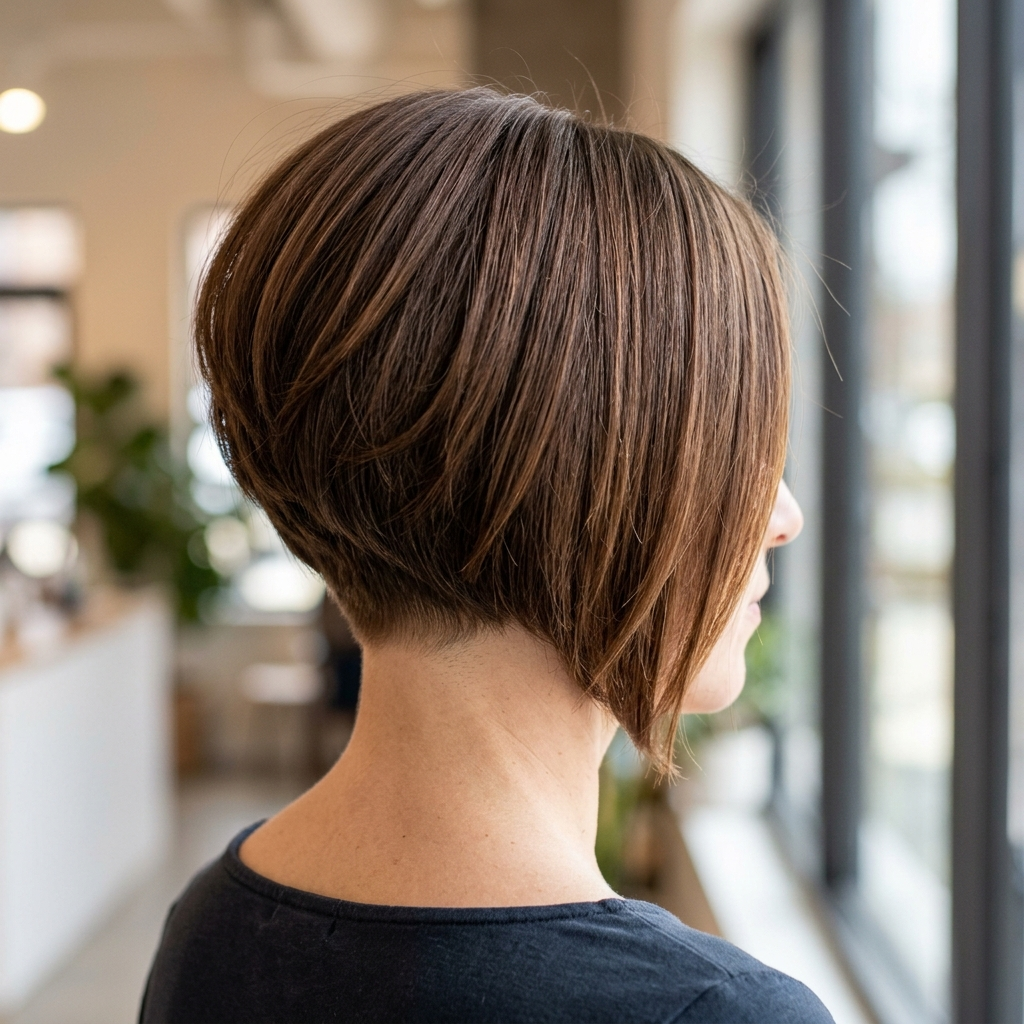
The back is cut in tight, stacked layers that build volume at the crown. The sides then fall forward to the chin. Because of that structure, the hair looks lifted even on days you barely touch it. That makes it one of the most reliable options for fine, flat hair that collapses by noon.
The graduation hugs the neck, so the profile looks clean from every angle. On straight hair, the stack stays sharp and polished. On a slight wave, it softens into something more relaxed. To style, blow-dry with a round brush at the crown, lifting at the roots. Smooth the front pieces forward with a paddle brush.
Best for: fine to medium straight hair, any color
- Length: 7–9 inches
- Maintenance: Medium
- Styling time: 10 min
- Trim every: 5–6 weeks
- Color touch-up: 4–6 weeks for full coverage; none for natural gray
2. Chin-Length Bixie with Wispy Fringe

A bixie blends a pixie and a bob. The back and sides are shorter and textured, and the front pieces stretch longer to brush the chin. The wispy fringe falls loosely over the forehead and softens lines without the commitment of heavy bangs.
This cut suits women who want something lighter than a full bob but aren’t ready for a true pixie. It looks especially fresh on silver or salt-and-pepper hair, where the choppy texture shows off the natural color variation. Work a pea-size amount of texture paste through dry hair and pinch the ends apart for separation.
Best for: fine to medium hair, straight or slightly wavy
- Length: 5–9 inches (shorter at the back, longest at the front)
- Maintenance: Medium
- Styling time: 5–10 min
- Trim every: 5–7 weeks
- Color touch-up: 6–8 weeks for coverage; none for natural gray
3. Jaw-Grazing Blunt Bob

This is the classic: one even line cut straight across at the jawbone, with no visible layers. The blunt perimeter makes fine or thinning hair look about twice as thick, because every strand ends in the same place. It reads as tailored and modern, especially on sleek, straight hair with a fresh gloss for shine.
The downside is that it shows every millimeter of growth, so regular trims keep it crisp. If your hair is thick, ask for a little internal texturizing so the shape doesn’t puff into a triangle. Flat-iron the ends slightly under, or leave them straight for a sharper finish.
Best for: fine, thin, or medium straight hair
- Length: 8–9 inches
- Maintenance: Medium
- Styling time: 10–15 min
- Trim every: 5–6 weeks
- Color touch-up: 4–6 weeks; a clear gloss every 6–8 weeks for shine
4. Soft A-Line Bob

In an A-line bob, the back sits slightly shorter than the front, but only by about half an inch to an inch. That keeps the angle gentle rather than dramatic. The front pieces dip just below the chin and frame the face, while the back stays neat at the neck.
It suits women who want a polished shape that still moves naturally. The subtle slope gives a lifted look along the jaw, which is flattering if that area has softened. On medium-density hair, the angle shows best when blow-dried smooth. On wavy hair, it relaxes into a softer outline.
Best for: medium-density straight or slightly wavy hair
- Length: 8–10 inches
- Maintenance: Medium
- Styling time: 10–15 min
- Trim every: 6–7 weeks
- Color touch-up: 4–6 weeks for coverage
5. Inverted Bob with Dimensional Lowlights
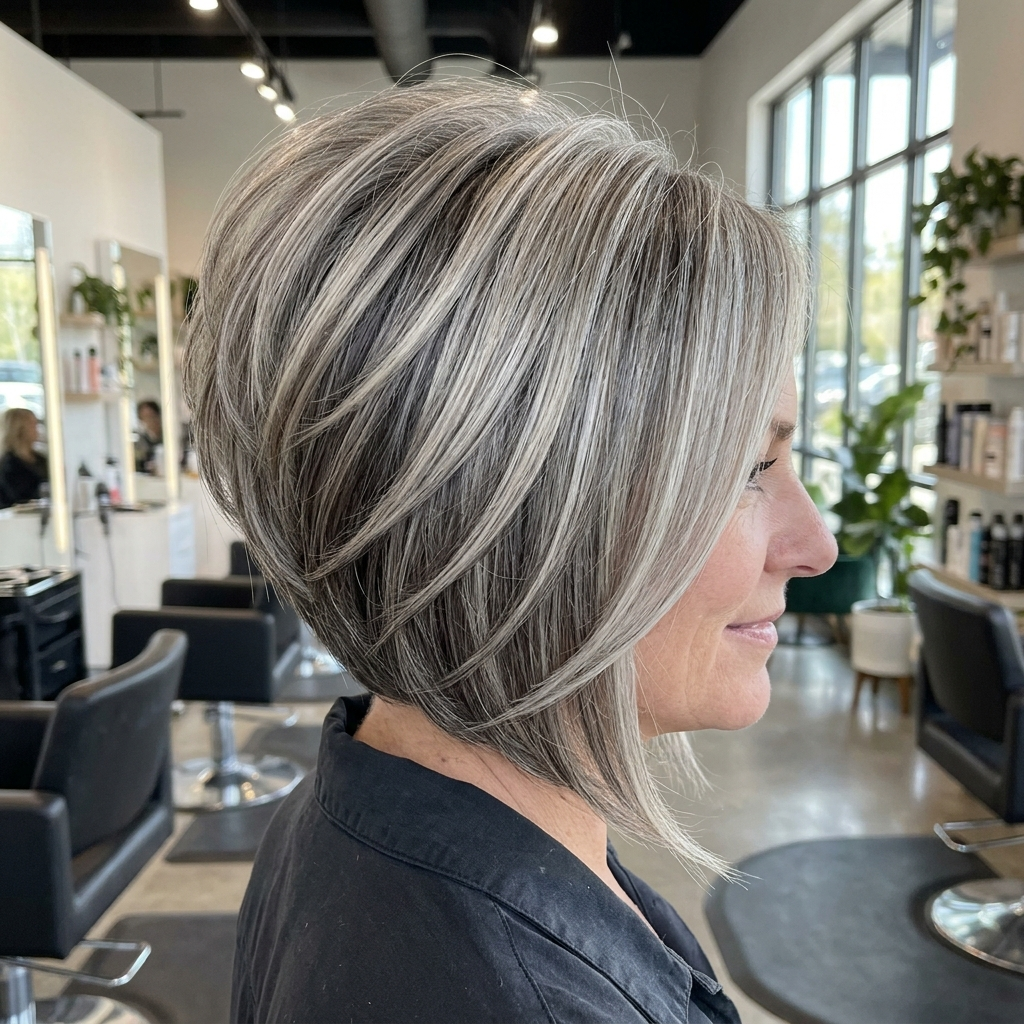
An inverted bob takes the A-line further. The back is stacked shorter and higher, and the front angles down sharply to the chin. Adding lowlights a shade or two darker than your base creates depth, so the stack looks fuller and the shape reads clearly even in photos.
Lowlights also help women going gray who want a softer, more lived-in blend instead of solid coverage. The stacked crown adds height, and the long front pieces draw the eye down to the cheekbones. Blow-dry the back with a small round brush for lift, then smooth the front straight.
Best for: medium to thick straight hair, especially blonde, light brown, or gray-blended bases
- Length: 6–10 inches (back to front)
- Maintenance: High
- Styling time: 15 min
- Trim every: 5–6 weeks
- Color touch-up: 10–12 weeks for lowlights
6. Side Swept Deep Part Bob

Moving your part an inch or two off-center changes the whole silhouette. The heavier side sweeps across the forehead and lifts at the root, which adds instant volume to fine hair. The lighter side tucks neatly behind the ear.
The cut itself is a simple chin-length bob, so the styling does most of the work. It is an easy choice if you want something classic and graceful that also hides a thinning part line. Blow-dry the roots against the direction you plan to wear them, then flip them over for extra height.
Best for: fine to medium hair, straight or with a gentle bend
- Length: 8–10 inches
- Maintenance: Low
- Styling time: 10 min
- Trim every: 6–8 weeks
- Color touch-up: 4–6 weeks; root touch-up spray between visits
7. French Bob with Brow-Skimming Bangs

The French bob sits a touch shorter than the chin, often near the lip line or just below the cheekbone. It pairs with straight-across bangs that skim the eyebrows. The look is effortless and a little artistic. The ends are left slightly undone rather than perfectly blunt.
Bangs work beautifully after 50 because they soften forehead lines and draw attention to the eyes. This cut suits straight to slightly wavy hair with some natural body. Very curly hair tends to make the bangs spring up too short. Air-dry with a light cream, then smooth just the bangs with a small brush.
Best for: fine to medium straight or slightly wavy hair, oval or heart-shaped faces
- Length: 7–8 inches
- Maintenance: Medium
- Styling time: 5–10 min
- Trim every: 6–8 weeks (bangs every 3–4 weeks)
- Color touch-up: 4–6 weeks
8. Curtain Bang Chin Bob

Curtain bangs part down the middle and sweep outward toward the cheekbones. They frame the face without covering the forehead the way full bangs do. Paired with a chin-length bob, they create a soft, face-framing V. That shape highlights the eyes and cheekbones and blends easily into the rest of the cut as it grows.
It is a good first step for anyone nervous about bangs, since they can be pinned back or tucked away. Round-brush the bangs back and away from the face, or use a large Velcro roller for 10 minutes.
Best for: medium-density straight or wavy hair, round or square faces
- Length: 8–10 inches
- Maintenance: Medium
- Styling time: 10–15 min
- Trim every: 6–8 weeks (bangs every 4–5 weeks)
- Color touch-up: 4–6 weeks
9. Wispy Side Bang Bob

Long, feathery side bangs cross the forehead at an angle and blend into the chin-length perimeter. The angle softens a strong jaw, a wide forehead, or a prominent cowlick. The wispy ends keep the fringe light, so it doesn’t sit heavily against the skin, which matters for anyone who wears glasses.
This style feels softer and more romantic than a sharp bob, and it works on fine hair as long as the bangs stay sparse. Blow-dry the bangs to the side with a flat brush, then mist with flexible hairspray.
Best for: fine to medium straight hair, square or long faces, glasses wearers
- Length: 8–10 inches
- Maintenance: Medium
- Styling time: 10 min
- Trim every: 6–8 weeks
- Color touch-up: 4–6 weeks
10. Sleek Center Part Glass Bob
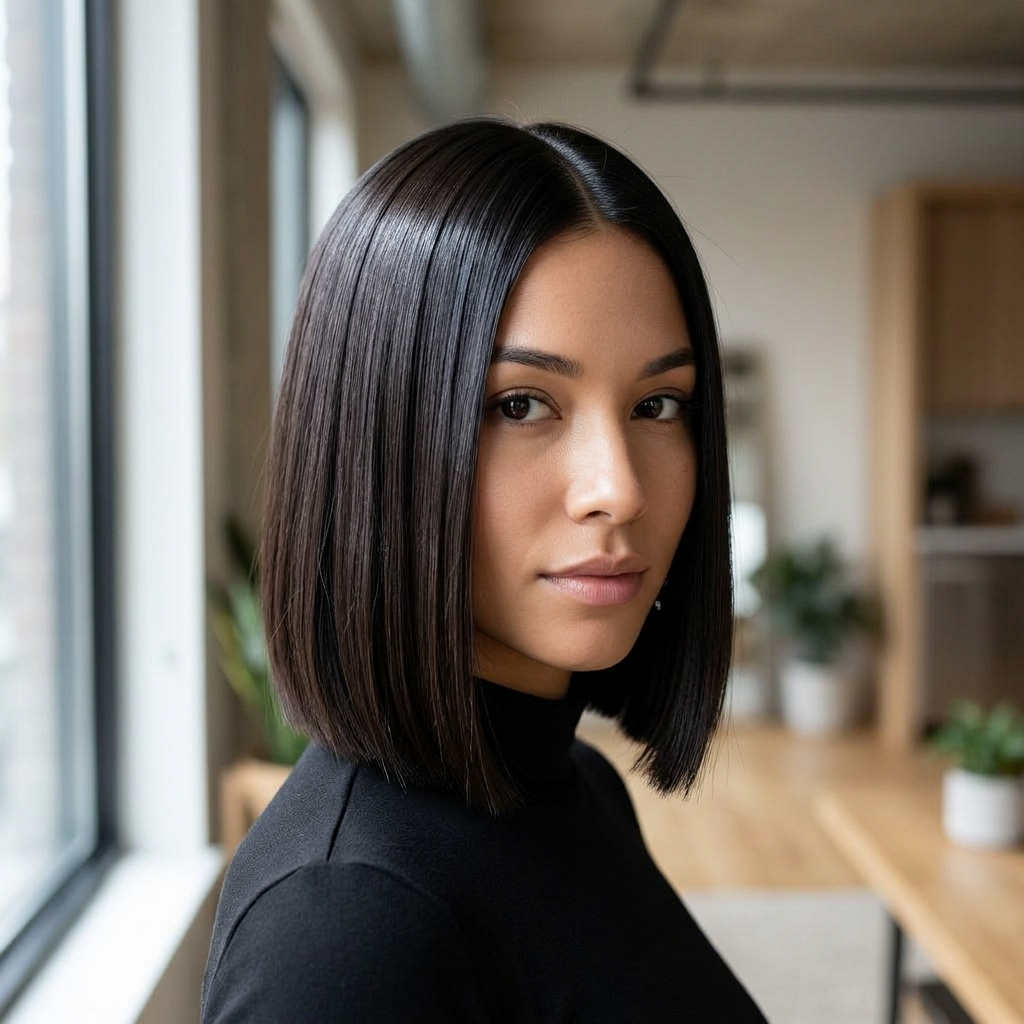
A “glass” bob is cut blunt, parted precisely down the center, and flat-ironed until it reflects light like a mirror. It is the most polished option on this list. On silver, platinum, or deep espresso hair, the shine becomes the main feature.
It suits women with straight, healthy hair who enjoy a sharp, modern finish and don’t mind a few minutes with a flat iron. A center part highlights face symmetry, so it is especially flattering on oval faces. Use a heat protectant, flat-iron in thin sections, and finish with a drop of lightweight shine serum.
Best for: medium to thick straight hair in good condition
- Length: 8–9 inches
- Maintenance: High
- Styling time: 15–20 min
- Trim every: 5–6 weeks
- Color touch-up: 4–6 weeks; gloss every 6–8 weeks
11. Feathered Shag Bob

The shag bob uses short, feathered layers throughout the crown and face, so the hair moves with every turn of the head. The shaggy texture hides uneven density and cowlicks. It also grows out gracefully, which makes it one of the easiest chin-length cuts to live with.
It has a relaxed, 1970s-inspired feel without looking costume-like. On wavy hair, the layers spring into natural texture. On straight hair, a little sea-salt spray gives the same piecey effect. Scrunch in mousse and diffuse, or rough-dry and finish with a flat iron flick at the ends.
Best for: medium to thick hair, straight or wavy
- Length: 7–10 inches
- Maintenance: Low
- Styling time: 5–10 min
- Trim every: 8–10 weeks
- Color touch-up: 6–8 weeks; longer with gray blending
12. Choppy Point Cut Bob

Point cutting means the stylist snips into the ends vertically instead of straight across. The result is a broken-up, textured edge rather than a hard line. On a chin-length bob, the edge looks modern and slightly edgy, and the light ends keep thick hair from looking boxy.
It sits between the precision of a blunt bob and the full movement of a shag. That makes it a smart middle choice for women who want texture without lots of layers. Finish with dry texture spray and twist a few random pieces for definition.
Best for: medium to thick straight or slightly wavy hair
- Length: 8–9 inches
- Maintenance: Low to Medium
- Styling time: 5–10 min
- Trim every: 6–8 weeks
- Color touch-up: 6–8 weeks
13. Tousled Wavy Bob with Root Smudge

Loose, bent waves through a chin-length bob create a carefree, lived-in shape. A root smudge, where the stylist blends a shade close to your natural color at the scalp, means regrowth melts in rather than showing a stark line. That pairing makes this one of the lowest-commitment color options for women whose gray is coming through.
The cut itself has light, long layers so the waves don’t stack into a pyramid. Create waves with a 1-inch curling wand, leaving the last inch straight, then brush through with your fingers.
Best for: fine to medium straight or naturally wavy (Type 2) hair
- Length: 8–10 inches
- Maintenance: Low
- Styling time: 10–15 min
- Trim every: 8–10 weeks
- Color touch-up: 3–4 months with a root smudge
14. Rounded Curly Bob (Type 3 Curls)

Type 3 curls get their best shape when the cut is done curl by curl, ideally on dry hair. Each ringlet is shaped where it naturally falls, which creates a rounded silhouette rather than a flat top with a wide base. At chin length, the curls frame the face in a soft, full halo.
Curls often loosen or change pattern after menopause. Cutting dry lets your stylist work with the texture you have now, not the one you had at 35. Apply curl cream and gel to soaking-wet hair, scrunch, and diffuse on low heat without touching until dry.
Best for: Type 3A–3C curls, medium to thick density
- Length: 9–11 inches stretched (sits at the chin when dry)
- Maintenance: Medium
- Styling time: 15–20 min
- Trim every: 10–12 weeks
- Color touch-up: 8–10 weeks; use demi-permanent color to limit dryness
15. Tapered Coily Chin Bob (Type 4)

This cut keeps the sides and nape slightly shorter and leaves more length on top and at the front. The result is a coily shape that lands near the chin and frames the face. Tapering stops Type 4 hair from expanding outward into a wide triangle.
Because coils can shrink 50% or more of their stretched length, the cut should be shaped on stretched or blown-out hair. A twist-out or a wash-and-go with a defining gel both work well. Seal moisture with a leave-in and a light oil, and sleep on a satin pillowcase to keep definition.
Best for: Type 4A–4C coily hair, medium to thick density
- Length: 9–12 inches stretched (chin-length when coiled)
- Maintenance: Medium
- Styling time: 20–30 min (wash day); 5 min refresh
- Trim every: 10–12 weeks
- Color touch-up: 8–10 weeks; deep condition every color visit
16. Chin Bob with Hidden Nape Undercut
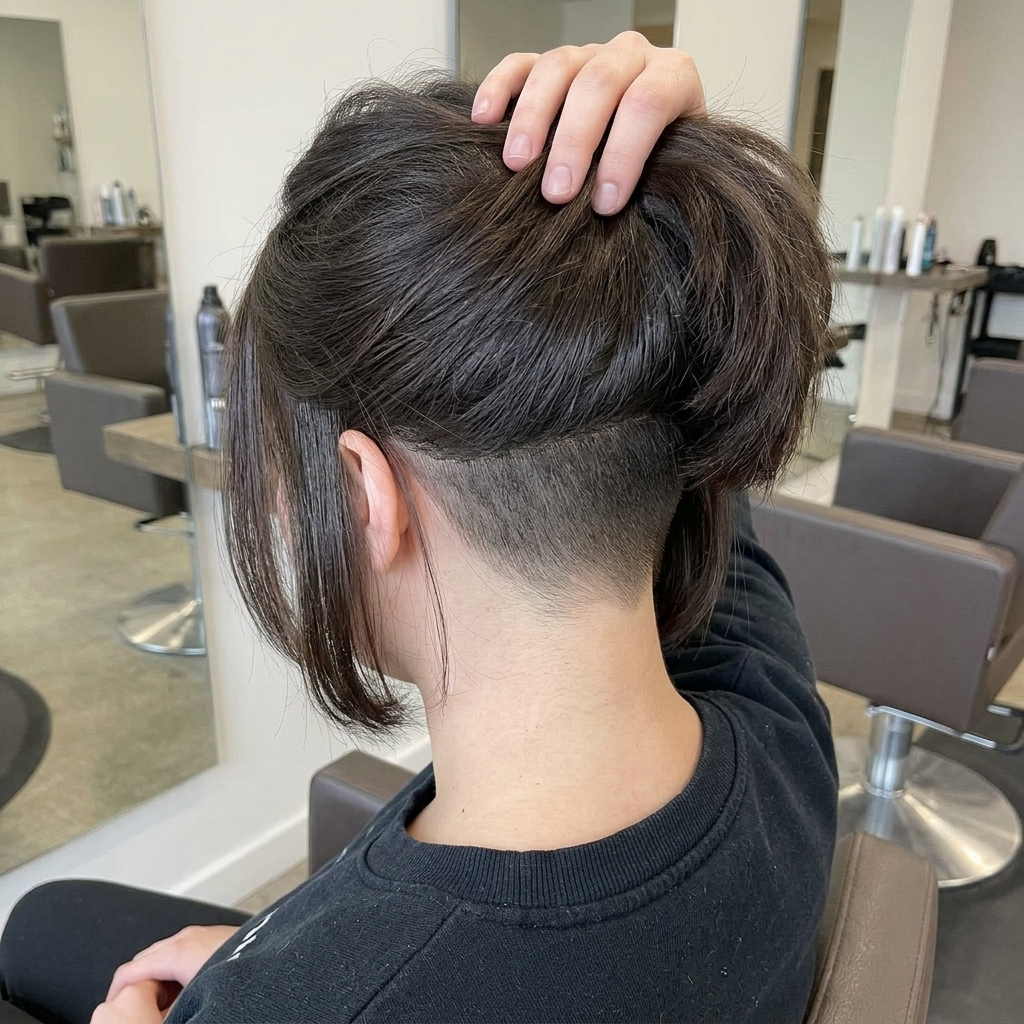
For very thick hair, a hidden undercut is the most effective way to remove bulk. The stylist clippers a small section at the nape, under the top layer. With the hair down, nobody sees it, and the bob lies flat and smooth against the neck.
Lift the hair into a clip and a short, sleek section shows underneath, which is a playful surprise. It dries much faster and stays lighter in warm weather. Keep the undercut tidy with a quick clipper cleanup every 3–4 weeks.
Best for: very thick, coarse, or dense straight to wavy hair
- Length: 8–10 inches (undercut area ¼–½ inch)
- Maintenance: Medium
- Styling time: 10 min
- Trim every: 6–8 weeks; undercut cleanup every 3–4 weeks
- Color touch-up: 6–8 weeks
17. Silver Blonde Bob with Face-Framing Babylights
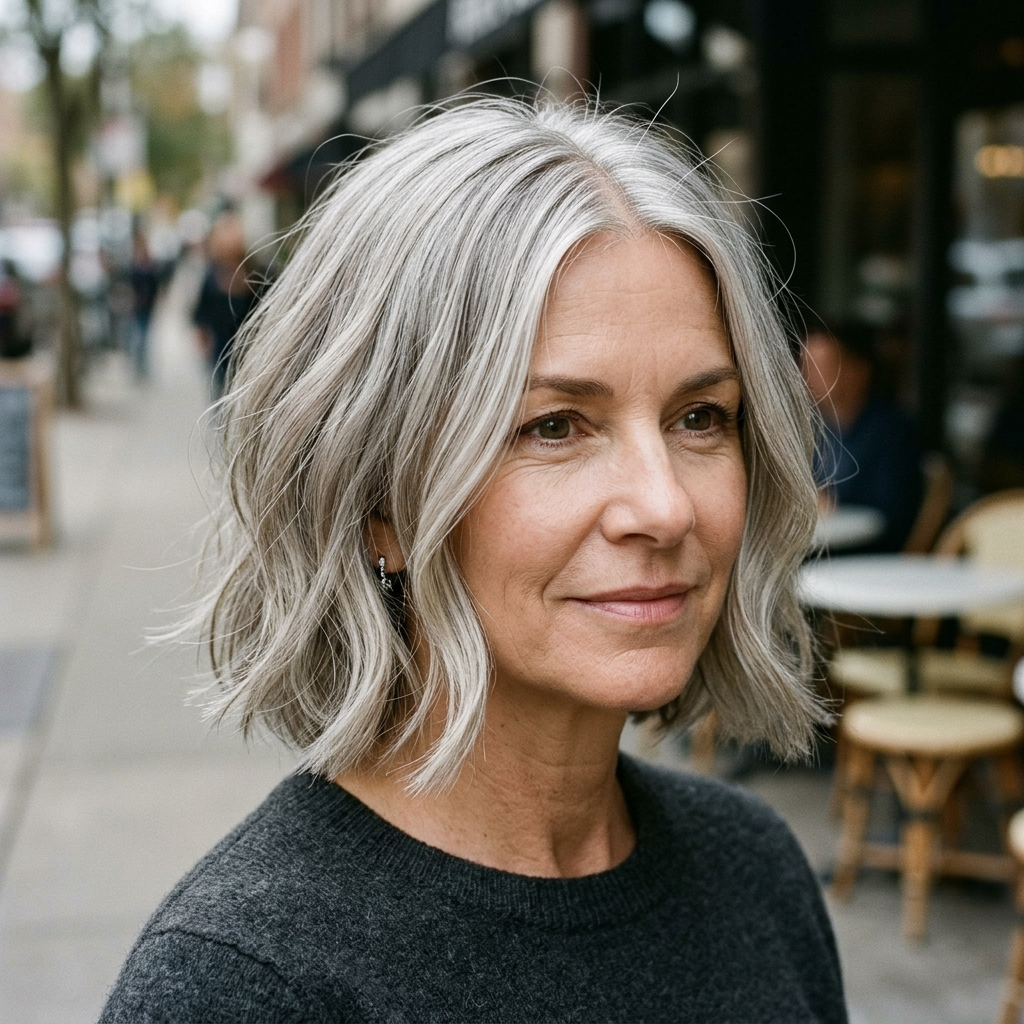
Ultra-fine babylights in silver, pearl, or icy blonde are woven around the face and part line. They blend naturally with incoming gray, so regrowth looks soft rather than stripy. It is one of the most flattering ways to transition away from full coverage.
The brightness near the face also lifts the complexion. Cool silver tones tend to suit cool or neutral skin undertones. Warm skin often looks better with beige or champagne blonde. A purple shampoo once a week keeps brassiness away.
Best for: light brown, dark blonde, or gray-blended bases; any straight to wavy texture
- Length: 8–10 inches
- Maintenance: Medium
- Styling time: 10 min
- Trim every: 6–8 weeks
- Color touch-up: 3–4 months; toner every 6–8 weeks
18. Italian Bob with Bouncy Volume

The Italian bob is fuller and slightly longer than most bobs here. It hits right at or just below the chin, with thick, blunt ends and a big, bouncy blowout. The look is glamorous and confident, and it gives fine hair noticeable body when you style it with volume at the roots.
It photographs well and reads as grown-up rather than trendy. Apply volumizing mousse at the roots, blow-dry with a large round brush, and set the front in a couple of rollers while you do your makeup.
Best for: medium to thick hair; fine hair with volumizing products
- Length: 9–11 inches
- Maintenance: Medium
- Styling time: 15–20 min
- Trim every: 6–8 weeks
- Color touch-up: 4–6 weeks
19. Asymmetrical Chin Bob

In an asymmetrical bob, one side lands at the chin and the other sits an inch or two shorter, near the cheekbone. The deliberate imbalance adds sharp, architectural edge. It suits women who like their hair to make a statement and enjoy a slightly fashion-forward look.
The uneven line also draws attention away from a fuller lower face. It shows most clearly on sleek straight hair. On waves, it softens into something subtler. Flat-iron for maximum effect, and keep the part on the longer side.
Best for: medium to thick straight hair, round or square faces
- Length: 7–10 inches (short side to long side)
- Maintenance: High
- Styling time: 10–15 min
- Trim every: 5–6 weeks
- Color touch-up: 4–6 weeks
20. Warm Copper Chin Bob

The boldest idea on the list pairs a classic chin bob with a rich copper or cinnamon-copper shade. Warm reds can make the skin look brighter and add warmth that fades with age. They also blend surprisingly well over gray, since lighter strands pick up the copper more brightly and look like natural highlights.
Copper flatters warm and neutral undertones most. Cool undertones may prefer a deeper auburn with a red-violet hint. The tradeoff is fading: red molecules wash out faster than other shades, so gloss visits matter.
Best for: medium to thick straight or wavy hair; light brown, blonde, or gray bases
- Length: 8–10 inches
- Maintenance: High
- Styling time: 10 min
- Trim every: 6–8 weeks
- Color touch-up: 6–8 weeks; color-depositing conditioner weekly
How Do I Choose the Right Chin-Length Haircut After 50?
Choose based on your density first, then your styling time and color plan. Fine hair looks fullest in blunt or stacked bobs. Thick hair needs layers or debulking. If you have 5 minutes in the morning, pick a shag or wavy bob. If you enjoy a flat iron, a glass or asymmetrical bob will reward the effort.
Next, look at your face and features. Bangs, whether curtain, side-swept, or straight across, soften forehead lines and draw focus to the eyes. A line that hits right at the jaw sharpens a softening jawline. A cut that ends slightly below the chin, like the Italian bob, is more forgiving on longer faces.
Then factor in color. Full gray coverage means salon or at-home visits every 4–6 weeks. Gray blending with babylights, lowlights, or a root smudge stretches that to 3–4 months. Keeping your natural silver removes color upkeep entirely, though a gloss every couple of months keeps gray from looking dull or yellow. For tone, cool undertones (veins look blue, silver jewelry flatters) usually suit ash, silver, and cool brown. Warm undertones suit copper, golden, and beige shades.
Finally, consider budget. Precision cuts like blunt, inverted, and asymmetrical bobs need trims every 5–6 weeks to keep their lines. Shaggy and curly cuts can go 8–12 weeks.
Which Chin-Length Cut Works Best for Fine, Thick, Wavy, Curly, or Coily Hair?
Fine hair does best with blunt or stacked shapes, thick hair needs weight removed, and textured hair needs cutting that accounts for its natural pattern and shrinkage. The same cut can look completely different on two women because density and texture change how the ends sit and how much volume builds.
- Fine hair: Layers remove weight that fine hair can’t afford to lose. Every layer makes the ends wispier. A solid perimeter, as in the blunt, stacked, or French bob, keeps the ends dense. Volume should come from styling at the root, not from heavy layering.
- Thick hair: Without internal thinning, thick hair at chin length tends to puff into a triangle. Point cutting, internal layers, or a hidden undercut remove bulk from inside the shape while the outline stays smooth.
- Wavy hair (Type 2): Waves need a little room to bend, so very blunt cuts can look stiff. Light, long layers in a shag or tousled bob let the waves form without stacking up at the bottom.
- Curly hair (Type 3): Curls spring up shorter than they look wet. Cutting dry, curl by curl, gives a predictable rounded shape. A straight-across wet cut often ends up uneven once the curls dry.
- Coily hair (Type 4): Coils can shrink to half their stretched length. Shaping on stretched or blown-out hair and tapering the sides keeps the silhouette balanced around the face.
How Do I Care for a Chin-Length Cut at Home?
Short cuts need less product but more consistency. Wash with a gentle formula, protect from heat, and keep the ends healthy between trims. Because chin-length hair sits close to the face, dryness and frizz show more than they do on longer hair, so moisture and shine matter.
- Wash 2–3 times a week with a sulfate-free, color-safe shampoo. Mature hair produces less oil, so daily washing usually dries it out. Curly and coily hair may only need washing once a week.
- Condition every wash, focusing on the mid-lengths and ends. Use a deep-conditioning mask once a week if your hair is coarse, gray, or color-treated.
- Apply a heat protectant before every blow-dry or flat-iron session. Gray hair can yellow with repeated high heat, so keep tools around 300–350°F.
- Use a gloss or toner every 6–8 weeks to restore shine, especially on silver, blonde, and red hair. Purple shampoo once a week keeps silver and blonde from turning brassy.
- Refresh second-day hair with dry shampoo at the roots and a quick pass with a round brush or flat iron at the ends. Curls and coils respond better to a water-and-leave-in spritz.
- Protect at night with a satin or silk pillowcase. It reduces friction frizz and helps curls and blowouts last an extra day.
How Do I Grow Out a Chin Length Haircut?
Growing out a chin bob takes about 4–6 months to reach shoulder length, since hair grows around half an inch a month. Keep getting light trims every 8–10 weeks. Trims don’t remove length; they reshape the cut so it passes through flattering stages instead of an awkward, shapeless one.
The hardest stage usually arrives when the ends hit the neck and flip outward at the shoulders. At that point, ask for the back to be trimmed slightly shorter than the front so the shape becomes a soft lob rather than a grown-out bob. If you have bangs, grow them into curtain bangs first. They blend into face-framing layers faster than other fringe styles.
If you’re transitioning from colored hair to natural gray at the same time, a chin-length cut is actually a smart starting point. It removes much of the old color in one go. Babylights or a root smudge can bridge the line between your natural gray and the remaining colored ends. Flexible styling helps too. Clips, headbands, and a deep side part hide uneven sections while the shape catches up
Frequently Asked Questions
Are chin length haircuts flattering for women over 50?
Yes, chin-length cuts are among the most flattering lengths after 50 for many women. The line draws the eye up toward the cheekbones and jaw. A clean perimeter also makes thinning ends look fuller. The most flattering version depends on your face shape, hair density, and texture.
What is the most low-maintenance chin-length cut for older women?
The feathered shag bob and the tousled wavy bob are the lowest-maintenance options. Both grow out softly, need trims only every 8–10 weeks, and style in about 5–15 minutes. Adding a root smudge or gray blending stretches color appointments to every 3–4 months.
Does a chin length bob make you look older or younger?
A well-shaped chin-length bob usually looks fresher than long, thinning hair. It lifts the focus toward the face and removes see-through ends. A very rigid, helmet-like shape can look dated. Soft movement, face-framing pieces, and healthy shine keep it modern.
What chin-length haircut is best for thin hair over 50?
A blunt bob or a stacked bob is usually best for thin hair. A blunt perimeter keeps the ends dense, and stacking at the crown adds lift. Avoid heavy layering, which removes weight that fine hair needs.
Can I wear a chin length cut with curly or coily hair?
Yes, as long as the cut accounts for shrinkage. Type 3 curls do well in a rounded bob cut dry, curl by curl. Type 4 coils suit a tapered shape cut on stretched hair, since coils can shrink to about half their stretched length.
How often should I trim a chin-length bob?
Precision bobs, such as blunt, inverted, asymmetrical, and glass bobs, need trims every 5–6 weeks to hold their lines. Shaggy, layered, and wavy cuts can go 8–10 weeks. Curly and coily bobs often go 10–12 weeks between trims.
Should I go gray with a chin-length haircut?
A chin-length cut makes going gray easier because it removes much of the previously colored length at once. Babylights, lowlights, or a root smudge can blend the line between your natural gray and older color while it grows out. Once you’re fully gray, a gloss every 6–8 weeks keeps silver bright.
Are bangs a good idea with a chin bob after 50?
Bangs can be very flattering after 50, because they soften forehead lines and draw attention to the eyes. Curtain bangs and wispy side bangs are the easiest to wear and grow out. Full brow skimming bangs work best on straight hair and need a trim every 3–4 weeks.
Final Thoughts
If you want fuller-looking hair with the least effort, start with a blunt or stacked bob. If your hair is thick and heavy, a shag bob or a hidden undercut will lighten it right away. Curls and coils look their best in a rounded or tapered shape cut with shrinkage in mind. If you’re ready for a change of color, a silver babylight blend or a warm copper bob gives your new cut real personality.
Save your favorite looks on Pinterest so you have them ready for your next salon visit. For more ideas on cuts, color, and styling at every age, explore the other guides on Hairstyle Inspirations.


