
20 Beautiful Fulani Braids for a Stylish and Unique Look

You’ve saved a dozen Fulani braids photos, but they all look slightly different. One has a single cornrow down the middle, another has beads at every temple, and a third has boho curls spilling out the back. Which one do you actually ask for? And will it work with your edges, your budget, and the six hours you can realistically spend in a salon chair?
Fulani braids are one of the most recognizable protective styles you can wear. They have their own pattern, centuries of history from the Fulani (Fula) people of West Africa, and a lot of room to make the look your own. That range is also why choosing can feel overwhelming. At Hairstyle Inspirations, we’ve broken down 20 distinct Fulani braid looks by length, texture, maintenance and vibe, so you can walk into your appointment knowing exactly what you want and why it suits you.
Quick Overview
- Lowest-maintenance pick: Medium-sized Fulani braids with a knotless back. They are lighter, cause less tension, and hold up for four to six weeks with basic care.
- Best for fine or thinning edges: Fewer, larger cornrows at the front. Ask your stylist to skip tiny parts along the hairline entirely.
- Most volume: Boho Fulani braids with curly pieces left out. Expect more frizz management and a shorter lifespan for the curls.
- Best for long-term wear: Mid-back length is the sweet spot. Waist-length looks dramatic but adds weight and styling time.
- Budget for time: Most versions take four to eight hours, depending on braid size, length, and whether curls or beads are added.
- Protect your hairline: Fulani braids put more stress on the front of the head than box braids. Tension at the edges is the main thing to discuss with your braider.
- Bring a photo and a pattern: Specify how many cornrows you want, which direction they run, and what goes in the back (box braids, knotless braids, or twists).
What Makes a Braid Style “Fulani”?
Before choosing a variation, it helps to know the core pattern, because that’s what keeps the look recognizable no matter how you customize it.
Traditional Fulani braids usually include:
- A center cornrow running from the forehead toward the nape. Some versions use two or three cornrows instead.
- Side cornrows that curve forward or downward toward the face and ears, often finishing as loose braids near the cheeks.
- A braid looped across the crown or forehead in some styles, framing the face like a headband.
- Adornments like wooden or gold beads, cowrie shells, metal cuffs, or wrapped thread.
- Loose braids in the back, usually box braids or knotless braids, that hang freely.
Modern stylists blend this framework with knotless techniques, curly extensions, bold color and creative parting. Below are 20 looks, grouped by the feeling you’re after.
Classic & Clean Fulani Braids
1. Traditional Fulani Braids with Wooden Beads
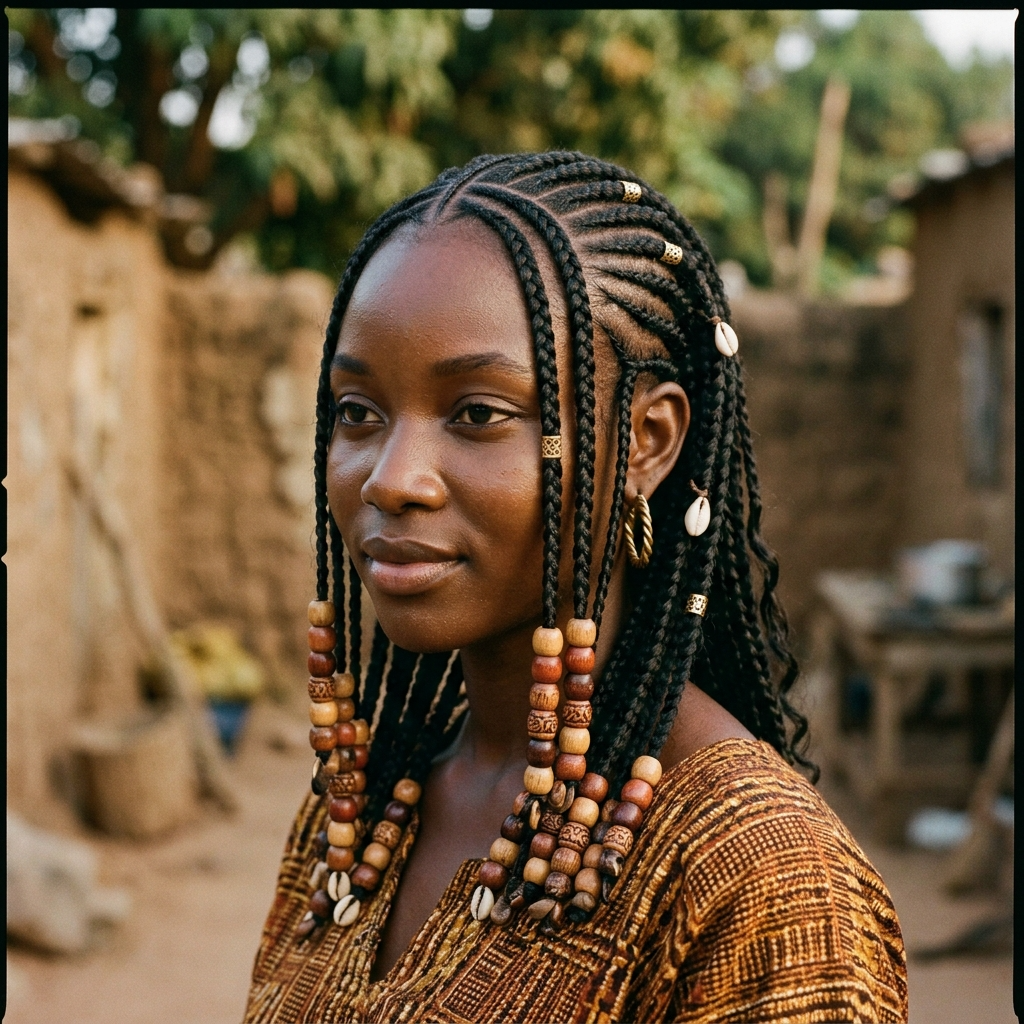
This is the version closest to the style’s roots: a single center cornrow, side cornrows angled toward the face, and loose braids at the back, finished with natural wooden beads. The beads add a warm, earthy tone that works especially well with black or dark brown braiding hair.
It’s the look to choose if you want something timeless rather than trend-driven. Medium-sized braids hold beads best. Very thin braids can slip, and very thick ones look heavy. Expect about five to six hours in the chair.
2. Knotless Fulani Braids
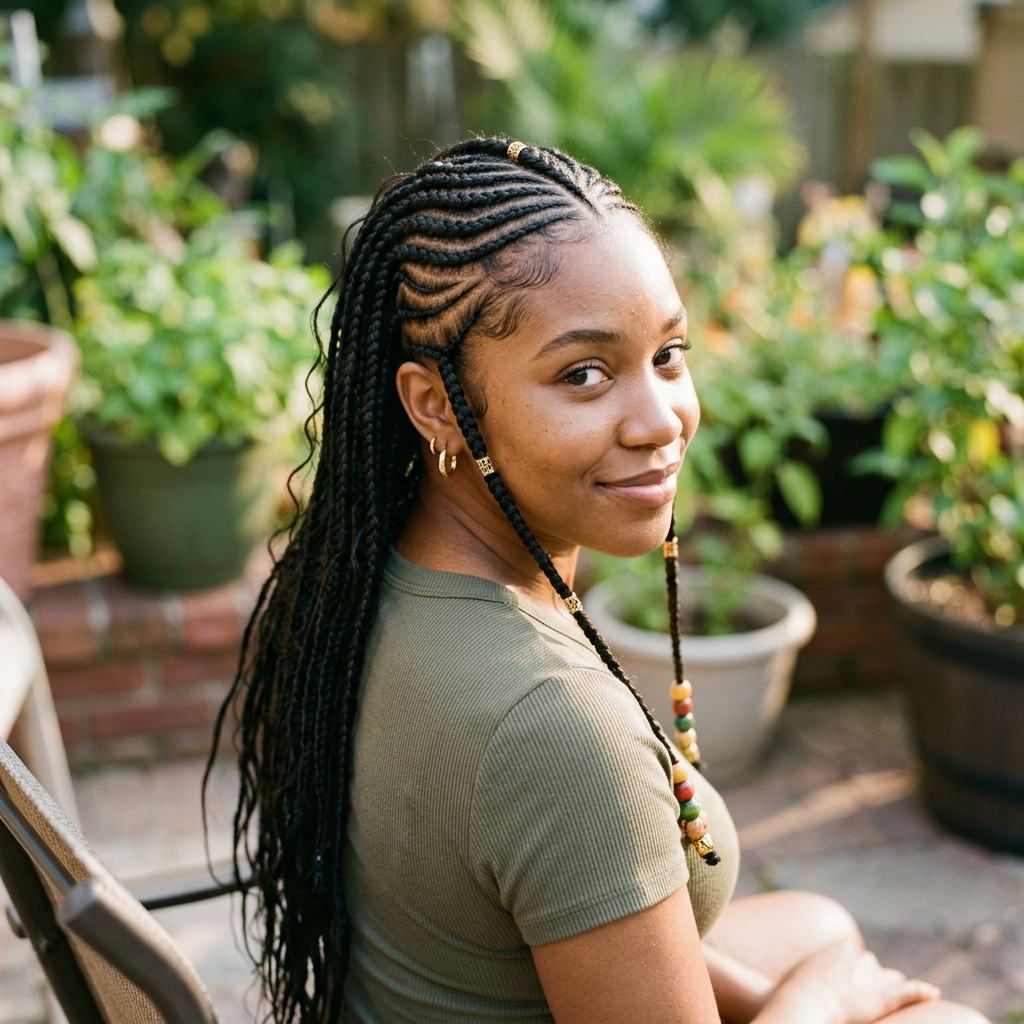
The cornrows at the front stay the same, but the back braids are done with the knotless method, which starts each braid with your own hair and gradually feeds in extensions. The result is flatter at the roots, softer to move, and noticeably gentler on the scalp.
If you’re new to braids or prone to tenderness after a fresh install, this is the version we’d point you toward first. The back looks more natural, and you can usually put it up into a ponytail on day one without the soreness that traditional box braids sometimes cause.
3. Small Fulani Braids, Mid-Back Length
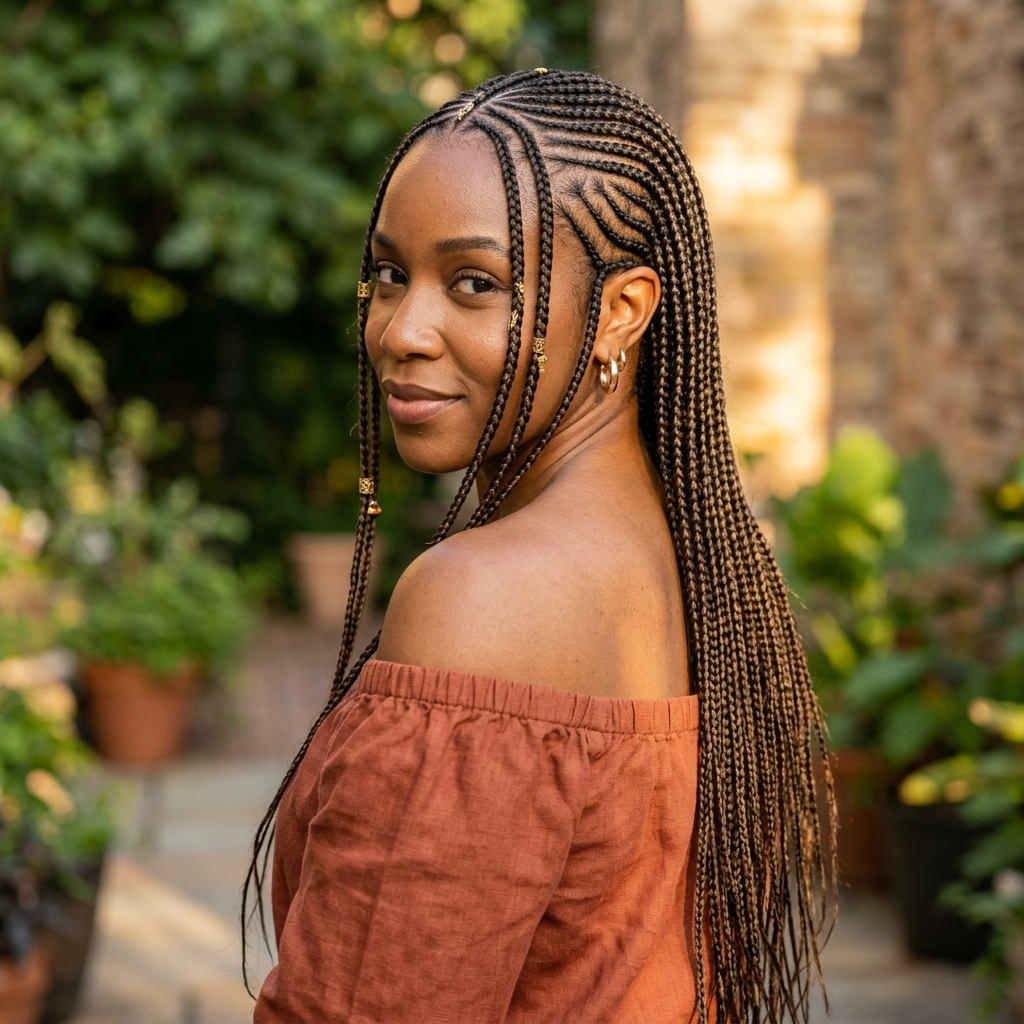
Smaller cornrows and thinner back braids give a refined, detailed look that photographs beautifully. Mid-back length keeps the weight manageable while still offering swing and movement.
The tradeoff is time. Small braids can push an appointment past seven or eight hours, and they cost more. They also last a bit longer, since smaller braids frizz less noticeably as they grow out. If your natural hair is fine or your edges are delicate, ask your braider to keep the hairline cornrows slightly larger even if the back braids are small.
4. Jumbo Fulani Braids
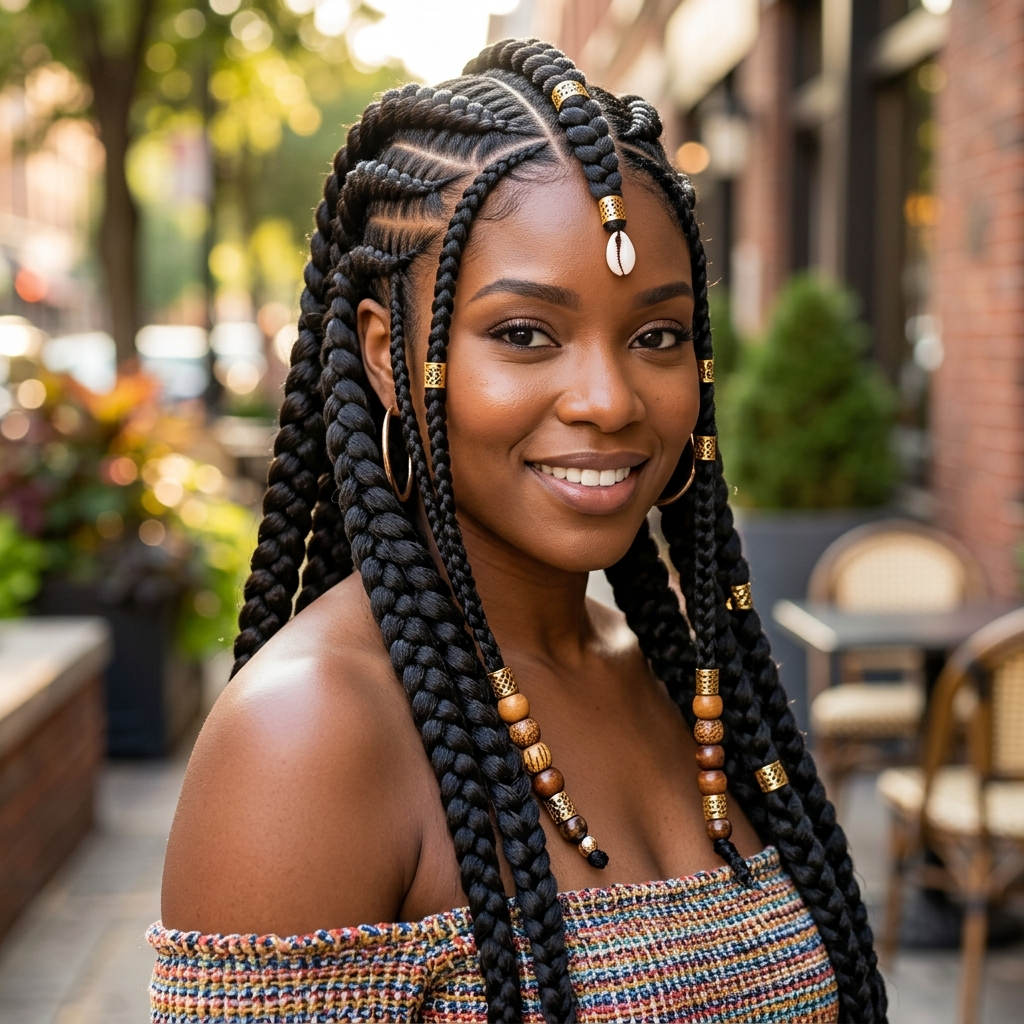
This look uses bold, chunky cornrows and thick back braids. It goes up fast, often in three to four hours, and has a graphic, statement-making quality that reads well from across a room or in a Pinterest grid.
Jumbo braids suit anyone who wants a quick install or a lower price point. Keep in mind that thicker sections pull on fewer strands at a time, so how they’re installed matters. A good braider will avoid packing excessive extension hair onto small sections of your own hair.
Soft, Boho & Textured Fulani Braids
5. Boho Fulani Braids
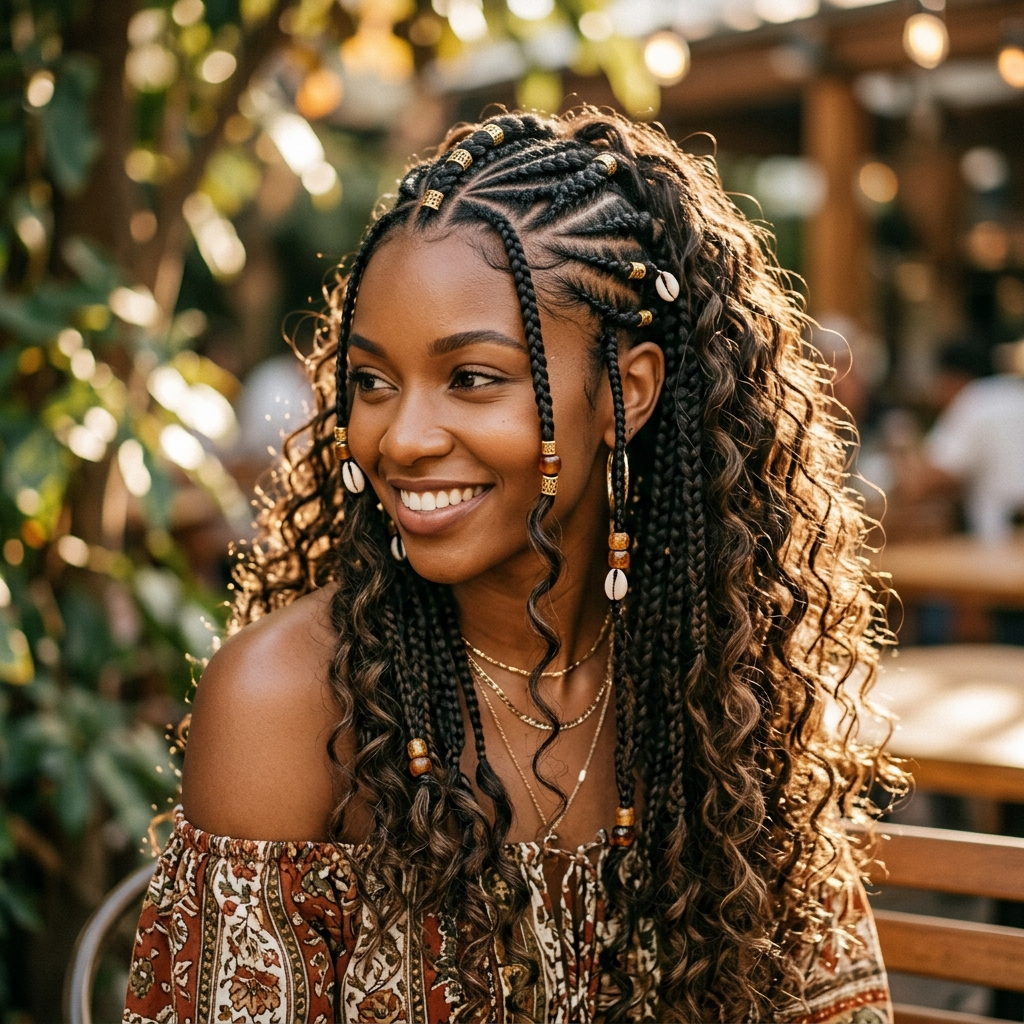
Curly or wavy human-hair pieces are left out along the length of the back braids, creating a romantic, lived-in texture. It’s one of the most saved Fulani styles on Pinterest for good reason: the mix of sharp cornrows at the front and soft curls in the back is striking.
The curls need care. Spritz them with water and a light leave-in, finger-detangle gently, and avoid brushing. Synthetic curls tangle faster than human hair, so if you want the boho effect to last more than two or three weeks, ask about human-hair curls even though they cost more.
6. Fulani Braids with Curly Ends
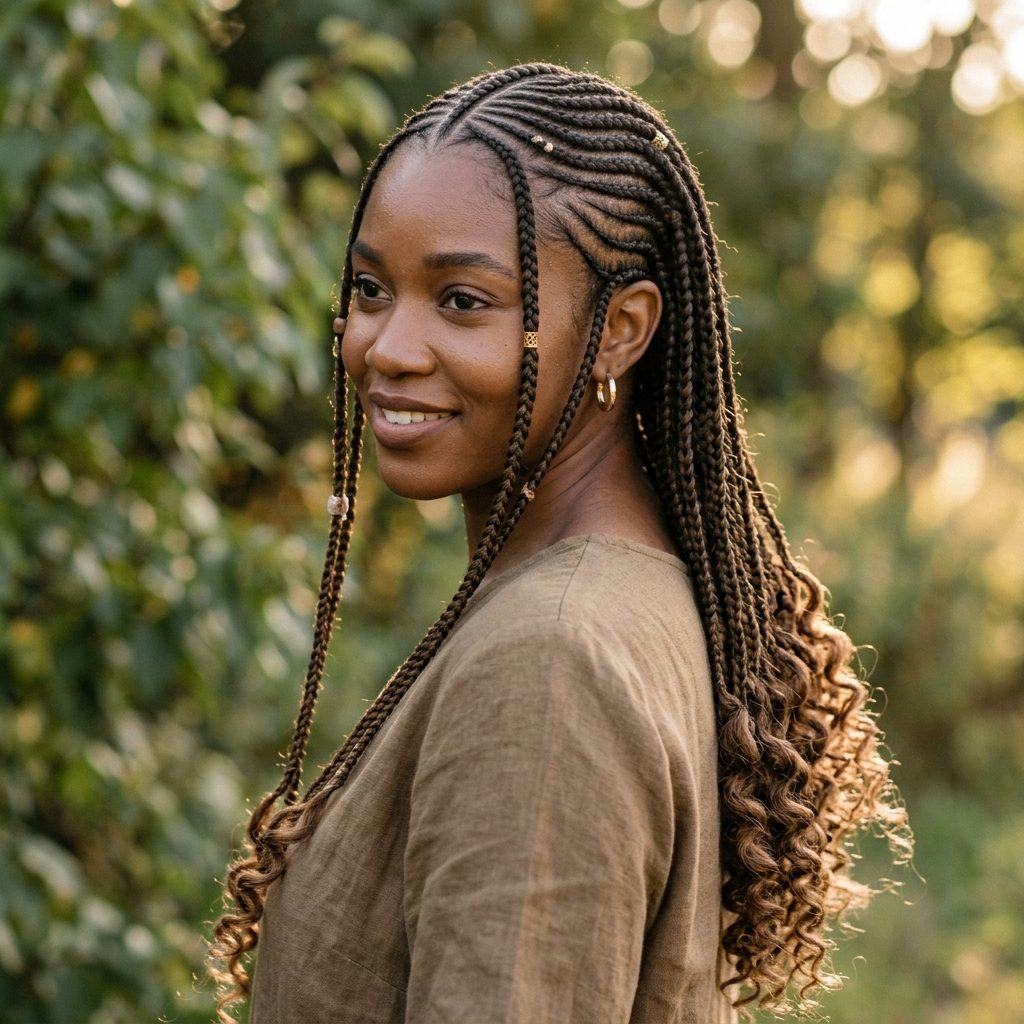
If full boho feels like too much upkeep, curly ends give you a hint of softness with far less maintenance. The braids run straight down and finish in a few inches of loose curls.
It’s a nice middle ground for someone who wants movement but still needs a low-effort morning routine. The curly ends also hide unevenness as braids loosen over the weeks.
7. Fulani Braids with French Curls
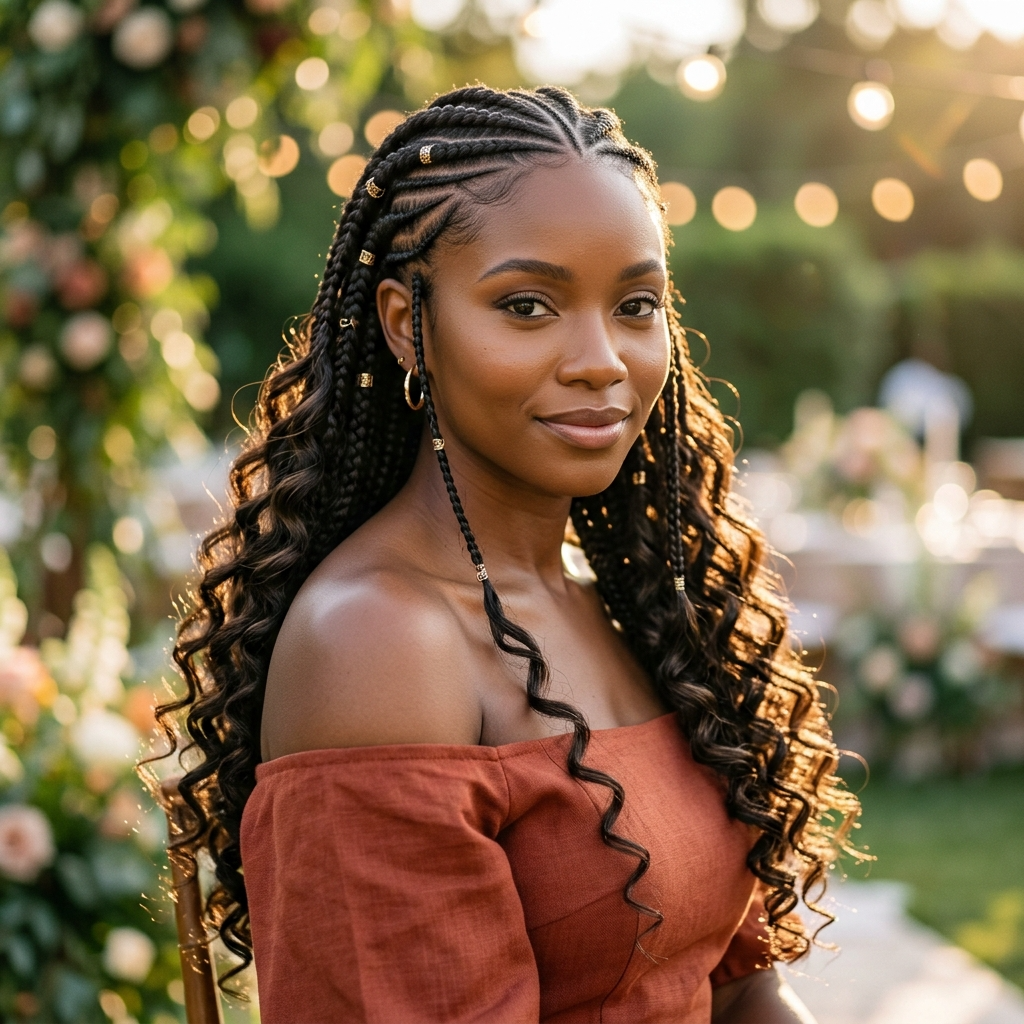
French curl braiding hair has a looser, bouncy spiral that falls at the ends of each braid like a soft ribbon. Paired with Fulani cornrows, it creates a more polished, elegant look than standard curly ends.
This style works well for weddings, graduations or vacation photos. French curl hair is lightweight, which helps on longer lengths, but the curls flatten if you sleep on them roughly, so a satin bonnet or pineapple-style updo at night helps.
8. Fulani Braids with Passion Twists in the Back
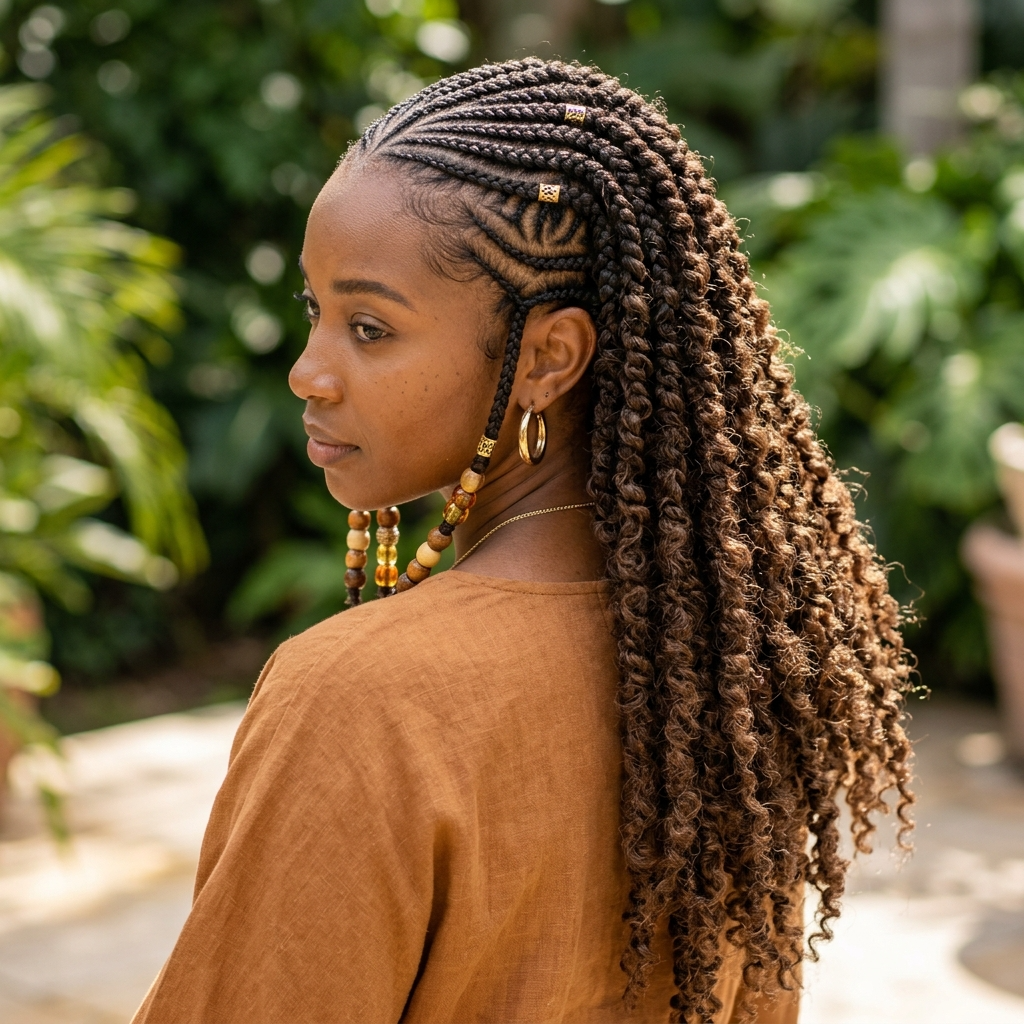
Swap the back braids for passion twists and you get a softer, fluffier silhouette with a slightly undone feel. The front stays defined while the back looks airy and textured.
Passion twists are usually quicker to install than small braids, and they’re lighter. They frizz faster, though, which some people love for the relaxed look and others find messy by week three.
Color-Focused Fulani Braids
9. Honey Blonde Fulani Braids
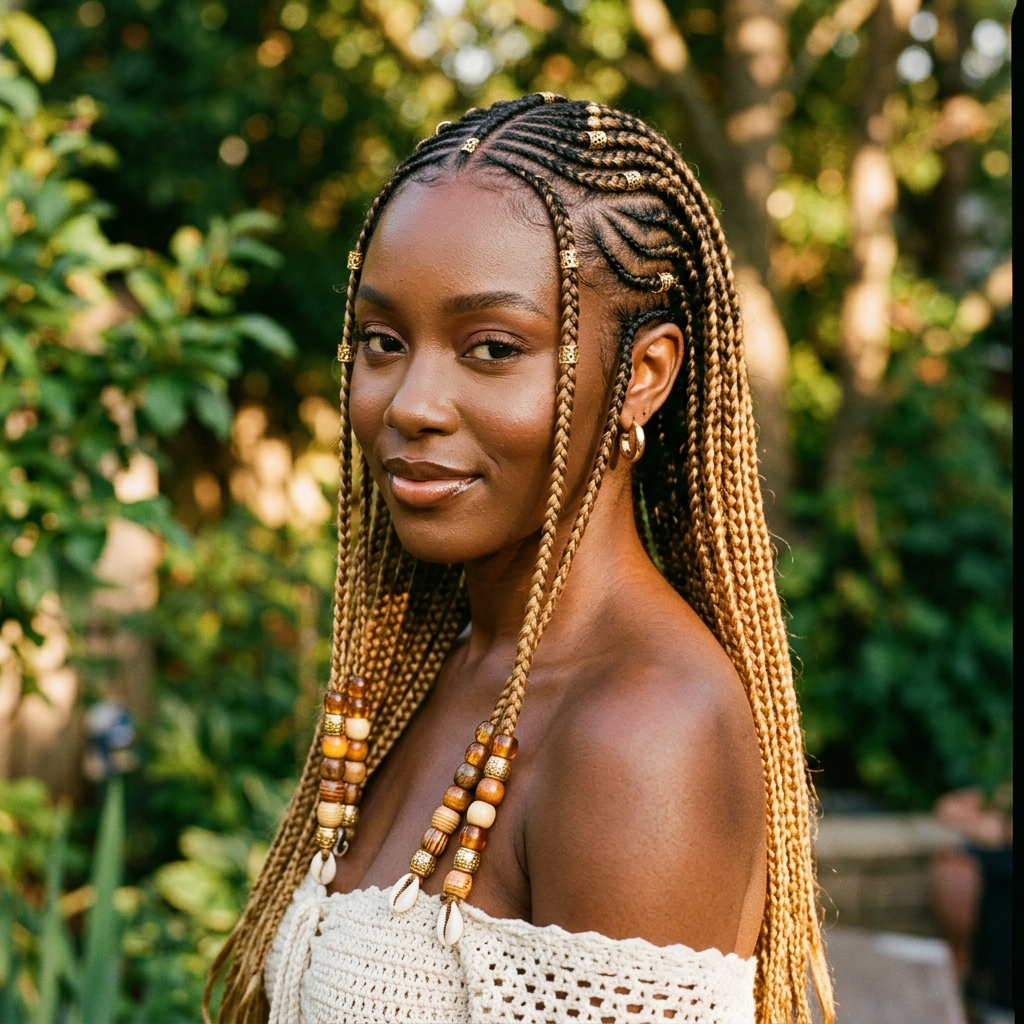
Honey blonde adds warmth and brightness without being harsh, and it flatters many deeper skin tones. Some people go all-over blonde, while others keep the cornrows dark and switch to honey blonde in the back braids for a two-tone effect.
Lighter colors show frizz and lint more easily, so plan on a bit of mousse to smooth flyaways and a clean satin pillowcase.
10. Burgundy or Wine Fulani Braids
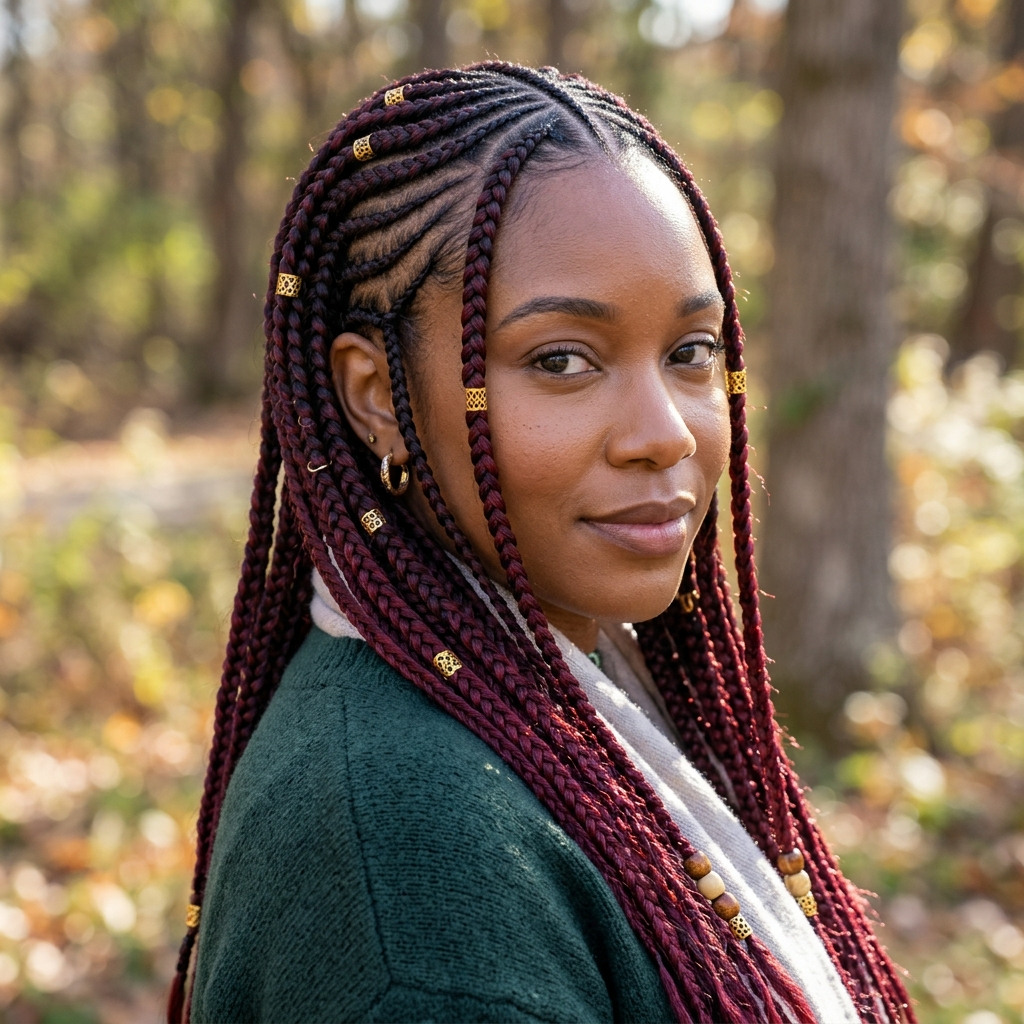
Deep burgundy reads as rich and moody in low light and glows red in sunlight, which makes it a fall and winter favorite. It’s also a good choice if you want color that still feels workplace-friendly.
Blending burgundy with black braiding hair (often called a mixed or “ombré” look) gives more dimension and makes new growth at the roots less noticeable.
11. Copper Fulani Braids
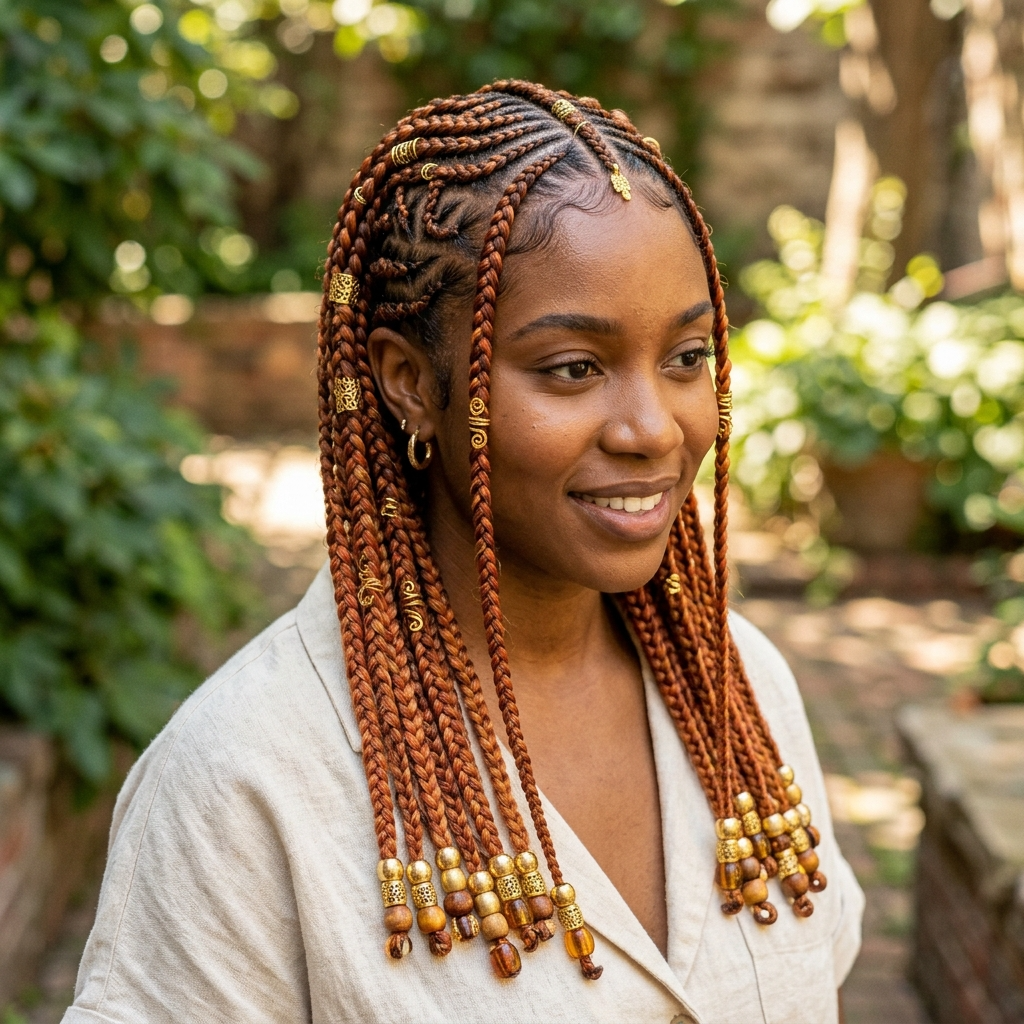
Copper and ginger shades have been everywhere in braiding salons over the past couple of seasons. They’re vivid, warm and easy to pair with gold accessories.
Ask to see the color under natural light before your install starts. Copper braiding hair varies a lot by brand, and some shades lean orange while others lean brown.
12. Peekaboo Color Fulani Braids
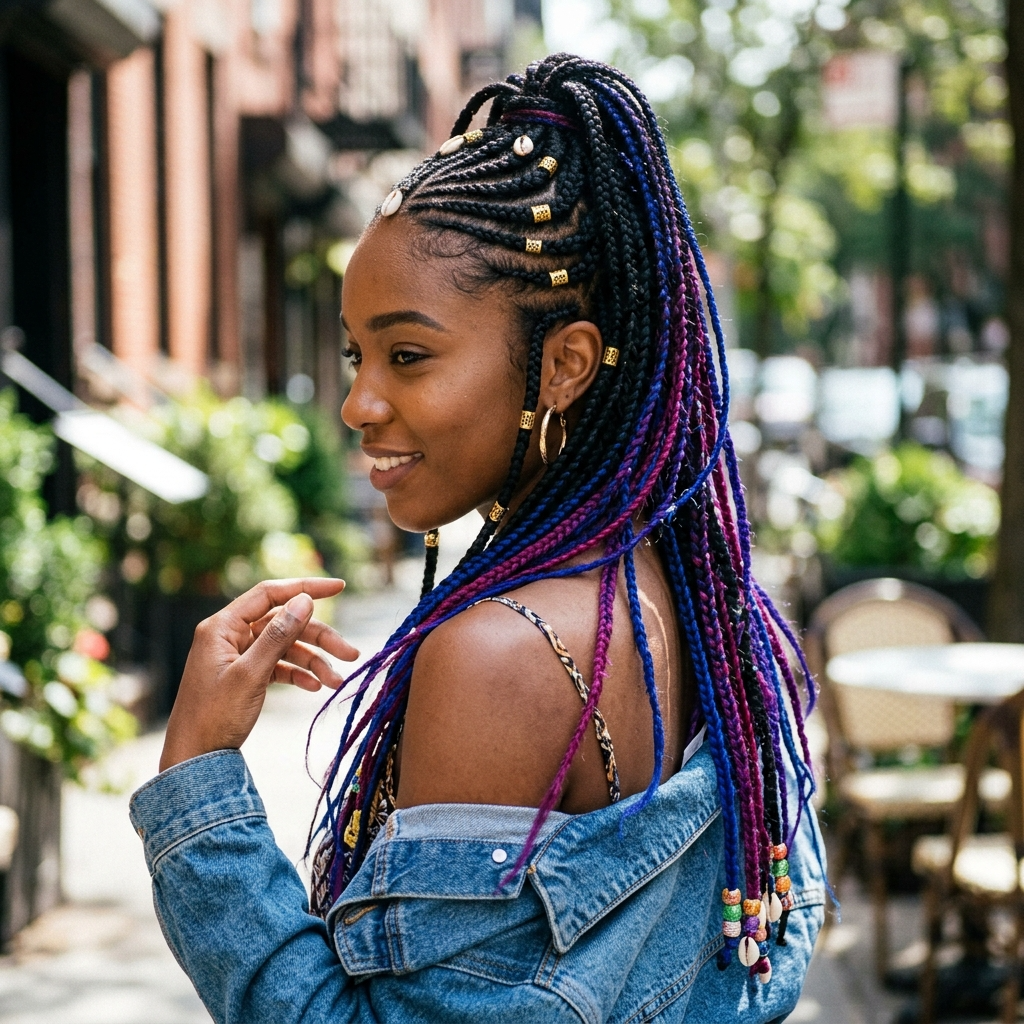
A few colored braids are tucked underneath or scattered through the back, so the color shows when your hair moves or when you wear it up. Popular choices include pink, blue, purple and blonde.
This is the commitment-light way to try a bold shade. It works especially well for anyone whose job or routine calls for a more subtle look most days.
13. Ombré Fulani Braids
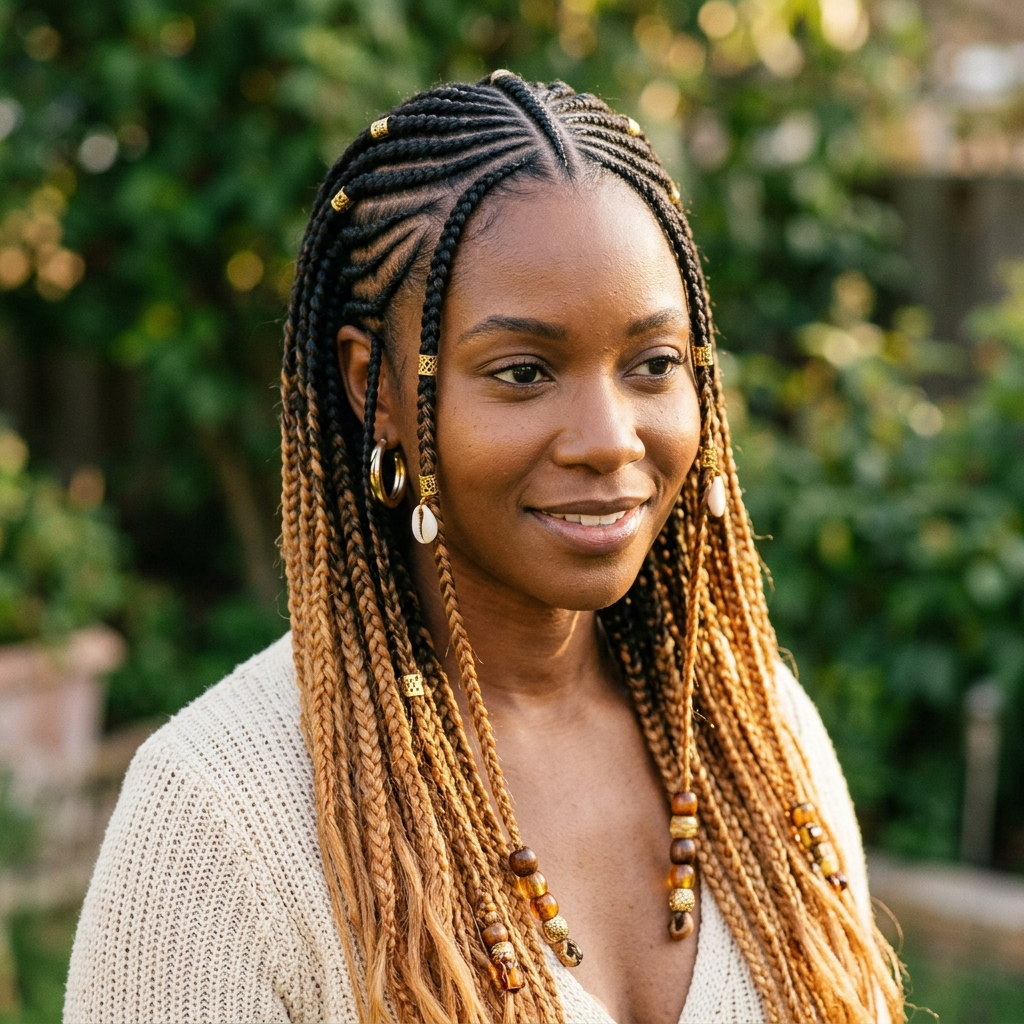
Ombré braids fade from a dark root into a lighter or brighter end, often black to blonde, black to copper, or brown to honey. The gradient adds movement even when the braids are hanging straight.
Ombré also grows out gracefully, since your natural roots blend with the dark starting shade.
Accessory Led Fulani Braids
14. Fulani Braids with Gold Cuffs and Rings
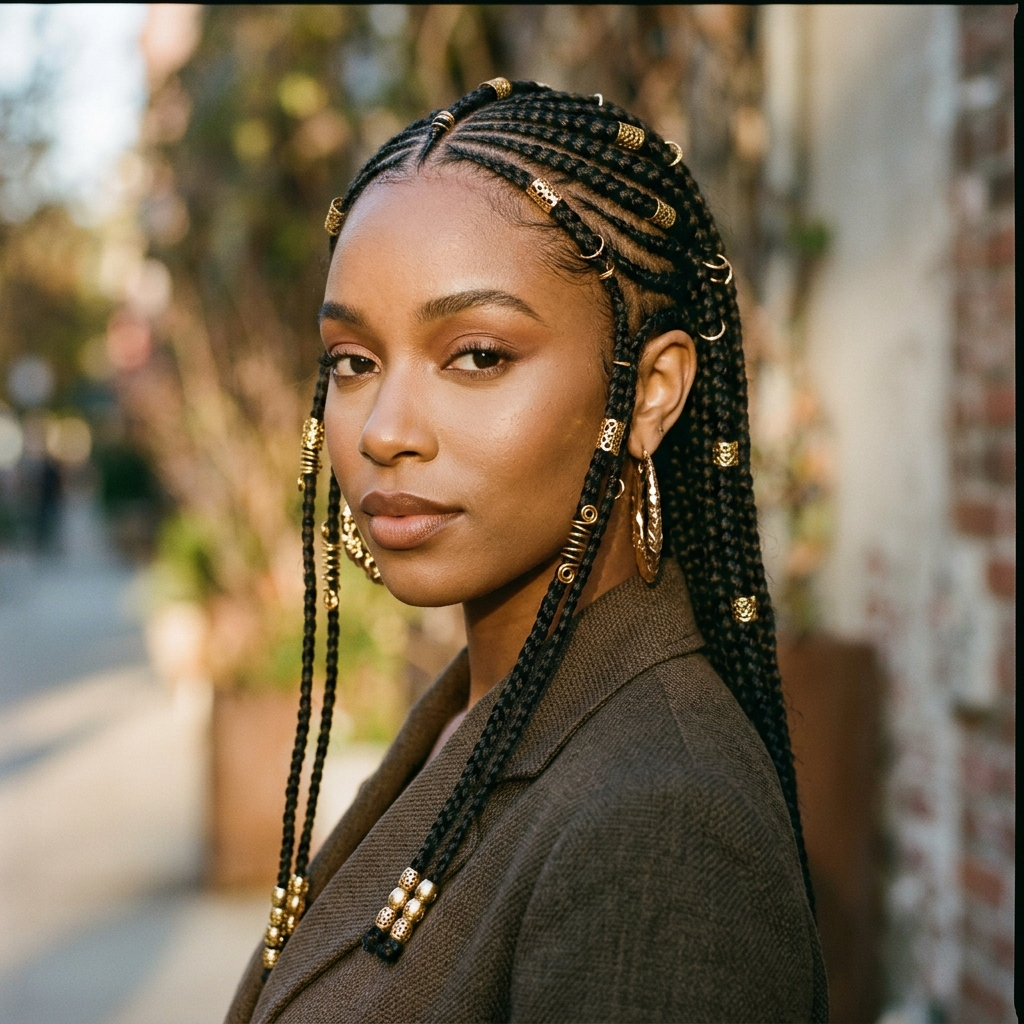
Gold cuffs clipped onto the cornrows and back braids give the style a luxe, editorial finish. You can use a few for subtle sparkle or many for a full statement.
Cuffs are easy to add and remove yourself, so you can change the look for events without a salon visit. Choose lightweight ones, since too much metal adds noticeable weight at the front of the head.
15. Fulani Braids with Cowrie Shells
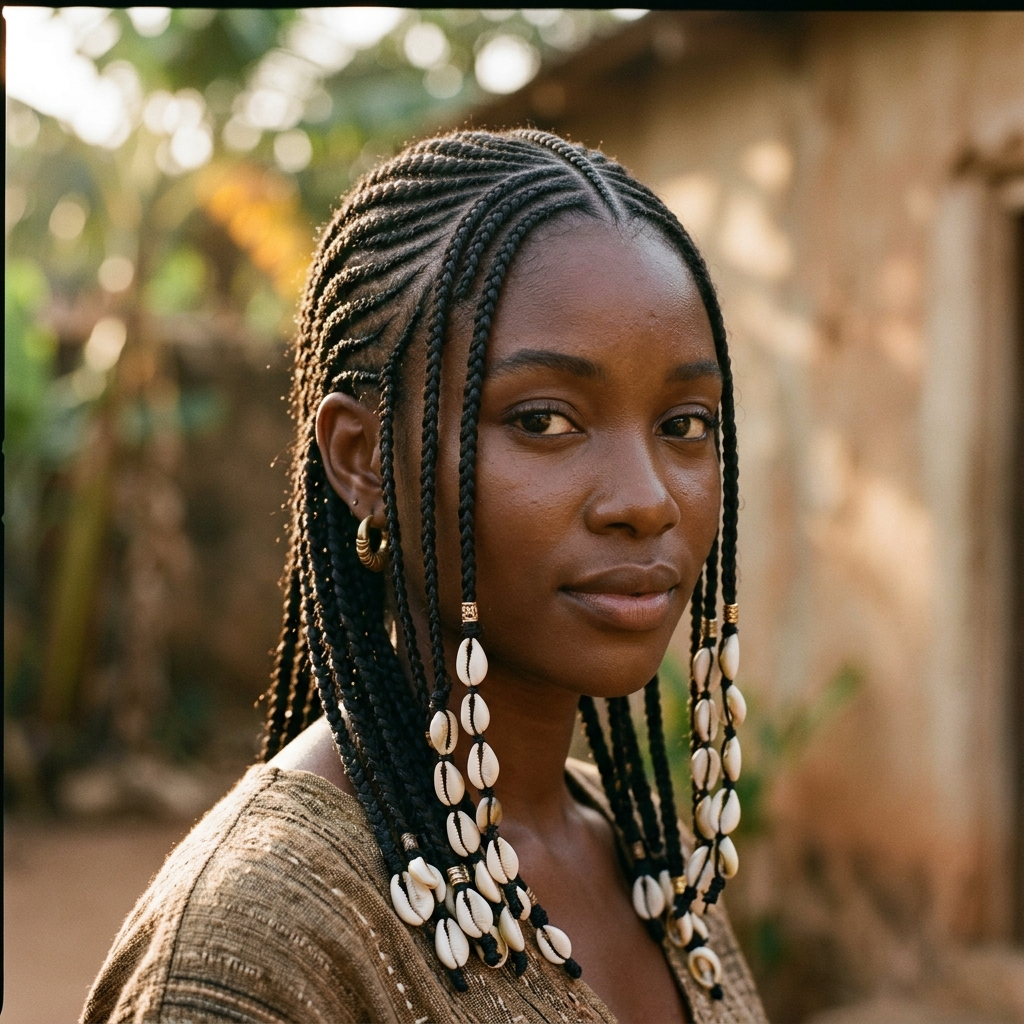
Cowrie shells carry cultural meaning across West Africa and have a long history in traditional braided styles. Threaded onto the side braids or the face-framing pieces, they create a natural, beachy look that photographs beautifully against dark hair.
Shells can clack and catch on clothing, so many people place them on just the face-framing braids rather than all over.
16. Fulani Braids with Thread Wrapping
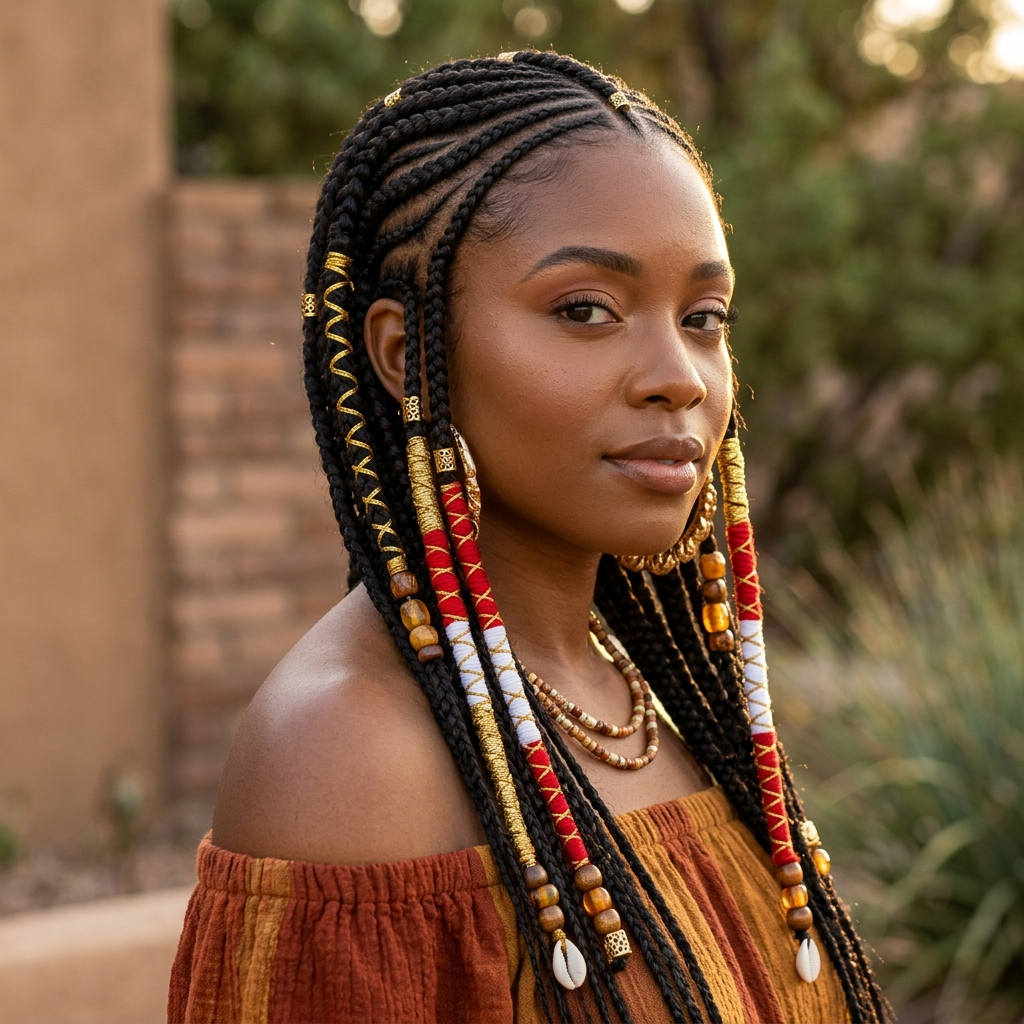
Colored thread or yarn is wrapped tightly around sections of a few braids, creating stripes of color. Gold, white and red thread are popular choices.
It’s a detail that adds personality without changing your braid color. Wrapping a handful of braids is usually enough, since wrapping many adds significant install time.
Shape, Part & Length Variations
17. Heart Part Fulani Braids
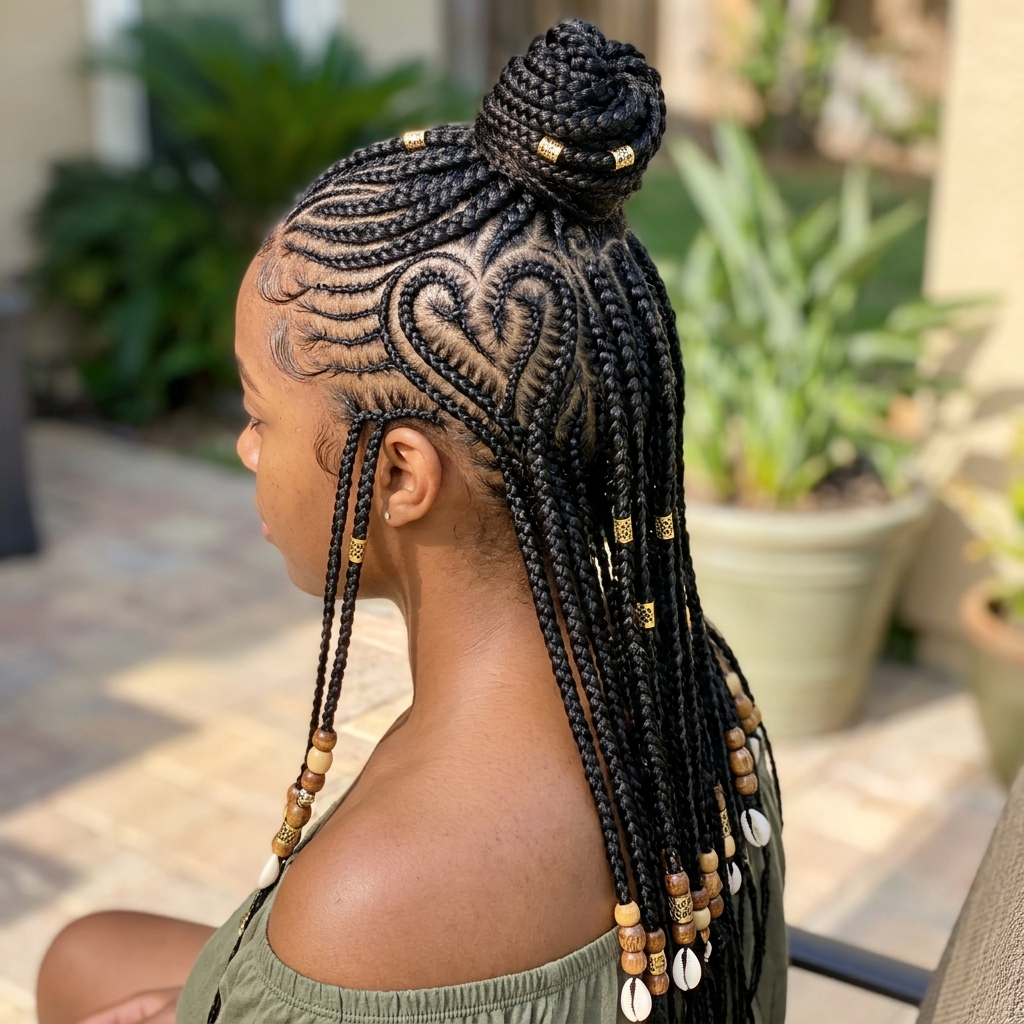
The cornrows are arranged around a heart-shaped section at the crown or back of the head. It’s playful, very Pinterest-friendly, and easy to show off in a half-up style.
A heart part requires a braider who’s comfortable with freehand parting, so ask to see photos of their previous heart-part work before booking.
18. Zigzag Part Fulani Braids
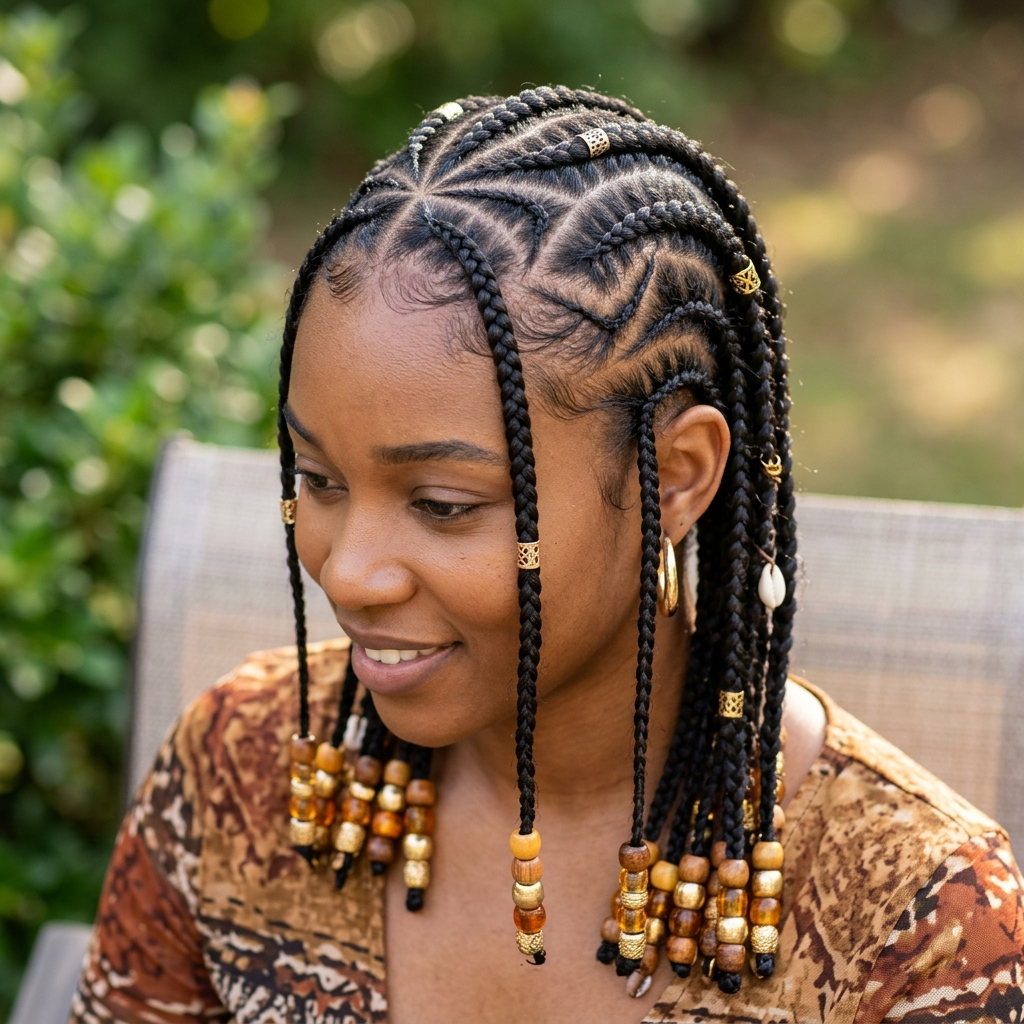
Instead of straight lines, the cornrows run in zigzag or curved patterns across the scalp. It turns the front of the style into a graphic design element.
Zigzag parts work best with medium or larger cornrows, since tiny zigzags can blur together and lose definition.
19. Short Fulani Bob
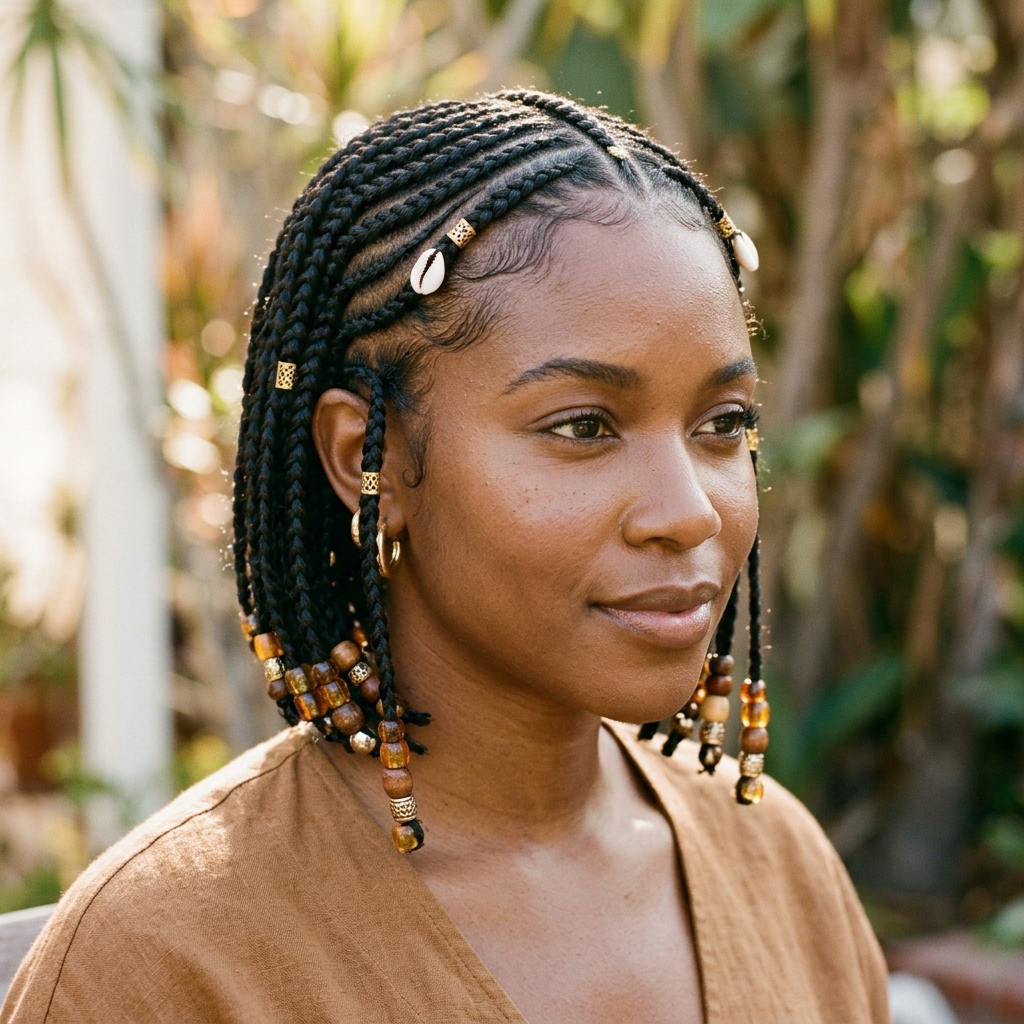
Fulani braids cut at chin or shoulder length feel crisp and modern. This is the choice to make if you want a lighter style for summer, a gym-friendly option, or less pressure on your scalp and edges.
A short bob also reduces install time and cost. The braids sit closer to the face, so the cornrow pattern becomes the focus.
20. Waist-Length Fulani Braids in a High Bun
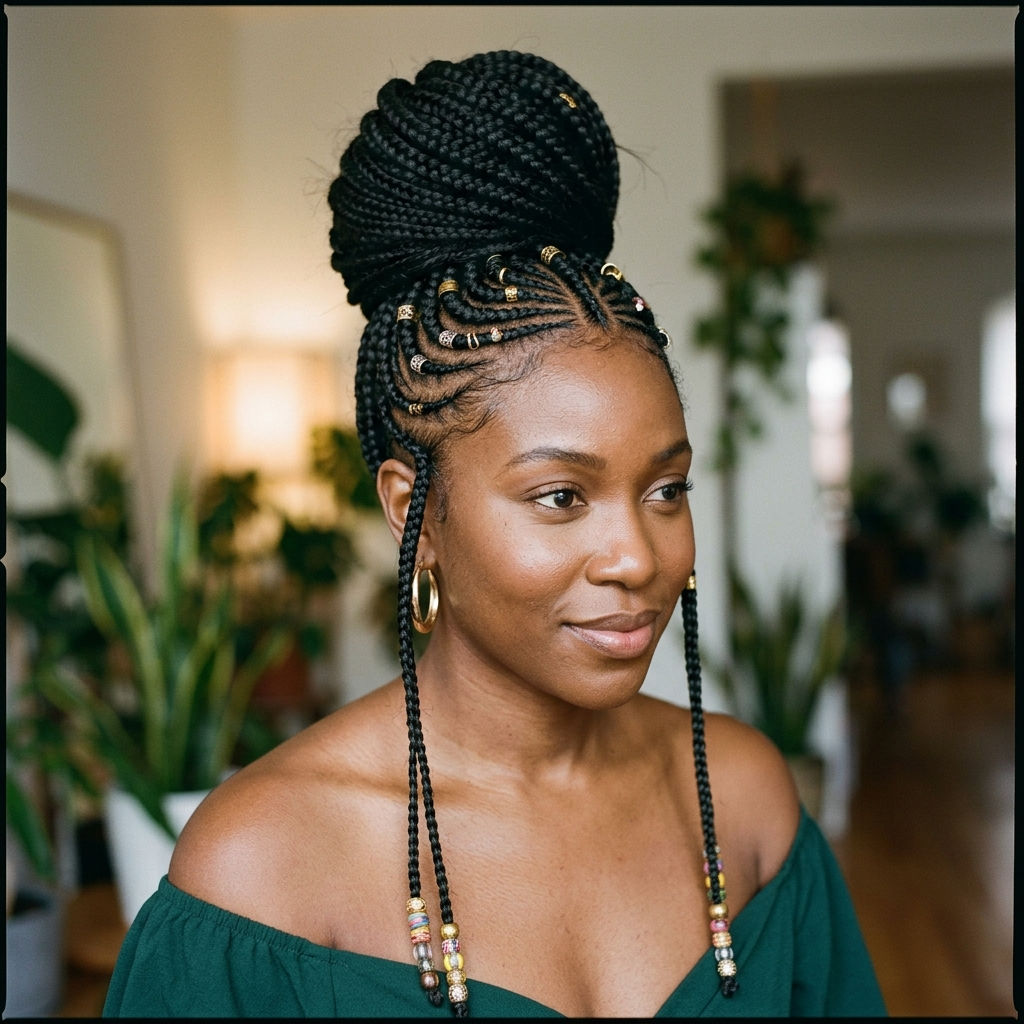
Long braids gathered into a high bun or sculpted top knot create a dramatic, elegant shape for formal events. Down, they swing past the waist. Up, they show off every detail of the cornrow pattern.
Waist-length braids are heavy, though. Wearing them in a tight high bun for many hours can strain the scalp, so loosen the bun when you get home and avoid tight updos during the first few days after install.
Which Fulani Braids Work Best for Different Hair Types?
Coily, tightly curled hair (Type 4): This texture holds Fulani cornrows and extensions extremely well because the hair grips the braiding hair naturally. Most variations work, and the main concern is tension rather than slippage.
Curly hair (Type 3): Cornrows hold well, though you may see more frizz at the roots as the weeks pass, since looser curls lift out of braids faster. Medium-sized braids tend to age better than tiny ones.
Fine or low-density hair: Choose fewer, slightly larger cornrows, a knotless back and shorter lengths. Heavy extensions on fine hair put extra stress on each section, which can lead to breakage.
Straight or wavy hair: Fulani braids are possible but trickier, since smooth hair can slide out of the extension. Look for a braider experienced with your texture, and expect the style to loosen sooner. Some braiders use a light grip product or slightly larger sections to help the braids stay secure.
Which Fulani Braids Are Easiest to Maintain?
| Style | Maintenance Level | Typical Wear Time |
|---|---|---|
| Knotless Fulani braids (medium) | Low | 4–6 weeks |
| Jumbo Fulani braids | Low | 3–5 weeks |
| Short Fulani bob | Low | 4–5 weeks |
| Small Fulani braids | Low to medium | 5–7 weeks |
| Fulani braids with curly ends | Medium | 3–5 weeks |
| Fulani with passion twists | Medium | 3–4 weeks |
| Boho Fulani braids | High | 2–4 weeks for curls to look fresh |
Front cornrows usually show frizz before the back braids do. Many people get only the cornrows redone around week three or four to stretch the life of the whole style.
Simple care routine:
- Sleep in a satin bonnet, scarf or on a satin pillowcase.
- Use a lightweight oil on the scalp a few times a week, not heavy grease.
- Smooth frizz with a light foaming mousse.
- Cleanse the scalp every one to two weeks with diluted shampoo in an applicator bottle, then dry thoroughly to prevent mildew odor.
- Don’t keep the style in past six to eight weeks. Leaving braids in too long increases matting and breakage at the roots.
What to Ask Your Braider
Bringing a photo is a great start, but these questions help avoid surprises:
- How many cornrows do you suggest at the front for my hair density?
- Will you use knotless braids or traditional box braids in the back?
- How much braiding hair should I bring, and do you prefer a certain brand?
- How long will the appointment take, and is the price based on length, size or both?
- Can you keep tension light around my edges?
- Do you include beads, cuffs or curly pieces in the price, or should I bring my own?
- Can I come back to have just the cornrows redone later?
A good braider will happily answer these questions, and the conversation tells you a lot about how carefully they’ll treat your hair.
Frequently Asked Questions About Fulani Braids
How long do Fulani braids last?
Most Fulani braids last four to six weeks. The front cornrows tend to frizz first, often around week three. Boho styles with curly pieces usually look their best for two to four weeks before the curls need refreshing.
How long does it take to get Fulani braids done?
Expect anywhere from three to eight hours. Jumbo braids and short bobs are on the faster end, while small braids, very long lengths, and boho looks take the longest.
How much do Fulani braids cost in the US?
Pricing varies widely by city, braider experience, braid size and length. Many salons charge somewhere in the range of about $150 to $400, with boho styles using human-hair curls often costing more. Ask whether braiding hair is included before you book.
Are Fulani braids damaging to your edges?
They can be if they’re installed too tightly. Because the cornrows pull from the hairline, tension at the front is the biggest risk. Larger front cornrows, a knotless back, lighter accessories and avoiding tight updos right after installation all reduce stress on your edges.
Can you get Fulani braids with fine or thin hair?
Yes, with adjustments. Fewer and slightly larger cornrows, knotless braids in the back, and shorter or medium lengths put less strain on fine strands. Discuss your density with your braider before the appointment.
What’s the difference between Fulani braids and tribal braids?
The terms are often used interchangeably. “Tribal braids” has become a broader salon term for cornrow-and-braid combinations, while Fulani braids specifically refers to the pattern with a center cornrow, forward-facing side cornrows, and often beads or shells.
How many packs of braiding hair do I need for Fulani braids?
Most installs use about four to eight packs, depending on length, braid size and the brand of hair. Longer, smaller braids need more. Your braider can give you an exact number.
Can I wash my hair with Fulani braids in?
Yes. Focus on the scalp with a diluted shampoo, rinse gently, and let your braids dry completely, using a hooded dryer or air-drying for several hours. Damp braids left overnight can develop an odor.
Finding Your Version of Fulani Braids
The best Fulani braids for you balance three things: the look you love, the upkeep you’ll actually do, and what your hairline can comfortably handle. If you want easy wear, start with medium knotless Fulani braids. If you want romance and movement, boho is worth the extra care. If you want to stand out, use color, shells or a creative part.
Keep exploring Hairstyle Inspirations for more protective style ideas. Save your favorite Fulani looks to a Pinterest board you can show your braider at your next appointment.