How to Cut a Fade Hairstyle: 7 Fade Types & Step-by-Step Guide (2027)

The fade is one of the most popular men’s haircuts in the world. By gradually blending short hair on the sides into longer hair on top, it creates a clean, sharp and modern look. Fades suit almost every hair type and face shape, and they pair with everything from crops and quiffs to curls and mullets.
This guide explains how to cut a fade hairstyle in 2027, from the tools you need and how to set your guide line to step-by-step blending techniques. You will also find seven fade types, including low, mid, high, skin, taper, burst and drop fades, plus tips for avoiding lines and keeping your fade fresh.
Quick Overview
- A fade blends short sides gradually into a longer top.
- Low, mid and high fades describe where the fade starts.
- Skin fades go down to bare skin.
- Clipper guards and the lever create smooth blending.
- Tapers are the softest fade option.
- Most fades need touch-ups every one to four weeks.
What Is a Fade Haircut?
A fade is a haircut where the hair on the sides and back is cut very short at the bottom and gradually gets longer toward the top of the head. Unlike an undercut, which has a sharp line between lengths, a fade creates a smooth, seamless gradient.
Fades are described by where the shortest section starts. Low fades begin just above the ears, mid fades start halfway up the sides and high fades start near the temples. Skin fades take the shortest point down to bare skin, while tapers only shorten the sideburns and neckline.
Fades are popular because they look clean and sharp yet grow out gracefully. They suit straight, wavy, curly and coily hair and can be paired with almost any top style. A good fade highlights the shape of the head and face and makes any haircut look polished and intentional. Our what is an undercut hairstyle guide explains how undercuts differ.
Tools You Need to Cut a Fade
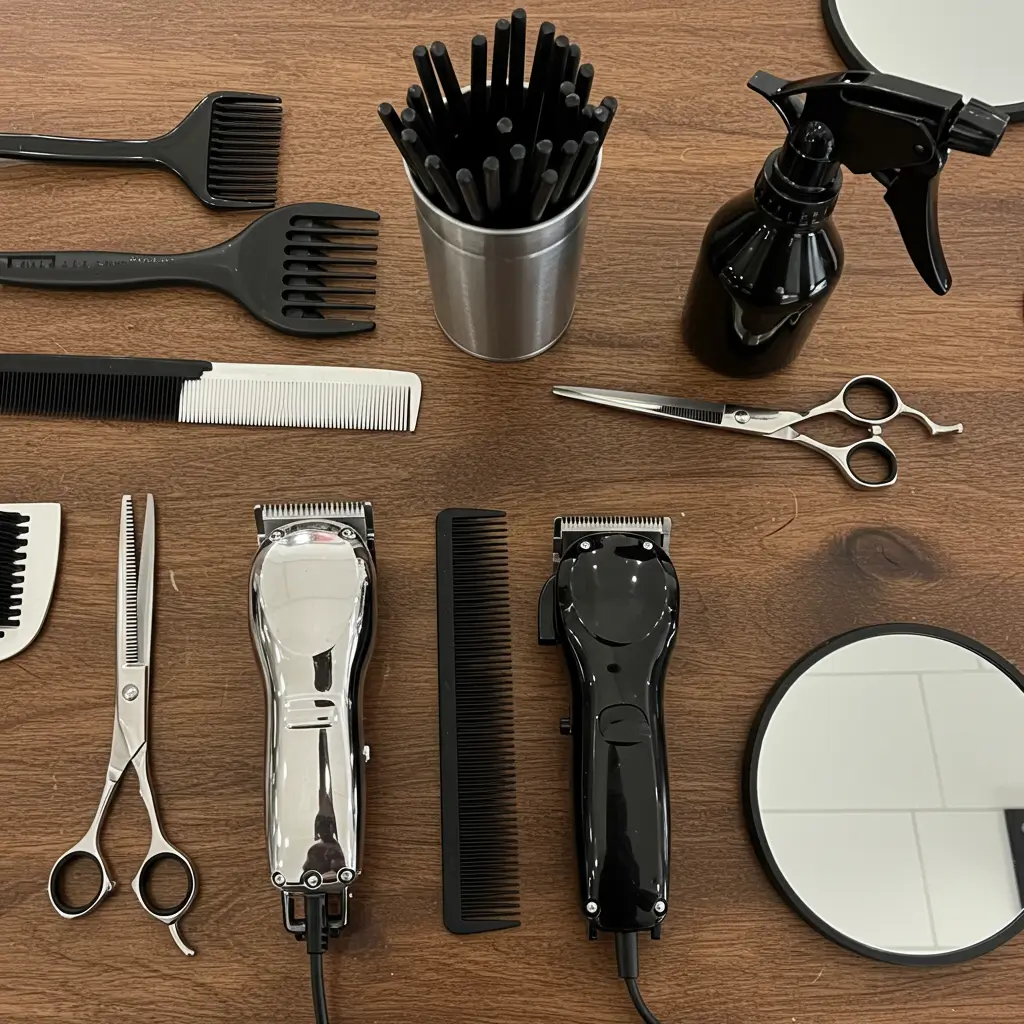
Cutting a fade requires quality tools. Clippers with a full set of guards, usually from zero to eight, are essential. The clipper lever lets you adjust the blade length between guard sizes for smoother blending. Trimmers help create clean lines around the ears and neckline.
A foil shaver or razor is needed for skin fades. You will also need a fine-tooth comb for clipper-over-comb blending, sectioning clips, a mirror and a hand mirror. A neck duster and cape keep the area clean.
Good lighting is important, as uneven lines are easier to spot in bright light. If you are cutting your own hair, a three-way mirror helps you see the back and sides. Fades require practice and precision, so many people prefer a professional barber, especially for high and skin fades. Our buzz cut guide explains guard sizes in more detail.
How to Cut a Fade Step by Step
Start by cutting the top to your desired length with scissors or a longer guard. Then set your guide line, the point where the fade begins. Use a short guard, such as a one or two, to cut the sides and back up to this line.
Next, switch to the next guard size up and cut slightly above the guide line, using a flicking, scooping motion away from the head. Repeat with progressively longer guards, moving higher each time. Open and close the clipper lever to blend between guard sizes and remove visible lines.
For a skin fade, use a zero guard or trimmer at the very bottom, then finish with a foil shaver. Blend the faded sides into the top using clipper-over-comb or scissor-over-comb. Finally, clean up the neckline and around the ears with a trimmer, and check both sides for symmetry. Our short cropped hairstyles guide shows tops that pair well with fades.
7 Types of Fade Haircuts
1. Low Fade

A low fade starts just above the ears and around the neckline, keeping most of the sides fuller. It is subtle, professional and grows out gracefully, making it ideal for office settings and anyone trying a fade for the first time. The gentle gradient creates a clean outline without dramatic contrast, and it pairs well with almost any top style.
Set the guide line just above the ears, use a short guard below it and blend upward with longer guards, opening and closing the clipper lever to soften the transition. Finish the neckline with a trimmer. Our fade haircut guide shows finished low fade looks.
Best for: Subtle professional finish
- Fade start: Above the ears
- Cutting difficulty: Medium
- Best hair type: All types
- Top length: 2–4 inches
- Touch-up every: 3–4 weeks
2. Mid Fade
A mid fade starts halfway up the sides, between the ears and the temples. It balances boldness and wearability and is the most popular fade in barbershops. It suits most face shapes and pairs well with textured tops, quiffs and crops. Mid fades are a dependable choice for men who want a modern look without committing to bare skin on the sides.
Set the guide line around the middle of the head, fade down to a short guard or skin, then blend upward into the top with longer guards and clipper-over-comb. A mid skin variation adds extra contrast, while a mid taper keeps it softer for work environments. Our faded undercut guide shows mid fades with longer tops.
Best for: Balanced everyday fade
- Fade start: Mid-head
- Cutting difficulty: Medium
- Best hair type: All types
- Top length: 2–4 inches
- Touch-up every: 2–3 weeks
3. High Fade
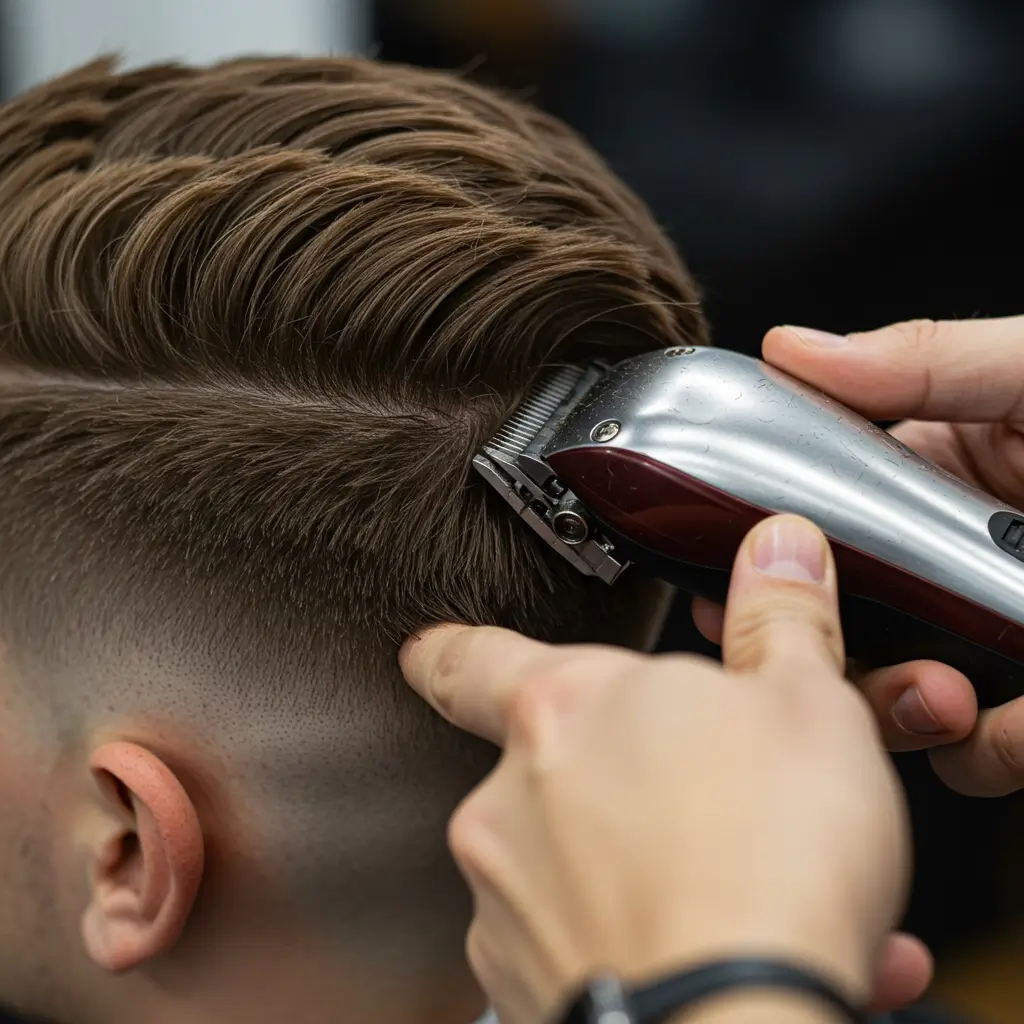
A high fade starts near the temples, removing most of the hair on the sides. The strong contrast draws attention to the top and creates a sharp, athletic look. It suits round faces that need height. It also makes thick, straight hair look neater by removing bulk from the sides where hair tends to puff out.
Set the guide line near the temple, take the lower sides very short, then blend upward over a short distance. Work carefully to avoid lines. Because the blend is compressed into a small area, high fades demand steady hands and plenty of guard changes. Our what is a pompadour hairstyle guide shows high fades with volume on top.
Best for: Sharp athletic contrast
- Fade start: Near the temples
- Cutting difficulty: Hard
- Best hair type: Thick, straight
- Top length: 2–4 inches
- Touch-up every: 2 weeks
4. Skin Fade

A skin fade takes the shortest part right down to bare skin using a foil shaver or razor. It creates the cleanest, most dramatic gradient. It looks crisp and modern but needs frequent touch-ups. Skin fades suit men with smooth scalps and work especially well alongside beards, line-ups and sharp hairlines.
Fade the lowest section with a zero guard or trimmer, then finish with a foil shaver for a skin finish. Blend upward through progressively longer guards. Keep a light moisturiser on the bare skin afterward, since freshly shaved areas can feel dry or show razor bumps. Our 17 faded mullets for men guide shows skin fades with mullets.
Best for: Crisp dramatic finish
- Fade start: Any height
- Cutting difficulty: Hard
- Best hair type: All types
- Top length: 1–4 inches
- Touch-up every: 1–2 weeks
5. Taper Fade
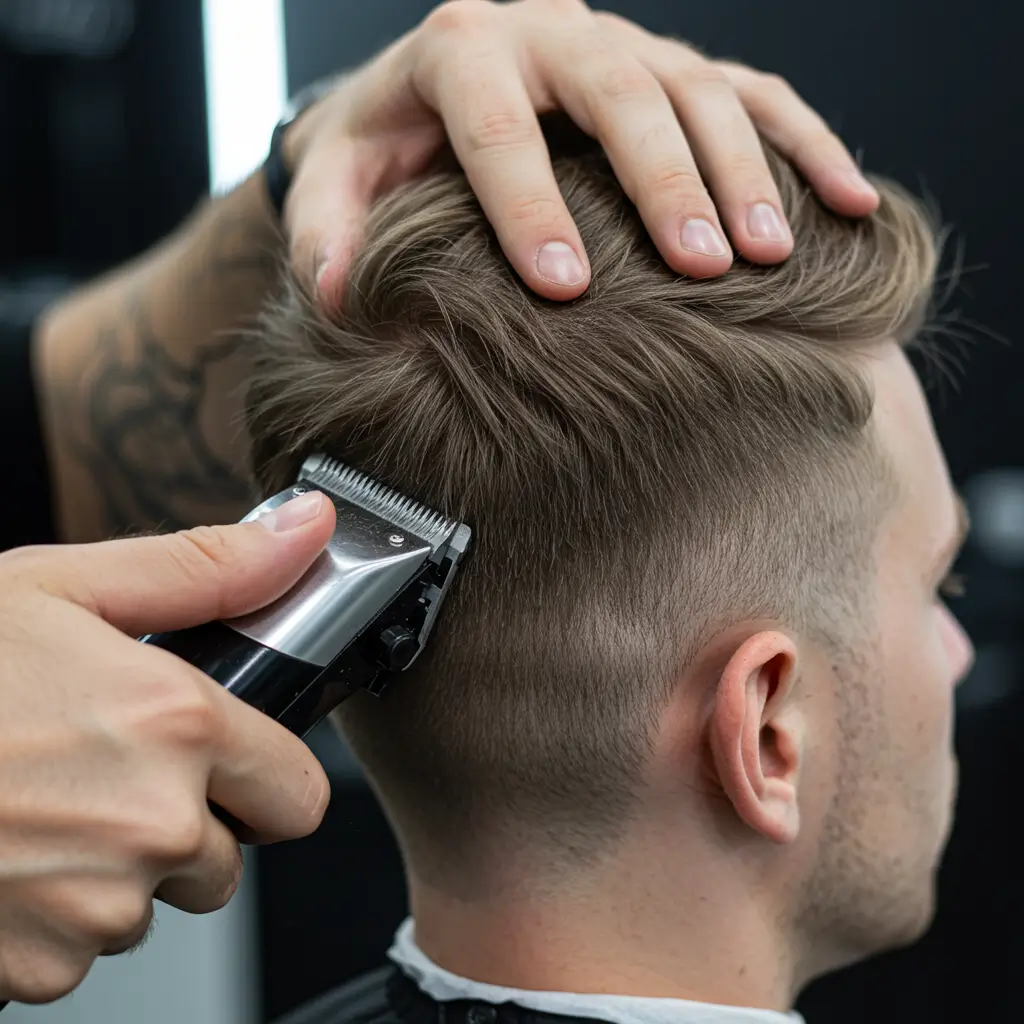
A taper fade shortens the hair only around the sideburns and neckline, keeping the rest of the sides natural. It is the softest fade option and grows out very gracefully. It suits professional settings and curly hair. Tapers are also the best option for men growing their hair out, because there is no hard contrast to outgrow.
Trim the sideburns and neckline with a short guard, blending into the natural length above. Keep the transition very short and soft. Use the trimmer lightly and avoid going too high, since the charm of a taper is its clean but natural edge. Our curly hair for men guide shows tapers with curls.
Best for: Soft natural grooming
- Fade start: Sideburns and nape
- Cutting difficulty: Easy to medium
- Best hair type: All types
- Top length: Any
- Touch-up every: 4 weeks
6. Burst Fade

A burst fade curves around the ear in a semicircle, leaving length at the back. It is often paired with mohawks, mullets and textured tops. It looks sporty, modern and full of personality. Burst fades pair especially well with curly and coily tops, where the rounded shape frames the texture beautifully.
Fade in a curved arc around each ear, keeping the back of the head longer. Blend carefully so the curve is symmetrical on both sides. Check the arc from the front and the back in the mirror, as uneven curves are the most common burst fade mistake. Our what is mohawk hairstyle guide shows burst fade mohawks.
Best for: Sporty curved shape
- Fade start: Around the ears
- Cutting difficulty: Hard
- Best hair type: Straight to curly
- Top length: 2–4 inches
- Touch-up every: 2–3 weeks
7. Drop Fade

A drop fade curves downward behind the ear, following the shape of the head. It creates a smooth arc and looks stylish and refined. It pairs well with longer tops and mullets. The downward curve also flatters the natural shape of the skull, making the back of the head look fuller and rounder.
Start the fade higher in front of the ear, then drop it lower behind the ear toward the nape. Blend upward with longer guards. Drop fades take more time than standard fades, so many people leave the curved section to an experienced barber. Our soft mullet guide shows drop fades with longer backs.
Best for: Stylish curved arc
- Fade start: Drops behind the ear
- Cutting difficulty: Hard
- Best hair type: All types
- Top length: 2–5 inches
- Touch-up every: 2–3 weeks
Tips for a Smooth, Line-Free Fade
Work in small sections and use a scooping motion. Flicking the clippers away from the head at the guide line creates a softer transition than cutting straight up. If you trim between barber visits, our home haircut guide covers safe clipper technique.
Use the clipper lever. Opening and closing the lever adjusts the blade length between guard sizes, helping blend half-steps and remove harsh lines. Many barbers use half-guard sizes, such as 0.5 and 1.5, for extra smoothness.
Check your work often. Step back, look in different lighting and compare both sides. Lines are easier to see when the hair is dry and brushed in different directions.
Finally, keep your fade fresh. Low fades and tapers last three to four weeks, while skin and high fades need touch-ups every one to two weeks. Regular maintenance keeps the gradient clean and the overall haircut sharp. Our what is a quiff hairstyle guide shows a popular top to pair with fresh fades.
How Do I Keep a Fade Looking Fresh?
- Moisturise the faded skin to prevent dryness and irritation.
- Use heat protectant before styling; the American Academy of Dermatology warns that frequent heat damages hair.
- If you colour your hair, follow American Academy of Dermatology guidance and keep lengths well conditioned.
- Use a light product on top, such as clay, pomade or curl cream.
- Keep the neckline tidy between cuts with a trimmer.
- Book touch-ups every one to four weeks, depending on the fade height.
Frequently Asked Questions
What is a fade haircut?
A cut where the sides and back gradually blend from very short at the bottom to longer on top.
What is the difference between a fade and a taper?
A fade covers more of the sides. A taper only shortens the sideburns and neckline.
Can I cut a fade at home?
It is possible with practice, but high and skin fades are best left to a barber.
What clipper guards do I need?
A full set, usually zero to eight, plus trimmers and a foil shaver for skin fades.
How do I avoid lines in a fade?
Use a scooping motion, the clipper lever and half-guard sizes for smooth blending.
How often should I touch up a fade?
Every one to four weeks, depending on how high and short the fade is.
Conclusion
The fade is a clean, versatile haircut that suits almost everyone. Whether you choose a subtle low fade, a balanced mid fade, a sharp high fade, a crisp skin fade, a soft taper, a sporty burst fade or a stylish drop fade, the secret is careful sectioning, smooth blending and regular maintenance.
Use the steps in this guide to understand how a fade is cut, or take the ideas to your barber for a professional finish. With regular touch-ups, your fade will look sharp throughout 2027.